
Changan Automobile has completed one of the more active leadership reshuffles in China's auto industry, with Zhao Fei taking over as president after the role sat vacant for eight months. His appointment closes a personnel cycle that also included changes across Qiyuan, Yinli, Avatr and Deepal.
A management reshuffle reaches its conclusion
The reshuffle reflects Changan's determination to move more decisively into electrification and intelligent vehicles. Ye Pei was appointed executive vice-president with responsibility for sales quality, operating quality and overseas business. Mi Mengdong became vice-president, general counsel and chief compliance officer. Wang Hui shifted to the high-end electric brand Avatr, while Deepal's Deng Chenghao became chairman and Jiang Hairong took over as president.
For Changan, this is not only personnel adjustment. It is a restructuring around a new identity. After China Changan Automobile Group was formally established as the country's third central-government-owned auto group alongside FAW and Dongfeng, the company moved quickly to build a leadership team suited to a tougher new-energy market.
Breaking old central-SOE habits
Changan's reform stands out because central state-owned enterprises are often seen as stable, hierarchical and slower to change. The article argues that Changan has acted more aggressively, promoting younger managers and challenging old seniority-based habits.
Several appointments show that pattern. Zhang Deyong took over as chairman of Changan Mazda. Di Zhirui and Yuan Zhixiong became product CEOs for Qiyuan and Yinli. Wang Xiaofei and Yang Dayong swapped responsibilities, with Wang Xiaofei tasked with energising Changan Ford and Yang Dayong taking charge of marketing for the Qiyuan and Yinli own-brand bases.
The logic is targeted. Changan wants younger and more aggressive leadership where a joint venture needs renewal, while putting more experienced managers over mainstream own-brand operations where internal overlap and product positioning must be managed carefully.
Why Zhao Fei matters
Zhao's appointment is the most important piece of the new structure. He began in powertrain research and worked on key technical programmes during the Changan Ford Mazda period, giving him a technical foundation. His experience also extends across strategy, operations, joint ventures, marketing and overseas business.
During his time as executive vice-president of Changan Ford, Zhao helped push the Ford China 2.0 strategy and the 330 product plan, supporting the brand's transition in electrification and intelligence. Changan Ford's sales stabilised in 2020 and grew more than 20 per cent the following year, according to the article.
That mix makes Zhao useful for Changan's current moment. The company needs a leader who understands technology but can also coordinate brands, channels and globalisation.
His technical background may help Changan focus on core areas such as electric drive, battery management and smart-cabin software. The article suggests that Changan needs to keep advancing its Jinkuang solid-state battery work while improving independent electric-drive systems and building a more self-controlled smart-cabin software base.
The brand coordination test
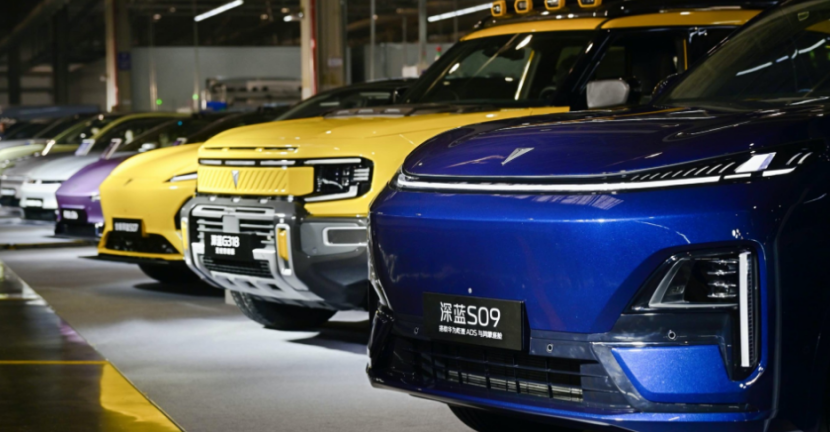
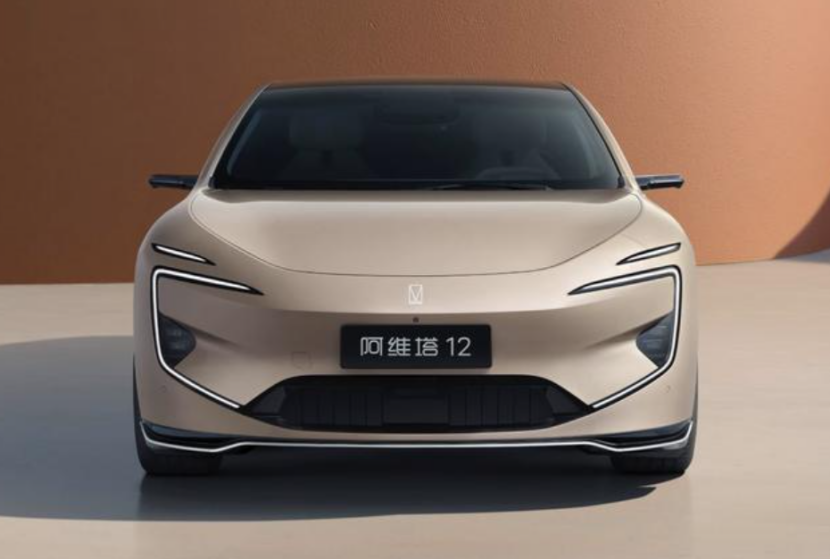
Changan's new-energy portfolio is broad, but coordination is now critical. Avatr, Deepal, Qiyuan and Yinli all need clearer roles and better use of shared resources. If Zhao can accelerate cooperation between Avatr and Deepal, Changan could share research platforms, supply-chain resources and channels more effectively.
Zhao's past work with Ford and Mazda may also support globalisation. He understands international standards and supply-chain management, which could help Changan move from product exports toward localised research, manufacturing and technology export.
Potential export assets include Changan's powertrain and manufacturing systems, 800-volt high-voltage platforms, Jinkuang battery systems, smart-driving technology and cabin software. The challenge is adapting those systems to different markets rather than exporting one domestic template.
The hard problems remain
Changan's leadership structure is now clearer, but the market has not become easier. BYD remains dominant among traditional automakers, Tesla retains strong influence, and Nio, Xpeng and Li Auto each occupy specific new-energy niches. Geely and Great Wall are also accelerating their own transformations.
Technology pressure is real. BYD's Blade Battery and CATL's Qilin Battery are already mature in the market, while Changan's solid-state battery work still needs time. In high-end vehicles, Changan still depends partly on foreign suppliers for motors and electric-control systems. Its smart-driving systems also need more data and stronger complex-scenario capability to match the leaders.
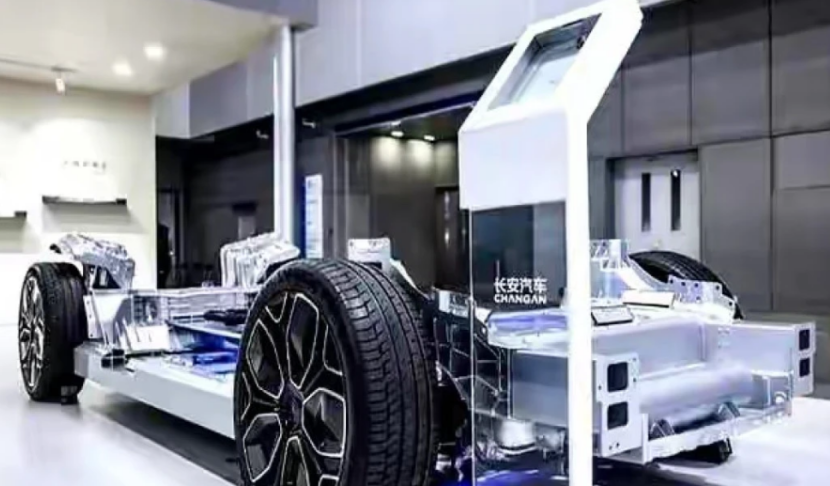
The dealer network is another major test. Large traditional automakers often struggle to turn quickly. Many Changan dealers still think in fuel-car sales terms, while EV brands increasingly build business models around full-life-cycle user service.
Fuel-car dealers rely heavily on after-sales, finance and insurance. New-energy retail requires more direct user engagement, digital operations and service consistency. Changan has introduced support policies, but changing dealer behaviour will take time and may bring higher costs and tighter margins.
An opportunity with no easy route
Zhao Fei takes over at a moment when Changan has shown unusual willingness to change. The company has assembled a more complete leadership team and signalled that it wants to move deeper into the new-energy and intelligent-vehicle market.
The opportunity is larger than the challenge if the team can find the right direction across four areas: technology, brand coordination, channels and globalisation. The harder question is whether a large central state-owned automaker can move fast enough once the leadership reshuffle is over.