
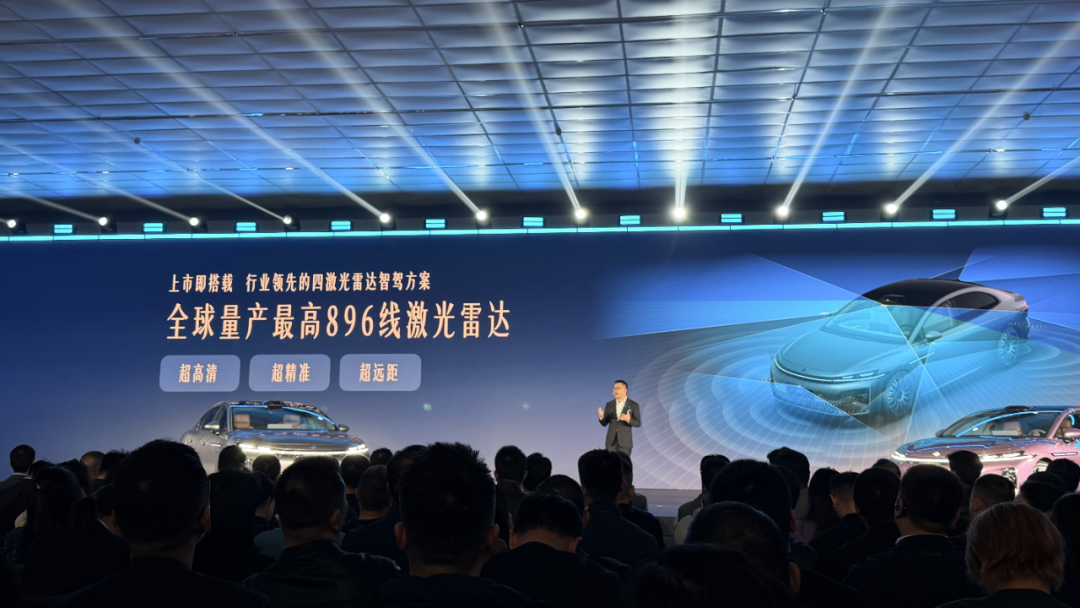
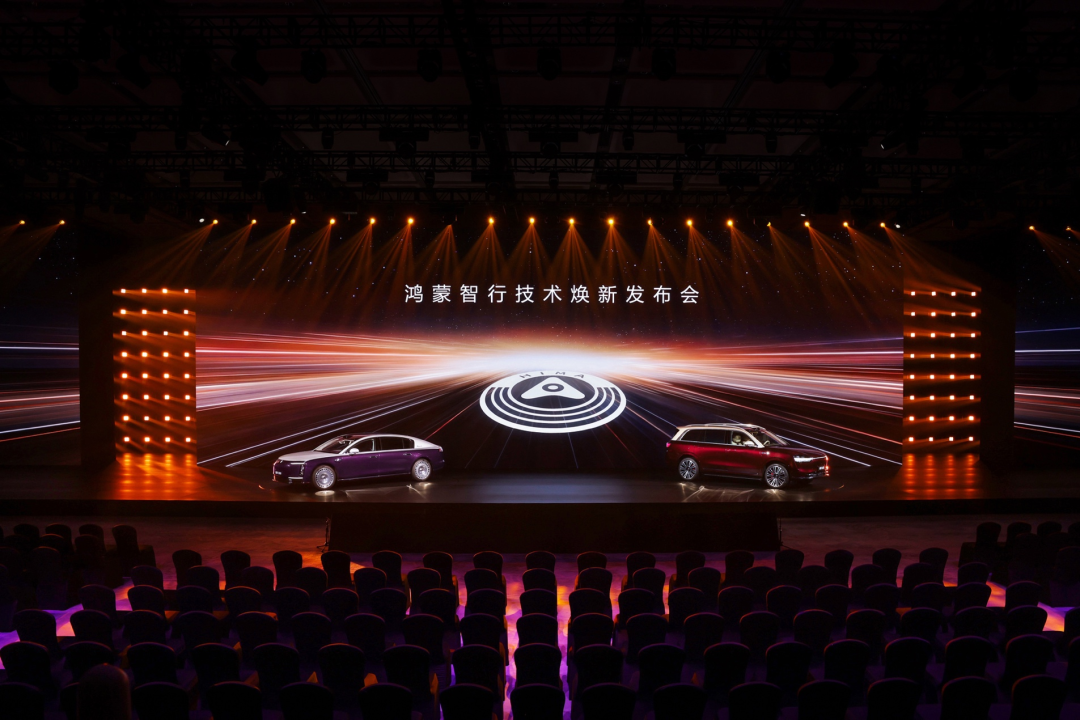
At Huawei Qiankun's recent technology refresh event, the company introduced what it called the world's highest-specification mass-produced automotive lidar: an 896-line dual-optical-path image-grade unit. Under normal industry logic, such a sensor would appear first on flagship vehicles and then move down gradually.
When Flagship Sensors Move Downmarket
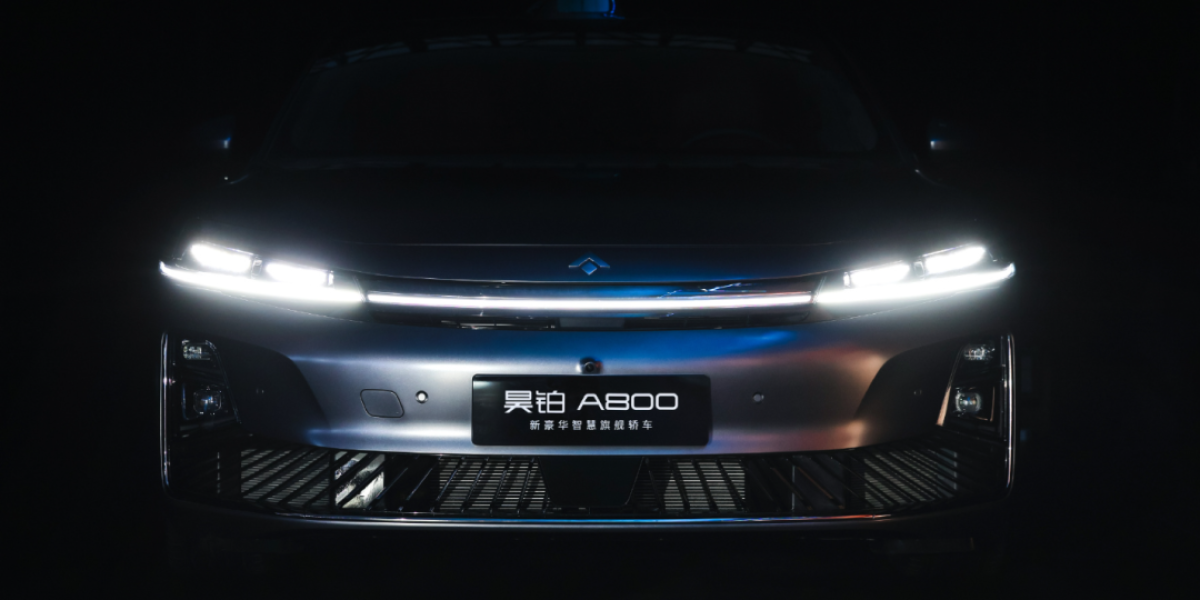
Huawei said the lidar would first be used on the Maextro S800 and Aito M9. Yet on the same evening, GAC's Hyptec A800 launched with a striking claim: after trade-in subsidies, it starts from about $23,000, and its top version uses Huawei's 896-line lidar.
That changes the framing. A sensor expected for flagship models has entered the mainstream market almost immediately. The question is no longer only how good Huawei's technology is. It is what carmakers can still use to differentiate themselves when more brands can access similar Huawei hardware and software.
What 896 Lines Means
Huawei Intelligent Automotive Solution chief executive Jin Yuzhi offered a vivid example at the launch. With the new lidar, he said, the system can see details such as a small dog wagging its tail beside a pedestrian 55 metres away.
Lidar works by emitting laser beams and using reflected light to build a three-dimensional point-cloud image. Older systems often looked granular, like an image built from scattered dots. If laser beams become dense enough, the point cloud begins to approach a true image. Huawei describes this as a shift from the 3D point-cloud era to the 3D imaging era.
The 896-line figure refers to the number of vertically emitted laser beams. More lines mean denser vertical resolution and richer detail. Huawei's previous 192-line unit was already considered advanced, while the 896-line version raises resolution more than fourfold.
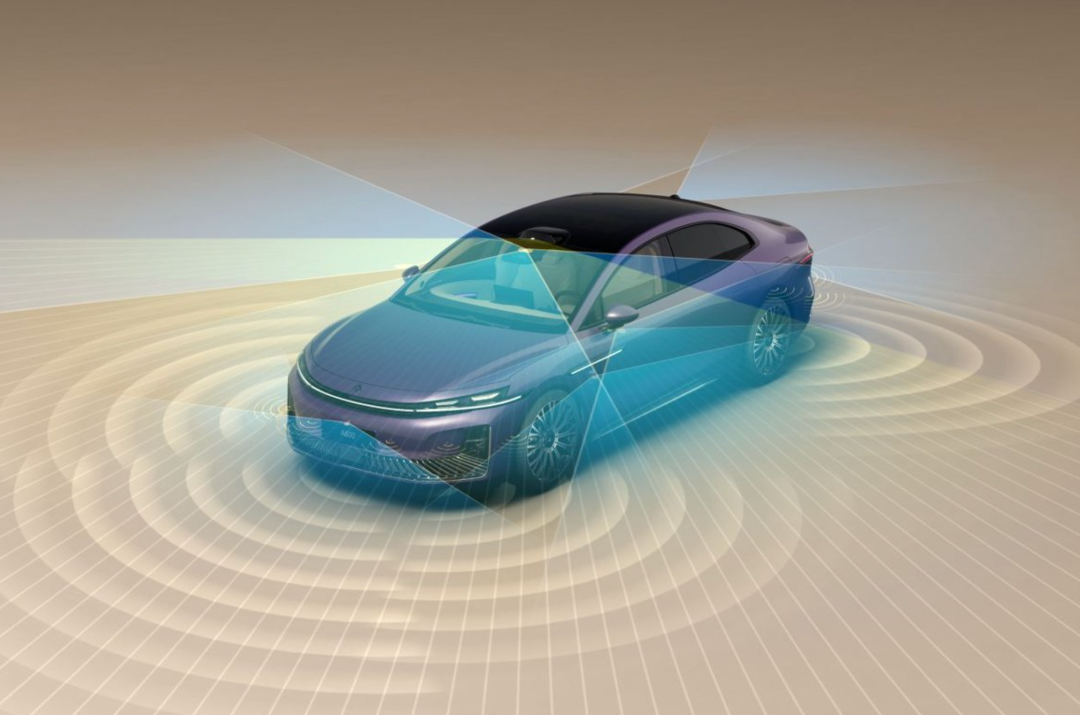
The key is Huawei's dual-optical-path architecture. One wide-angle receiving unit captures the broader scene, while one telephoto receiving unit focuses on details. The combination is similar to human vision: looking ahead while peripheral vision monitors the surroundings.
Measured data cited in the original report show that, compared with the 192-line unit, the 896-line lidar reduces minimum recognisable target height from 30cm to 14cm, extends maximum recognition distance from 100 metres to 162 metres, and increases low-reflectivity target recognition in total darkness from 42 metres to 122 metres.
Hyptec A800 as a Technology-Democratisation Case
The Hyptec A800 is the model that makes this technology shift more disruptive. The Maextro S800 and Aito M9 start at roughly $98,000 and $65,000 with 192-line lidar, while their 896-line versions start around $100,000 and $66,000. The sensor upgrade costs about $3,000 and $1,000 respectively.
The Hyptec A800 is priced from about $26,000 to $41,000 before subsidies. After manufacturer and national trade-in subsidies, the entry price falls to about $23,000, while the top version uses the same Huawei 896-line lidar.
GAC has also structured the range carefully. The entry version uses a HarmonyOS cockpit but not Huawei ADS assisted driving, keeping the price threshold low. Versions above about $28,000 come standard with Huawei Qiankun ADS 4.1. The difference between variants is mainly lidar count. The mid-range model uses a single-lidar solution, while the top version, after subsidies at about $38,000, uses a four-lidar full-spec package, including one 896-line unit.
That is a strong statement for a vehicle in the mainstream premium band. Yet GAC is trying not to define the A800 only by sensors.
Beyond Huawei: Chassis, Safety and Space
At the launch, Yang Long, vice-president of GAC's Hyptec and Aion business unit, said that a vehicle's feet must keep pace with its soul. In other words, a smarter brain requires a more capable body.
The A800 uses GAC's most advanced three-motor four-wheel-drive intelligent digital chassis. Its core capability is millisecond-level torque distribution. In as little as 10 milliseconds, the system can move torque at an individual wheel from zero to 100%. A negative-torque output function allows one rear motor to generate reverse torque, locking down the inside rear wheel during cornering for sharper rotation.
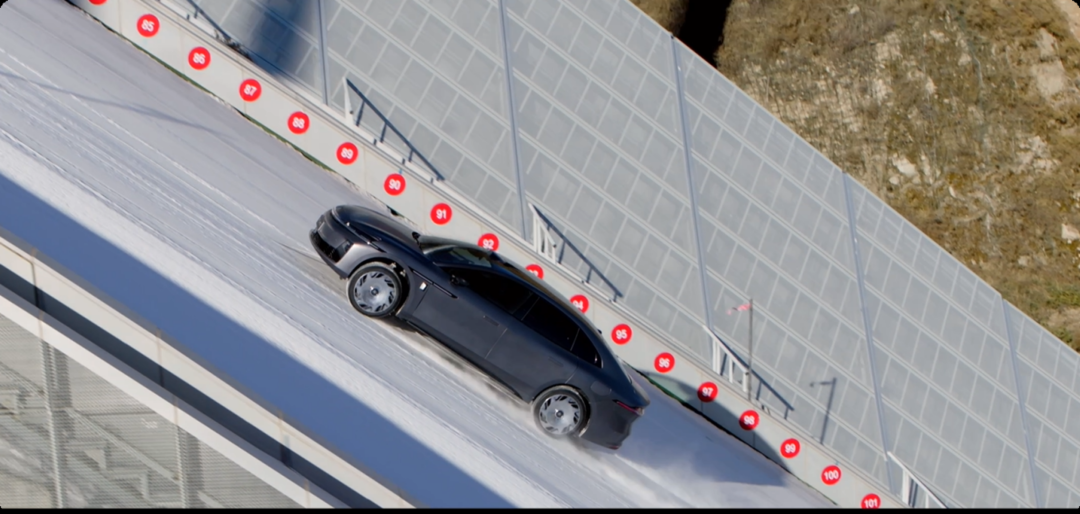
To demonstrate the chassis, Hyptec drove the A800 up the National Ski Jumping Center, known as Snow Ruyi. The challenge involved an 85-metre vertical drop, 125-metre ramp length and maximum gradient of 37.1 degrees, making it the industry's first two-person climb challenge of its kind, according to the brand.
Safety is another pillar. The A800 has completed 61 tests, six times the number required by Chinese national standards, according to GAC. It uses 14 airbags, the most in its class, and is described as the first domestic model in its class with standard second-row frontal airbags.
The vehicle uses GAC's Magazine Battery 2.0 technology and has passed a gunshot test said to be tougher than the upcoming national nail-penetration standard. GAC also promises triple compensation if a vehicle fire is caused by battery-pack thermal runaway.
Inside, the A800 offers a rear 2+1 transforming seat layout that can switch between a five-seat family configuration and a four-seat business layout. A smart centre island with an armrest screen and folding table is designed to turn the cabin into a more private mobile meeting space. These are product details Huawei cannot supply; they require automaker-level user understanding.
When Huawei Content Becomes Common
The broader market question is whether "Huawei content" can remain a moat when more carmakers use the same stack. On March 4 alone, the 896-line lidar was announced for the Maextro S800, Aito M9, Hyptec A800, new Avatr 12 and Voyah FE.
More Huawei-linked models are expected in 2026, spanning from ultra-luxury vehicles to the $30,000 range. HarmonyOS cockpits and Qiankun assisted driving are becoming common options rather than rare differentiators.
That means competition is shifting. Carmakers are no longer only asking which intelligent-driving supplier to choose. They must show how they use Huawei and what they can add beyond Huawei.
Huawei's own structure reinforces that point. Qiankun provides the technology foundation, while Harmony Intelligent Mobility is one channel for end-market implementation. For automakers, access to Huawei's systems reduces development risk and brings best-in-class capability. It also creates a new test: when intelligent driving and cockpit systems become standardised, what defines the vehicle?
Hyptec's answer is to use Huawei's intelligence but not depend on it alone. In its logic, intelligence is the brain, while chassis, safety and space remain the legs.
That may be the lesson for the wider industry. If the shine around Huawei content fades as it becomes more available, the remaining competition will return to basics: chassis tuning, supply-chain integration, user-scenario design and service-network strength.
The more intelligent cars become, the more important old-fashioned carmaking competence may become again.