
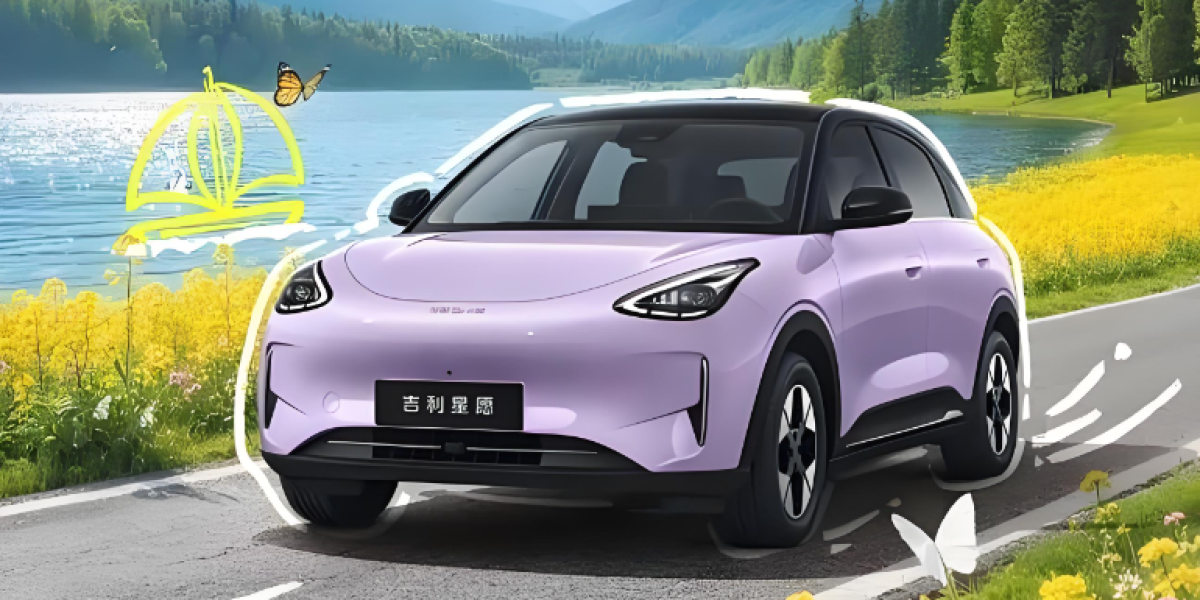
Geely's EX2 has delivered one of the clearest breakout stories in China's small-EV market.
A Small Car With Big Numbers
On March 29, the model passed 600,000 cumulative deliveries only 536 days after launch, which Geely says makes it the fastest pure-electric model globally to reach that milestone.
Across roughly 18 months, that works out to about one EX2 delivered every minute. In September last year, monthly sales exceeded 50,000 units. In China's A0-segment pure-EV market, the model has taken more than 30% share, meaning roughly one in every three cars sold in the segment was a EX2. In 2025, it became China's best-selling model across all vehicle categories.

The achievement is more surprising because EX2 entered a market already dominated by BYD and Wuling, which together controlled nearly 80% of the A0 EV segment. The category was widely seen as a red sea with fierce price competition and limited profit. Geely's success came from identifying a gap that rivals had left open.
Finding the Gap Between Cheap and Desirable
In 2023 and 2024, China's A0 EV market was split into two broad camps. At one end were entry-level mobility cars such as the Wuling Bingo, which had strong price appeal and brand awareness but lagged newer models in advanced safety and intelligent features. Even with a 333km range version, its technology iteration was slower than the broader market.
At the other end were more refined small EVs such as the BYD Dolphin. The Dolphin offered balanced product strength, but in 2023 its price band of roughly $16,000 to $19,000 remained high for many younger families. Even after the 2024 Honor Edition brought the starting price down to about $14,000, it still sat above the comfort zone of a large budget-conscious audience.

Between those poles was a vacuum. Buyers wanted affordability, but they no longer wanted a car that felt merely adequate. They wanted a small EV that did not look or feel cheap.
The gap was not only about price. In 2023 and the first half of 2024, few A0 pure EVs offered, at roughly $10,000 to $14,000, the full combination of 400km-plus range, 30kW-plus fast charging, a smart cabin with at least a 10-inch central screen and voice interaction, a wheelbase above 2,600mm, and credible safety equipment including at least four airbags and ESP.
Market timing helped. China Passenger Car Association data showed A0 sedan sales reached 543,000 units from January to July 2025, of which 538,000 were new-energy models, up 100.3% year on year. It was the fastest-growing subsegment by sales.
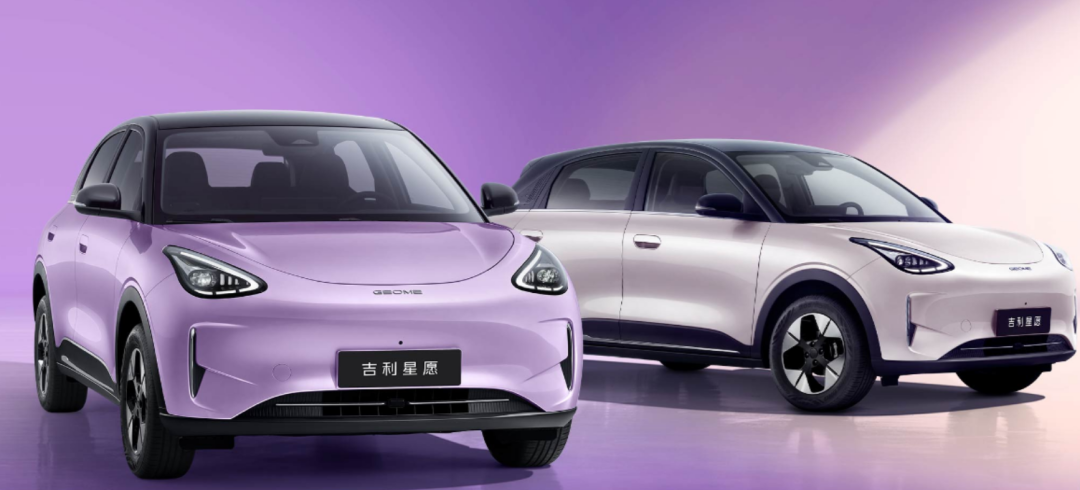
EX2 launched on October 9, 2024, priced from about $9,000 to $14,000. It was slightly more expensive than the cheapest Wuling offerings but meaningfully below the Dolphin. That placed it between quality upgrade and price accessibility: not the cheapest, not the most expensive, but positioned to feel like the best-value choice.
The launch also came with a strategic adjustment inside Geely. Group chief executive Gan Jiayue announced that the Geometry series would be folded into Galaxy, with EX2 positioned as Galaxy's volume weapon. That gave the model access to group-level technology and marketing resources, including the GEA new-energy architecture, Flyme Auto smart cabin and Aegis battery safety system.
Refusing to Cut What Users Notice
EX2's product philosophy can be summarised simply: do not cut back on the areas users notice most often. In the A0 market, many competitors must trade range for price, space for design, or intelligence for brand premium. EX2 tries to avoid a single standout feature and instead build a wide value base.
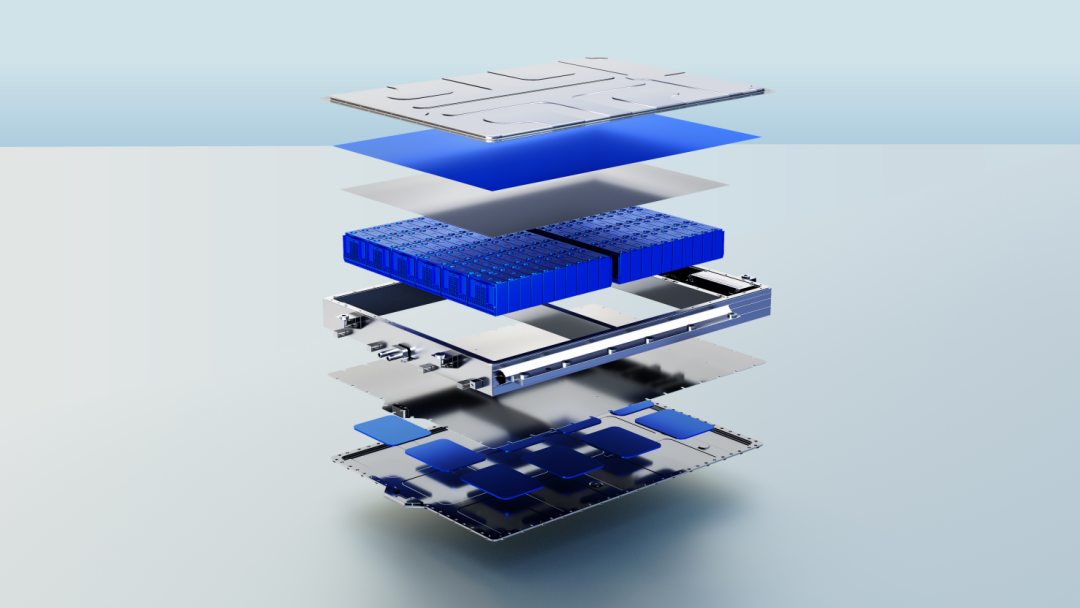
The first pillar is the battery. EX2 is described as the only model in its class to use CATL cells across the full range, giving ordinary buyers a supplier name they associate with quality and safety. The pack supports a 1.66C charging rate and can charge from 30% to 80% in 21 minutes. Liquid-cooled thermal management is standard, and Geely says charging can work in conditions from minus 30C to 55C. After 1,000 charge-discharge cycles, battery capacity retention was measured at 90.72% under verification standards twice China's national requirement.
The second pillar is driving dynamics. Small A0 cars are usually built around front-wheel drive and a rear torsion beam. EX2 uses rear-wheel drive and a multi-link independent rear suspension, an unusual setup in the class. Rear-wheel drive helps traction during acceleration and leaves the front wheels to focus on steering. Geely's chassis tuning gives the car a top speed of 140kph, a zero-to-50kph time of 3.9 seconds and energy consumption of 10.7kWh per 100km.
The third pillar is safety. A recent crash in Thailand became an unplanned proof point: a EX2 was hit by a fully loaded 18-wheel truck, squeezed from front and rear into a bridge barrier, and suffered heavy body damage, yet the passenger cell remained intact and the owner escaped with minor injuries.
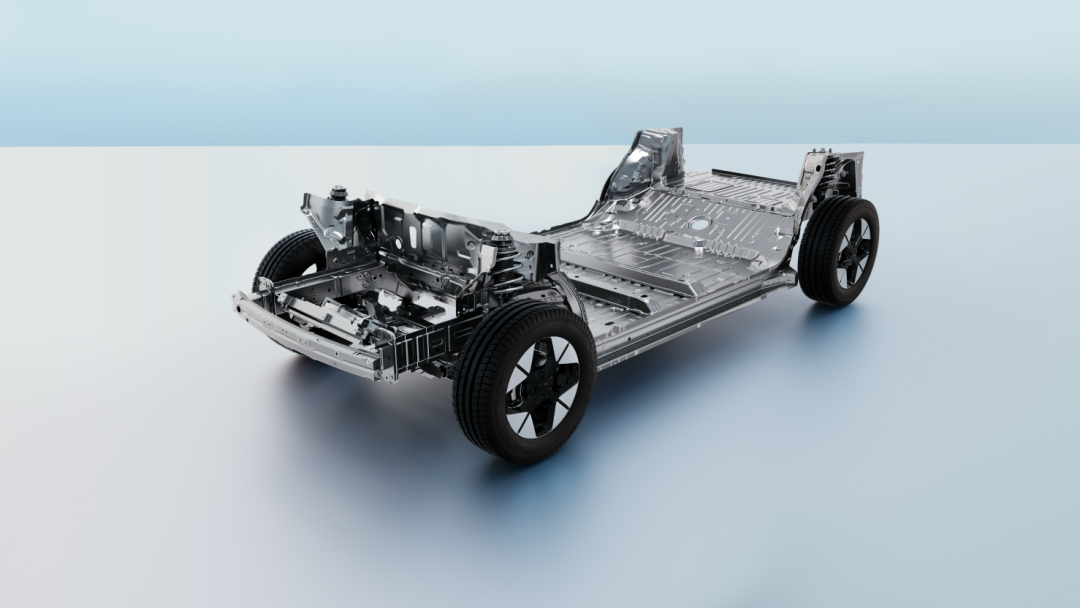
Behind that result is a dedicated aluminium battery protection structure. The side-beam protection distance reaches 149mm, well above the roughly 100mm level common in the class. Lower sill and subframe structures add passive protection, while optimised A-pillars, front and rear windscreens and side-window visibility deliver a claimed 279-degree field of view to reduce blind spots.

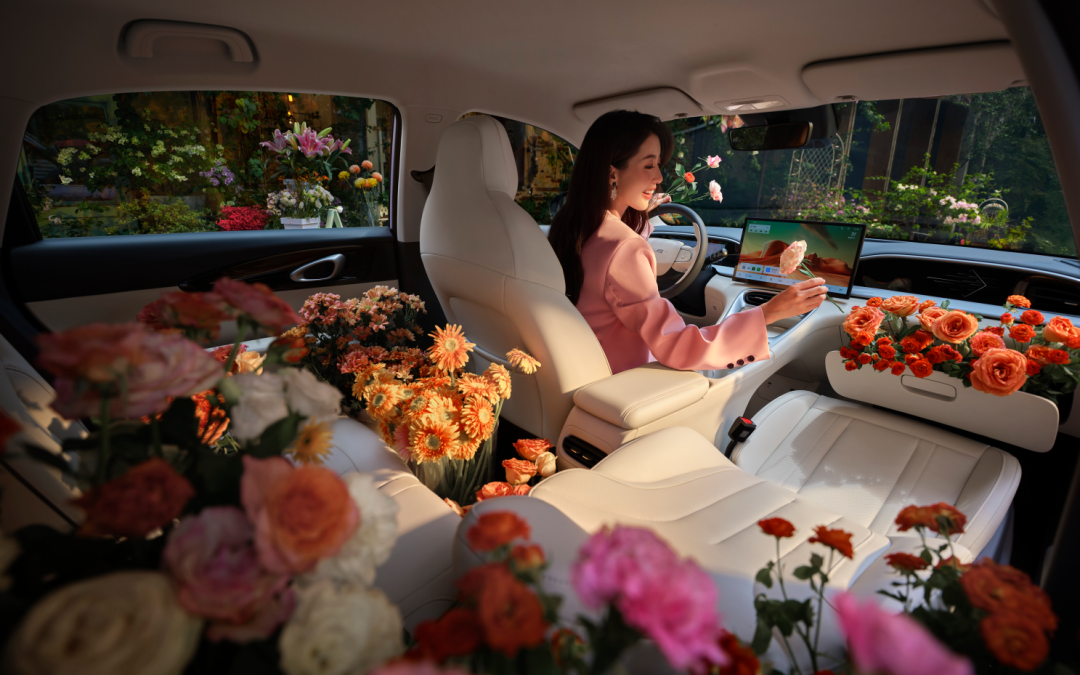
The fourth pillar is space. Built on Geely's GEA new-energy architecture, EX2 measures 4,135mm long, 1,805mm wide and 1,570mm high, with a 2,650mm wheelbase close to that of traditional A-segment petrol cars. It offers a real five-seat layout, a rare 70-litre front trunk, a 10-litre passenger-side drawer storage compartment and up to 1,320 litres of luggage space with the rear seats folded.
The Cost-Control Engine Behind the Price
If a start-up tried to combine CATL cells, rear-wheel drive, a smart cabin and a spacious body, the price could easily move above $21,000. EX2 delivers the package at about $9,000 to $14,000 because Geely brings the manufacturing and purchasing power of a large incumbent.
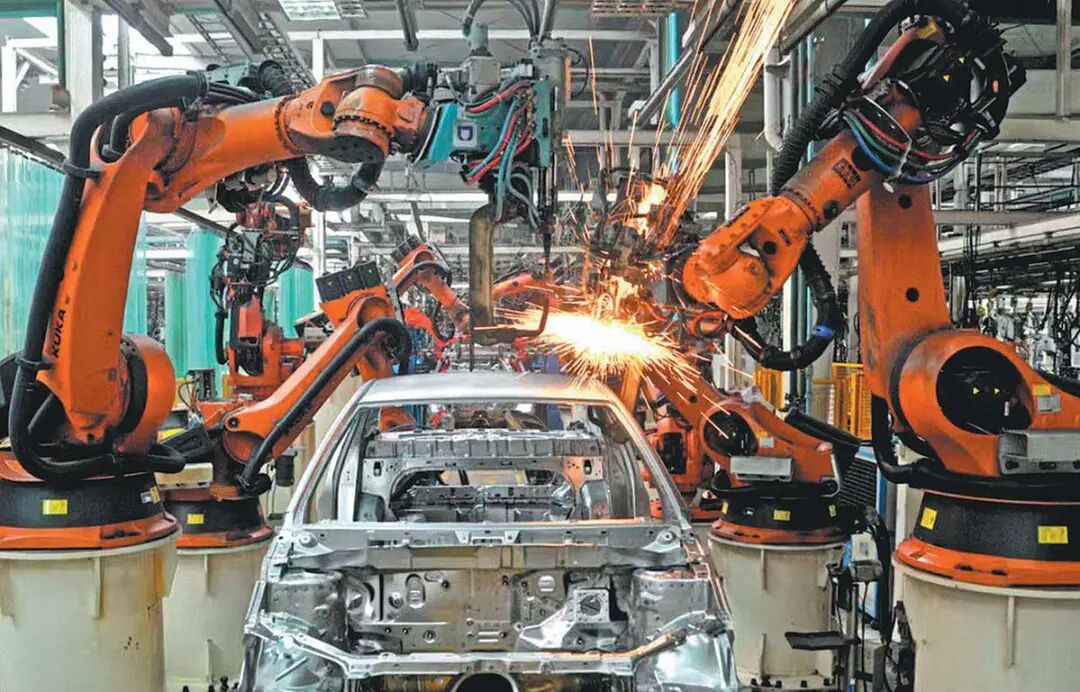
The car is built at Geely's Xiangtan plant, which uses a new-energy and export-driven production model. The plant has cut single-vehicle production time to 55.4 seconds and reached annual capacity of 320,000 units in 2024. Its GEA architecture and flexible production line can support petrol, hybrid and pure-electric models.
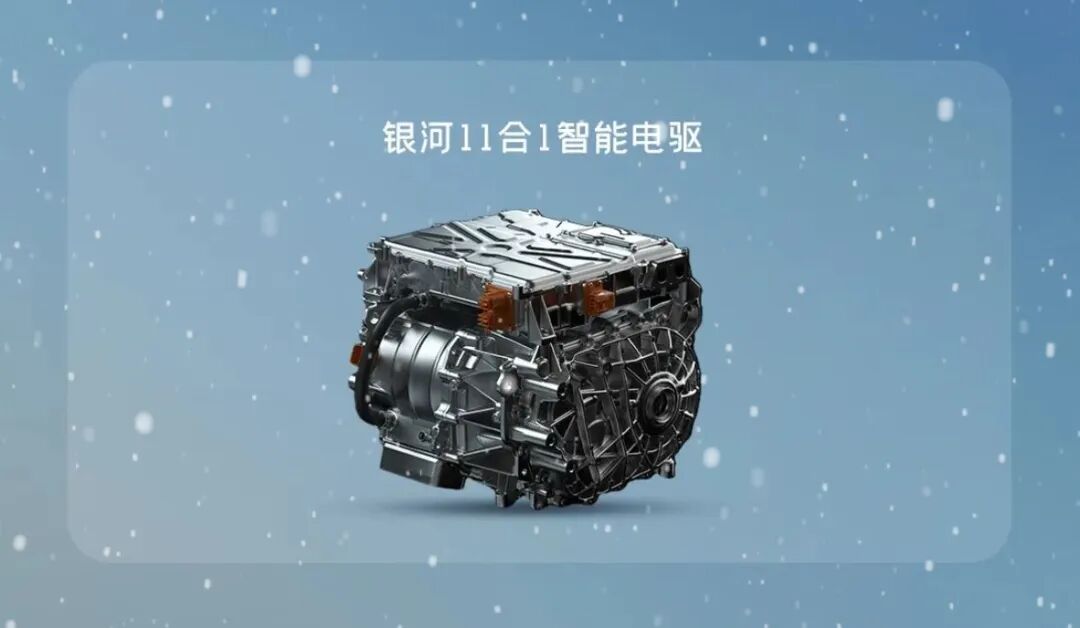
On the supply-chain side, EX2 combines top-tier suppliers with core in-house development. CATL supplies the cells, while Geely's self-developed 11-in-1 intelligent electric-drive system produces 85kW and achieves 89.2% overall efficiency. The system has passed China Automotive Research Institute certification for high-reliability electric drives, after 3,000 hours of bench durability testing and 2 million kilometres of real-road validation.
Geely's scale also improves purchasing power. A carmaker selling at million-unit scale can obtain components at lower cost than a smaller rival, and that advantage flows directly into the EX2's equipment-price balance.
The model also sits inside a broader Galaxy portfolio rather than standing alone. Between the Galaxy E5, which starts at about $15,000, and EX2, Geely covers the pure-EV range from roughly $8,000 to $21,000. Shared development, tooling and marketing costs across multiple models reduce fixed cost per car.
User Operation, Not Just Discounts
At the 600,000-delivery milestone in March 2026, EX2 added a new Sakura Pink colour as a free option, targeting younger users and female buyers with a softer, lower-saturation tone. The brand also announced a crossover with a popular youth-culture IP and offered blind-box benefits to 600,000 existing owners through the Galaxy app.
That follows a consistent marketing pattern: user-friendly gestures rather than only cash discounts. EX2 has used store visit benefits, winter events on the Songhua River in Harbin and public-welfare activity in Liangshan to build emotional attachment around a budget EV.
The service base matters as much as the campaigns. Geely says it has more than 2,600 service outlets, with 100% coverage in first- and second-tier cities and more than 99% coverage in third- and fourth-tier cities. Roadside assistance can respond within three minutes and dispatch within 10 minutes. First owners of non-commercial vehicles receive lifetime warranty on the three-electric system. Geely's Haohan charging ecosystem has also brought more than 2,100 self-built charging stations online across more than 210 cities.
A New Standard for A0 EVs
EX2's success is not easily copied. Its moat comes from Geely's manufacturing scale, supply-chain leverage, research system and portfolio strategy. Those are difficult for smaller start-ups to replicate quickly.
The wider impact is that EX2 is forcing the A0 market to upgrade. Products that assume small-car buyers will accept "good enough" equipment are likely to lose relevance. The model has turned value from a low-price argument into a full-product argument.
For China's auto industry, the lesson is that the next blue ocean may not be found by cutting prices further. It may lie in delivering real product strength at a price point where buyers had been taught to expect compromise.