Geely's 2025 financial results stood out in a Chinese auto market still defined by price wars.
Profit Growth Outruns Revenue
Total revenue reached about $47.6 billion, up 25% year on year. Core net profit attributable to shareholders, excluding non-recurring items, rose 36% to roughly $2 billion. Cash reserves climbed 46% to about $9.4 billion.
Those figures matter because many Chinese carmakers are still caught in a pattern of trading price for volume, increasing revenue while weakening profit. Geely delivered growth across revenue, profit and cash at the same time, with profit rising faster than sales income.
The result was not driven by a single business windfall. It reflected a broader improvement across product structure, cost control, brand value and global operations. In that sense, Geely's 2025 performance was less a passive benefit from market recovery than the result of long-term strategic adjustment.
High-Quality Profit, Not Empty Scale
Revenue growth alone only proves that a company sold more or sold at higher prices. It does not prove quality of growth. In China's current market, some carmakers have achieved large revenue numbers through deep discounts, leaving margins under heavy pressure.
Geely's 2025 picture looks different. Net profit attributable to shareholders rose 36%, revenue rose 25%, sales rose 39%, cash flow rose 46%, and gross profit rose 25%. Revenue set a company record at about $47.6 billion, while core net profit growth outpaced revenue growth by 11 percentage points.
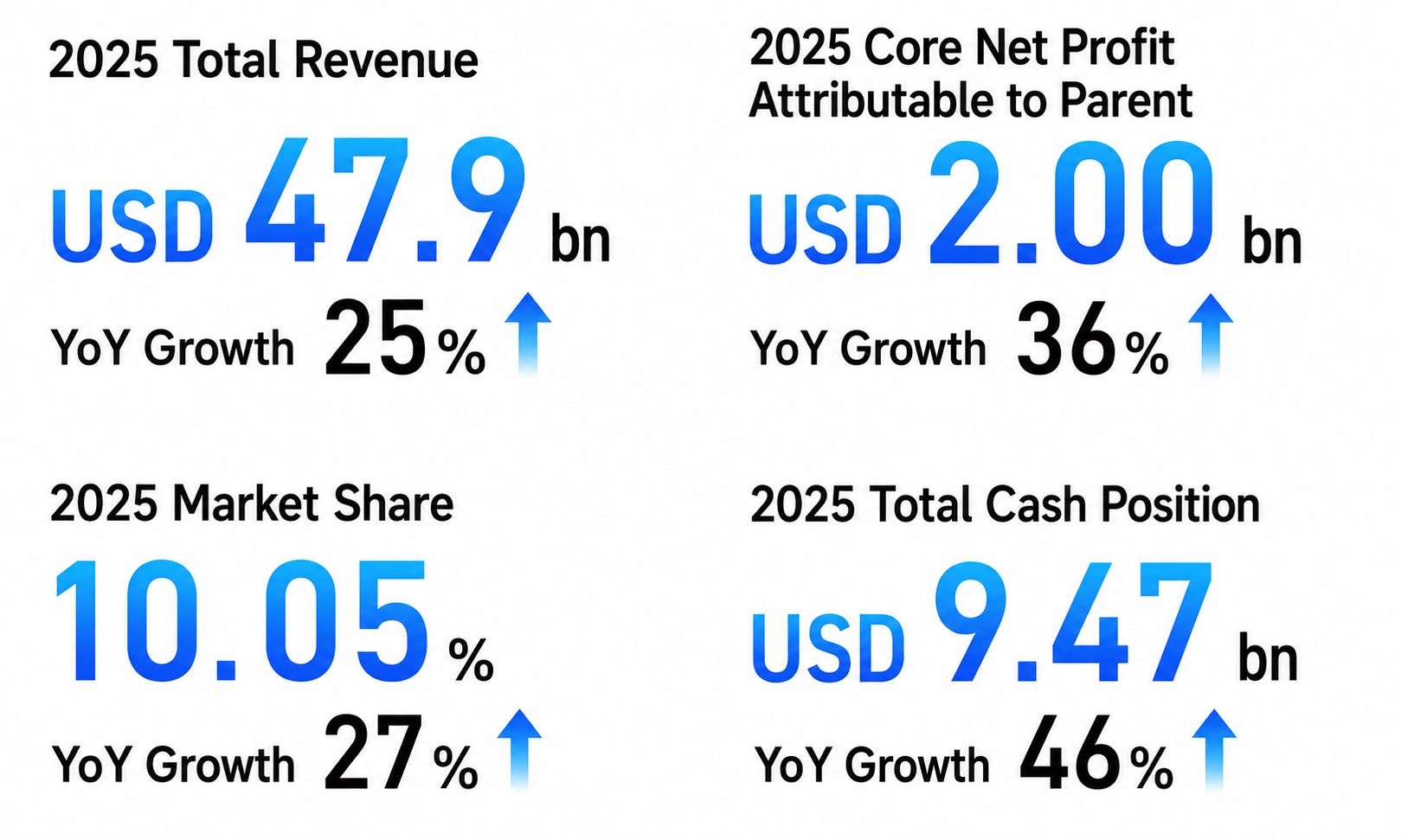
That combination points to improved profit efficiency. Even with volatile raw-material prices and relentless terminal competition, Geely did not fall into the trap of selling more while losing more.
The cash balance is especially important. Automaking is capital-heavy and long-cycle. Cash is the buffer that allows a company to keep investing in research, global expansion and supply-chain integration when the market turns hostile. Geely's roughly $9.4 billion cash reserve gives it more strategic room than many peers.
The underlying driver is a dual engine of scale and structure. Scale helps spread costs. Higher-end brands and new-energy models lift value. Geely is reducing dependence on low-price volume at a time when much of the industry is still trying to survive through thin-margin discounting.
The One Geely Strategy
If the financial results are the visible outcome, the "One Geely" strategy is the operating logic behind them.
Geely has long had many brands covering different markets and price bands. That breadth created opportunity, but also inefficiency: scattered research resources, repeated supply-chain investment and brands that sometimes worked in isolation.
One Geely is designed to break down those internal barriers. Technology, research, supply chain, production and channels are being integrated so the group can use shared resources rather than duplicated systems.
The benefits show up most clearly in platform-based vehicle development. From CMA to SEA and dedicated hybrid architectures, Geely's modular platforms now support multiple brands and model classes. That shortens development cycles, reduces research cost and improves consistency in product quality and technology.
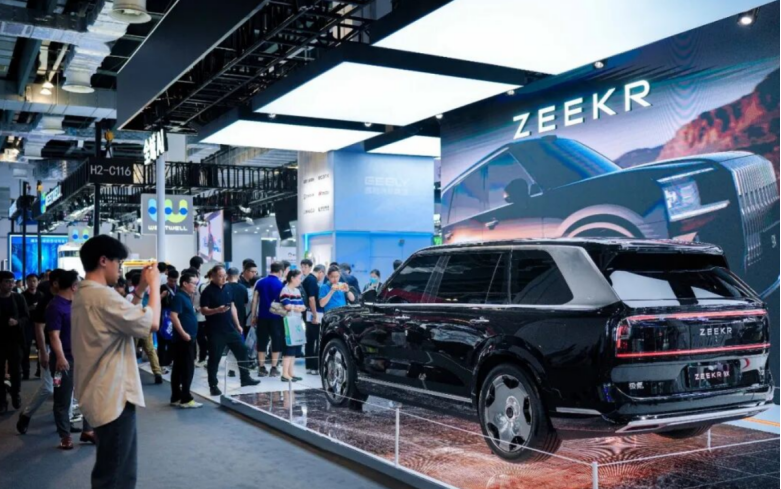
Geely now covers a wide price range with clearer brand positioning and less internal overlap. Petrol and new-energy products run in parallel, mainstream models protect the base, and higher-end brands create room for premium pricing. That gives Geely more resilience than a company dependent on one segment or one technology route.
Deep system reform does not translate neatly into one year's profit line. Yet 2025 was the first full financial year in which One Geely's effects were visible, and the results suggest that the strategy is starting to work. The next three to five years will show how much further the efficiency gains can go.
Globalisation Moves Beyond Exports
Many Chinese automakers now talk about going overseas, but much of the industry still relies on a basic model: produce in China and sell abroad. That approach faces tariffs, transport costs and localisation challenges.
Geely is trying a different route, built around partnerships and technology export. It is no longer only shipping complete vehicles. It is embedding itself into global industrial chains.
The partnership with Renault is a useful example. In markets such as South America and Europe, Renault already has plants, channels and operating experience. Geely can supply technology and jointly launch products without having to build every asset from zero. That reduces expansion cost and limits exposure to trade friction.
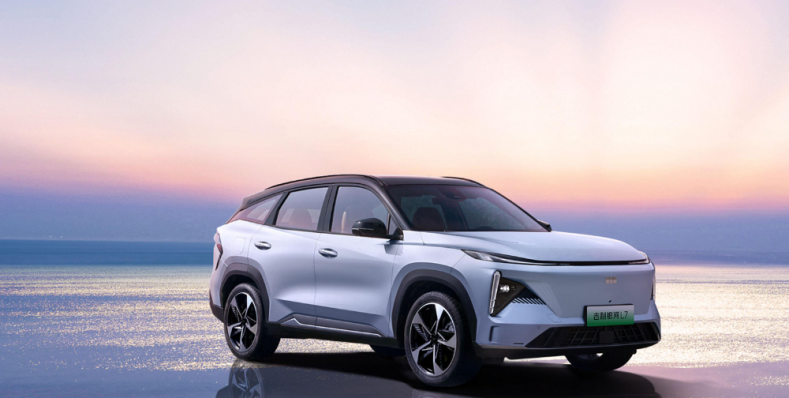
The more important shift is from car production to technology output. HORSE Powertrain, the joint venture between Geely and Renault, increased profit 2.5 times in 2025 and entered the world's top five powertrain groups. That means Chinese core powertrain technology is no longer only serving domestic brands. It is becoming an independent global business.
Geely's profit model is expanding from vehicle sales to a combination of cars, technology services and supply-chain enablement. That creates a new growth channel at a time when domestic competition is compressing margins.
A 2026 Test of Scale and Discipline
Geely has set a 2026 sales target of 3.45 million vehicles. The year is expected to bring a heavy product cycle across multiple segments, while One Geely's system benefits, globalisation and intelligent-vehicle investments continue to unfold.
The 2025 financial report is therefore more than a strong set of numbers. It shows that Geely has clarified its internal system, built a more sustainable globalisation route and entered a period where long-term strategy is beginning to produce financial results.
China's auto industry is a marathon rather than a single sales year. Geely's latest performance suggests that a Chinese manufacturer can compete globally without relying only on low prices. Its challenge now is to prove that high-quality profit can be sustained as the industry shake-out intensifies.