

Great Wall Motor’s first-half 2026 results have created a sharp disconnect between its sales performance and profitability.
A Profit Collapse Behind Rising Sales
The Chinese automaker is selling more vehicles, expanding overseas rapidly, yet its reported profit has fallen by more than half — turning its latest financial update into one of the most debated earnings stories in China’s auto industry.
On July 14, Great Wall Motor said it expects first-half 2026 net profit attributable to shareholders to reach $330 million to $370 million, down 59% to 63% from $890 million in the same period last year. The gap of nearly $560 million immediately triggered investor concerns over where the lost earnings had gone.
The market reaction was swift. Citi downgraded Great Wall Motor’s rating from “buy” to “sell” and cut its target price sharply, raising questions about the company’s profitability model and strategic direction.
The Missing Profit Was Not From Vehicle Sales
A closer look at the financial figures shows that much of the decline came from one-off items rather than a collapse in core operations. In the first half of 2025, Great Wall benefited from around $320 million in Russian vehicle scrappage tax-related subsidies and about $210 million in foreign exchange gains.
Together, these temporary gains contributed almost $530 million to last year’s results. In the first half of 2026, delayed overseas subsidy recognition and currency movements reversed the effect, creating a large year-on-year comparison gap.
Analysts at Jefferies estimated that after removing these non-recurring factors, Great Wall’s underlying first-half profit remained broadly stable at around $900 million to $910 million.
Growth Abroad, Pressure at Home
Great Wall’s sales figures tell a more complicated story. The company delivered 583,895 vehicles in the first six months of 2026, up 2.48% year-on-year. Overseas sales reached 291,426 units, rising 47.44% and approaching half of total deliveries.
Yet the domestic market remains challenging. China’s new energy vehicle penetration rate has moved beyond 60%, while Great Wall’s new energy vehicle sales fell 9.8% year-on-year to 145,000 units in the first half. New energy models accounted for only 29.4% of passenger vehicle sales, leaving the company behind a market that is rapidly shifting toward electrification.
The Hybrid and EV Strategy Debate
Great Wall has maintained a strong focus on fuel efficiency and plug-in hybrid technology while rejecting extended-range electric vehicles. Executives have repeatedly argued that technical efficiency should guide product decisions.
But the auto market is increasingly rewarding products that combine electric driving, smart cabins and competitive pricing. The company’s strategic discipline may become a disadvantage if consumer preferences continue moving faster than its product roadmap.
Brand Momentum Begins To Slow
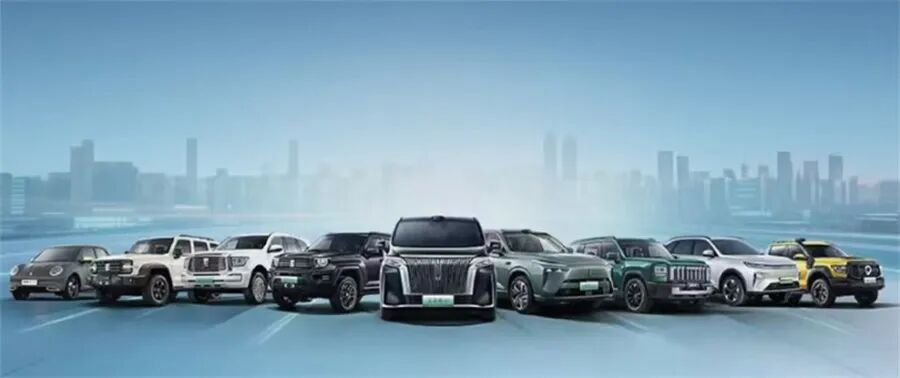
The company’s major brands have faced increasing pressure. Tank, once considered one of Great Wall’s strongest profit engines, reported June sales of 15,713 units, down 27.16% year-on-year. The Tank 300, previously selling close to 10,000 units monthly, has dropped to around 3,000 units this year.
Haval sales declined 3.38% in June, while Wey fell 29.48%. Although Ora achieved strong growth driven by new models, its smaller scale limits its ability to offset weakness elsewhere.
A Global Expansion Story Facing New Tests
Great Wall remains one of China’s most internationally expanded automakers. Overseas growth, European distribution expansion and production development in markets such as Brazil provide important opportunities.
However, the company faces a more demanding phase. Its annual sales target of 1.8 million vehicles requires a significant acceleration in the second half of the year, while investors are becoming increasingly cautious after several years of missed targets.
The Next Chapter Depends on Execution
New models including updated Tank products, Haval SUVs and Wey vehicles could provide fresh momentum. Overseas growth may also continue supporting the company’s long-term strategy.
But Great Wall Motor’s next challenge is no longer simply increasing sales. It must prove that its technology choices, brand positioning and global expansion can translate into sustainable profits in an automotive market undergoing its biggest transformation in decades.