
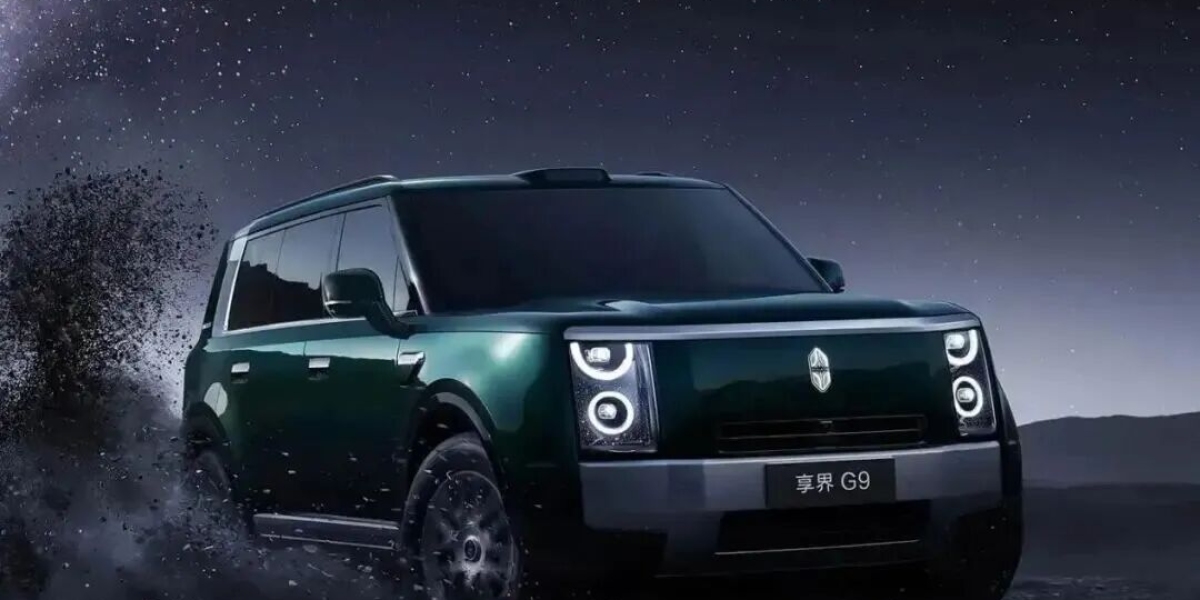
“More rugged than luxury, more luxurious than rugged.” That was how Richard Yu, Huawei’s executive director and chairman of its consumer business group, framed the Stelato G9 as the model opened for pre-orders on August 5, 2026.
The first boxy SUV sold through Huawei’s Harmony Intelligent Mobility Alliance, or HIMA, starts at about $65,000. Stelato said orders exceeded 5,100 units within two hours, a strong opening for a vehicle entering one of China’s increasingly crowded premium SUV segments.
Yet the early order count is less revealing than the contradictions built into the G9 itself. It uses a unibody structure rather than the body-on-frame layout traditionally associated with serious off-roaders. It carries the visual language of a rugged SUV but comes with an L3-ready driver-assistance architecture as standard. And while the industry broadly sees its use case as roughly 80% urban driving and 20% light off-roading, it will inevitably be compared with vehicles such as Great Wall Motor’s Tank 700 and BYD’s Fang Cheng Bao Bao 8.
The larger question is therefore not whether the G9 can out-climb a conventional off-roader. It is whether Huawei and BAIC can help redefine what buyers expect from a premium “boxy” SUV in the electric and intelligent-vehicle era.
How Much Off-Road Ability Does the G9 Really Need?
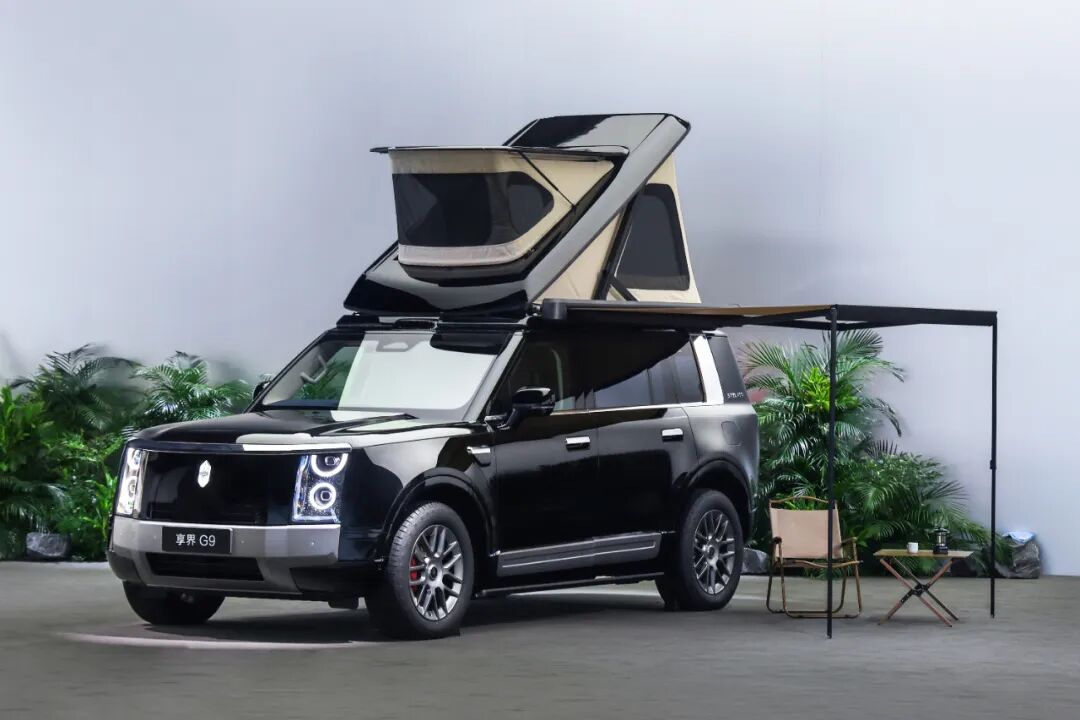
The most immediate debate around the Stelato G9 concerns its body structure. Instead of a conventional ladder-frame chassis, the SUV uses a unibody architecture reinforced by an integrated internal frame. The engineering compromise is straightforward: preserve the comfort, refinement and noise isolation expected from a luxury road-going SUV while adding enough structural strength for rougher terrain.
That formula is not new. Carmakers have repeatedly tried to combine unibody construction with more serious off-road capability. The same question follows each attempt: is the structure rigid enough when conditions become difficult?
On paper, the G9 is equipped well beyond the requirements of an ordinary urban SUV. It has a 23-degree approach angle, a 26-degree departure angle and a claimed wading depth of 900mm. The latter exceeds the 700mm figure cited for a standard Mercedes-Benz G-Class in the source material and matches the quoted factory figure for the Land Rover Defender.
Its chassis hardware includes front double wishbones, a five-link rear suspension, closed dual-chamber air springs, continuously variable dampers with dual-valve control and rear-wheel steering of up to 12 degrees in either direction. Higher-specification versions add an 800V fully active disconnecting anti-roll bar and Huawei’s adaptive differential-lock electric-drive system.
For committed off-road enthusiasts, that still may not settle the argument. A Tank 300, for example, offers a 33-degree approach angle, and a body-on-frame layout retains clear advantages in structural rigidity under extreme articulation, rock crawling and prolonged heavy-duty use.
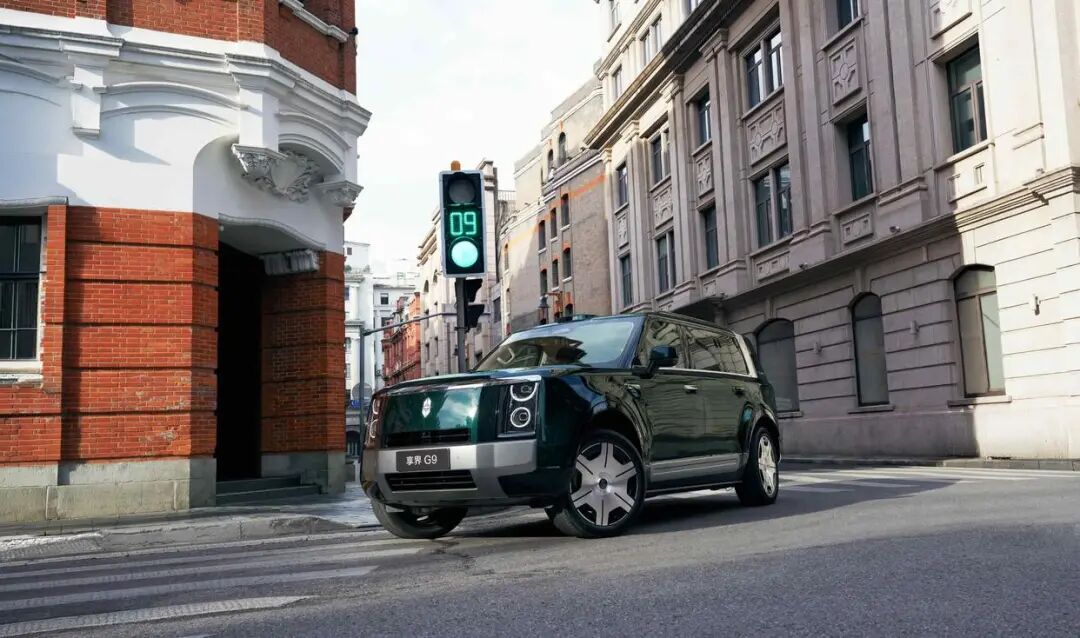
But the G9 does not appear to be designed around that customer. Its target is closer to the buyer who spends most of the year in cities and only occasionally ventures onto gravel roads, campsites, snow, mud or moderately difficult trails.
That distinction matters because China’s boxy-SUV boom is increasingly being driven by the appearance and lifestyle associations of off-road vehicles rather than by demand for extreme off-road capability itself. According to the source article, 42 boxy SUV models recorded combined sales of 447,600 units in the first half of 2026, while sales of genuinely hardcore body-on-frame off-roaders did not rise at the same pace.
BYD’s Fang Cheng Bao Tai 7 illustrates the shift. It sold 94,417 units in the first half of the year, according to the article. Its appeal was tied less to extreme terrain performance than to generous dimensions, an efficient hybrid powertrain and a highly recognisable boxy design.
The G9 follows the same market logic from a more premium, technology-heavy direction. The unibody structure is intended to improve on-road comfort and quietness; reinforcement and electronic chassis systems provide capability away from paved roads; Huawei’s software, cockpit and driver-assistance technology are then used to differentiate the overall experience.
That amounts to a broader bet: in the electrified era, “ruggedness” may no longer be defined primarily by mechanical architecture. It can increasingly be sold as a combination of chassis capability, software control, comfort, intelligence and design.
The limitations remain real. A unibody SUV is unlikely to match a dedicated body-on-frame vehicle in repeated extreme rock crawling or prolonged punishment over severe terrain. For buyers who rarely face those conditions, though, that disadvantage may have little practical relevance.
The G9 Is Entering the Most Crowded Part of the Boxy-SUV Boom
Stelato describes the G9 as occupying the space between urban luxury and hardcore off-roading. That sounds like an open niche, but it may be one of the most contested parts of China’s SUV market.
The source article estimates that annual sales of boxy SUVs in China could reach 1.5 million to 1.6 million units in 2026, approaching 12% of the broader SUV market. In 2020, annual sales of similarly styled SUVs were just 131,000 units.
The category is still expanding, but the pace of growth is slowing as the number of entrants rises. That is an early sign that the market is moving from rapid category creation toward a fight for share.
The internal structure of the segment is also changing. The success of the Fang Cheng Bao Tai 7 suggests the boxy shape can be separated from the traditional idea of a hardcore off-roader. Many customers want the visual identity of a rugged SUV without necessarily needing the mechanical package associated with one.
As a result, competition is shifting toward family usability: interior space, charging speed, cabin comfort, driver-assistance capability and everyday efficiency are becoming as important as suspension travel or body construction.
The premium end of the traditional off-road market remains relatively small. The source article says the Tank 700 New Energy recorded 7,144 retail sales in the first half of 2026, while the Fang Cheng Bao Bao 8 had yet to reach comparable scale. The G9’s roughly $65,000 entry price places it just above the approximately $63,000 starting price of the Tank 700 Hi4-T and below more expensive luxury alternatives.

At that price, buyers are unlikely to accept a vehicle that is merely competent across several areas. They will expect a product with a clear reason to choose it over established rivals.
Stelato is using size and comfort as part of that argument. The G9 has a 3,160mm wheelbase, longer than the 3,000mm figure quoted for the Tank 700 and the 2,920mm wheelbase of the Bao 8. Five- and six-seat configurations are offered, with the six-seat model featuring individual second-row captain’s chairs with ventilation, heating and massage functions.
Its competitive set also extends beyond rugged-looking SUVs. Huawei-backed Aito M9 and Li Auto L9 buyers are shopping in a similar roughly $74,000 budget range and prioritise technology, space and luxury even without traditional off-road styling.
The G9 therefore has to establish a position between the Tank brand’s rugged image, Aito’s technology-led premium appeal and Li Auto’s family-focused luxury proposition. Its styling may open the door, but the real contest will be over how convincingly it combines those attributes in everyday use.
For BAIC BluePark, the G9 Is About More Than One Model
The intensity of the competition gives the G9 a second role: it is also a test of whether BAIC BluePark can turn rising sales into a stronger premium business.
BAIC BluePark delivered more than 100,000 vehicles in the first half of 2026, according to the source article. Its Arcfox brand contributed about 80,600 units, up 65.88% from a year earlier, while Stelato delivered about 21,000 vehicles, an increase of 119.58%.
Profitability has yet to recover. BAIC BluePark expected a first-half net loss attributable to shareholders of roughly $262 million to $292 million, though the loss had narrowed from the same period a year earlier.
Stelato has already begun to establish itself in the roughly $44,000-to-$59,000 premium range. The S9 and S9T have ranked among the stronger-selling new-energy sedans priced above about $44,000 for several months, according to the article, while the average transaction price of their main-selling versions has reached around $52,000.
The G9’s job is to push the brand’s pricing power higher. If Stelato can move its average transaction level beyond roughly $59,000, BAIC BluePark’s premium strategy would begin to look less dependent on a single successful sedan line and more like a broader portfolio.
The model also reflects the depth of BAIC’s relationship with Huawei. The two companies first signed a cooperation agreement in 2017. In 2021, an Arcfox HI model introduced Huawei’s full-stack technology solution, and in 2023 the partnership expanded into the Smart Selection model that created the Stelato brand.
The source article says the G9 has received a Beijing road-test licence for L3 automated driving at speeds of up to 120km/h, making it the first pre-sale mass-production model in China to receive that specific qualification.
Yet the more consequential difference may be how Stelato combines intelligence with chassis control. Rather than treating off-road hardware as a standalone selling point, the G9 is designed around tighter integration between software, electric drive systems and the underlying chassis.
Huawei and BAIC Are Selling a Lifestyle, Not a Rock-Crawling Machine
The market has begun to frame the Stelato G9 and Aito M9 as two flagship “9-series” SUVs within Huawei’s wider automotive ecosystem: one leaning toward urban luxury, the other extending the proposition toward a broader range of road and outdoor scenarios.
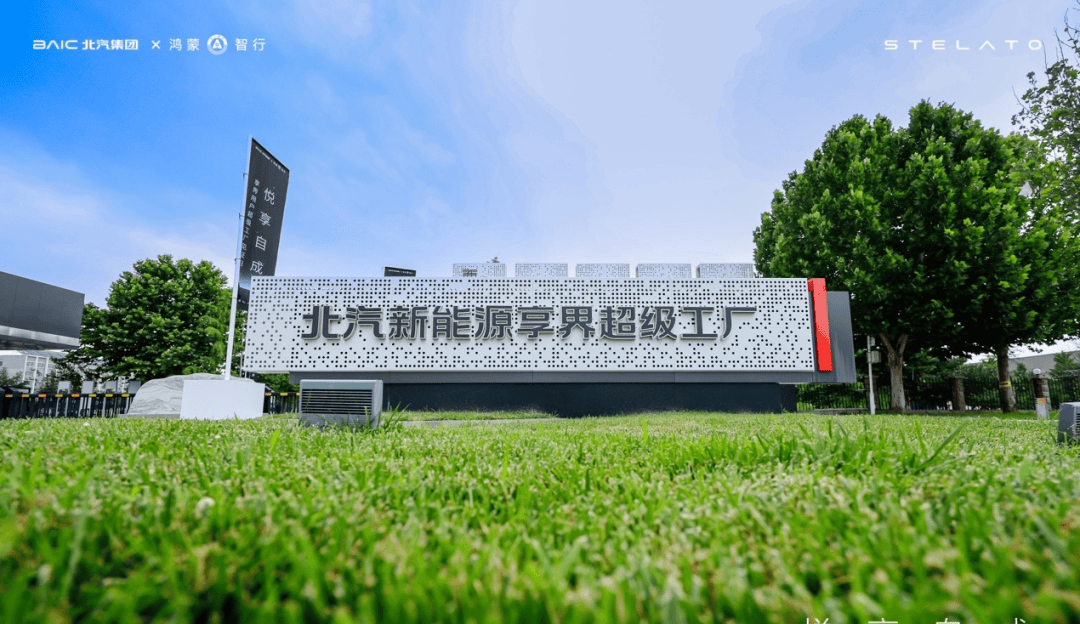
The Stelato factory itself is presented as part of that proposition, combining BAIC’s manufacturing experience, Mercedes-Benz-influenced production standards cited by the source article, and Huawei’s intelligent-vehicle technology.
That makes the G9 more than a single-model launch. It is a test of whether an ecosystem built around manufacturing, software, intelligent driving and premium positioning can compete with brands whose identities were formed around either traditional off-road engineering or family-oriented luxury.
Whether the G9 can “disrupt” the hardcore off-road market ultimately depends on how that market is defined. If the benchmark is extreme rock crawling and sustained heavy-duty expedition use, the G9 is not aimed at replacing a dedicated body-on-frame off-roader.
If ruggedness increasingly becomes a lifestyle label combining city comfort, outdoor capability, technology and visual identity, the vehicle may be entering a much larger opportunity.
The 5,100 pre-orders recorded in two hours suggest there is early demand. The more meaningful test will come after deliveries begin in the third quarter, when buyers can judge whether a 5.2-metre boxy SUV with a 437kW dual-motor system, 900mm wading depth and an L3-ready driving architecture can make its mixture of luxury and ruggedness feel coherent rather than contradictory.
Whatever the sales outcome, the G9 already points to a changing competitive rulebook. China’s boxy-SUV market is no longer only about which vehicle can go furthest off road. Increasingly, it is about which brand can make an off-road image work best in everyday life.