
SAIC Motor has already exceeded its full-year 2024 sales total, giving one of China's largest state-owned carmakers a rare point of strength in a volatile market.
A stronger headline number, and a different mix
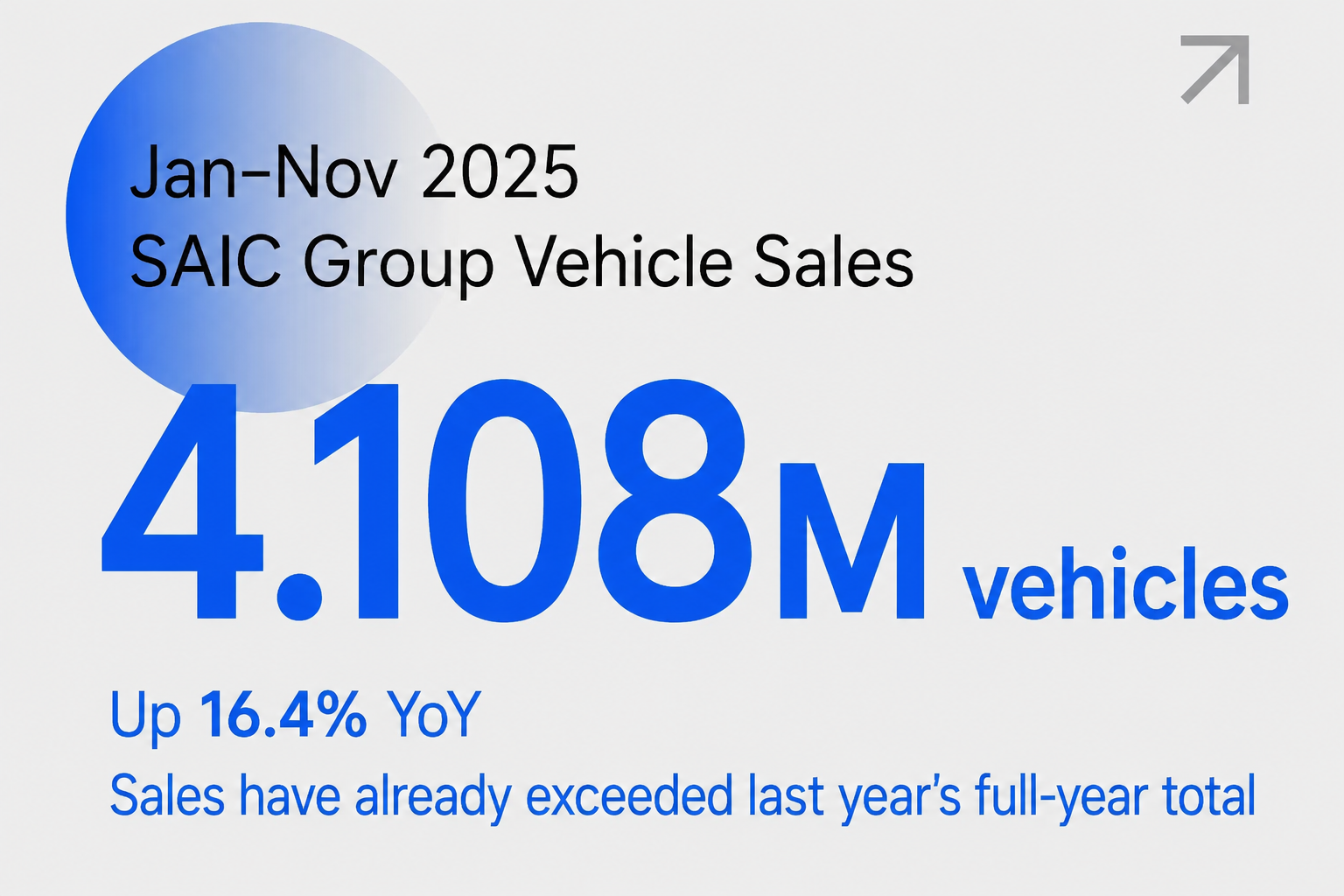
From January to November 2025, SAIC sold 4.108 million vehicles, up 16.4 per cent from a year earlier. The scale matters, but the more important story is the changing structure behind it.
SAIC's growth is increasingly driven by three areas: its own brands, new-energy vehicles and overseas markets. That mix is strategically important because it reduces dependence on older joint-venture models and gives the group more control over technology, pricing and brand direction.
Domestic brands carry the group
SAIC's self-owned brands sold 2.666 million vehicles in the first 11 months, up 25.7 per cent year on year. They accounted for 64.9 per cent of the group's total sales, meaning more than six in every 10 vehicles sold by SAIC now come from its own brand portfolio.
That is a major change for a group long associated with large joint ventures. It suggests SAIC is gaining more command over its industrial chain and customer relationships at a time when foreign-brand joint ventures are under pressure across China.
SAIC Passenger Vehicle sold more than 100,000 vehicles in November, with domestic sales almost doubling. SAIC Maxus rose 81.3 per cent year on year, reflecting momentum in more specialised segments. Wuling continued to provide a large and steady volume base.
The shift toward owned brands should also matter for margins and brand equity, provided SAIC can keep improving product quality, software capability and retail execution.
New-energy sales set another record
New-energy vehicles are becoming SAIC's most important growth driver. In November, the group sold 209,000 new-energy vehicles, setting a record for the third consecutive month. From January to November, the total reached 1.499 million, up 38.8 per cent and close to the 1.5 million mark.
Several sub-brands contributed to the rise. IM Motors has sold more than 10,000 vehicles for three straight months, helped by the LS6 and flagship LS9, both supported by its extended-range technology and positioned in the roughly $28,000 to $42,000 market.
SAIC Passenger Vehicle's new-energy sales rose 277.2 per cent year on year. The new MG4 semi-solid-state battery version also gives the group a technology talking point, with the company presenting it as the world's first mass-produced model equipped with such a battery pack.
SAIC Maxus used the Guangzhou auto show to display autonomous passenger and cargo concepts, pointing to another possible area of growth in commercial vehicles. Across the group, the important point is that technology is moving from presentation to production more quickly.
MG gives SAIC a European foothold
SAIC's overseas business is no longer just a volume export story. In the first 11 months, overseas sales reached 969,000 vehicles. In Europe, MG delivered 285,000 vehicles, making it the best-selling Chinese brand in the region, according to the article.
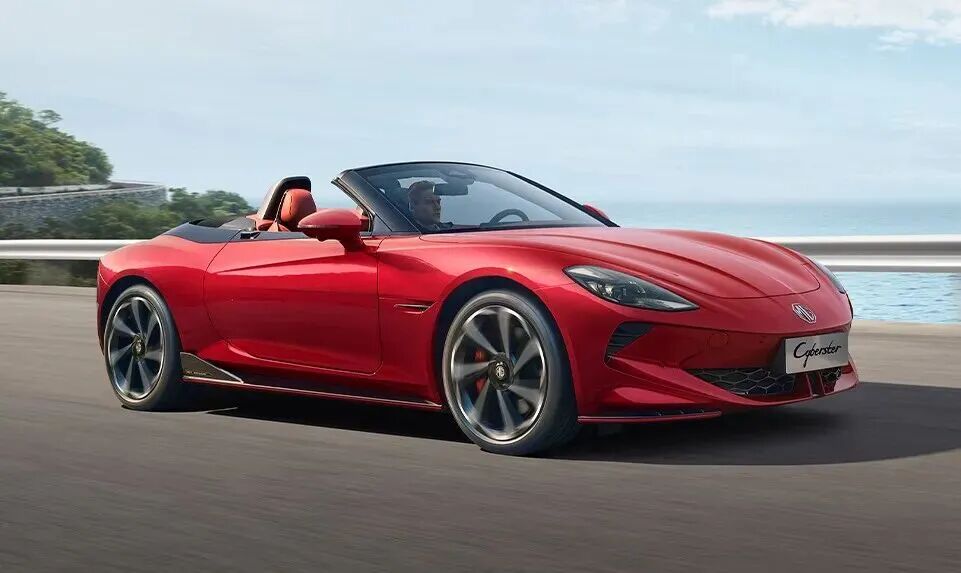
MG recorded growth of more than 50 per cent in countries including Spain, France and Poland. In the UK, cumulative MG electric-vehicle sales have passed 100,000, supported by models such as the MG4 and Cyberster.
That matters because Europe remains one of the world's most demanding car markets. SAIC's progress there suggests Chinese manufacturers can compete not only on price, but also on design, electrification and brand recognition.
A transition still being tested
SAIC's 2025 sales performance shows that its transformation is beginning to produce measurable results. Owned brands, new-energy products and overseas markets are now central rather than peripheral.
The next challenge is to turn those gains into a durable position. Semi-solid-state batteries, digital chassis systems and intelligent-driving features can help, but SAIC must also prove it can move quickly across product cycles and hold brand value outside China.
For a legacy Chinese carmaker, the direction is clear. The old joint-venture era is giving way to a more self-directed model built around local brands, electrification and global markets. SAIC has made progress, but the harder test will be sustaining that momentum as competition intensifies.