China's auto market in 2025 was defined by intense competition between legacy manufacturers, EV start-ups and technology-led challengers.
A traditional group finds new momentum
SAIC, long seen as one of the country's largest traditional car groups, used the year to show that scale does not have to mean inertia.
IM Motors, one of SAIC's higher-end intelligent EV brands, became a visible sign of that shift. After the LS6 and LS9 launches from September, IM Motors delivered more than 10,000 vehicles for four consecutive months and achieved full-cost profitability for the first time in December, according to the article.
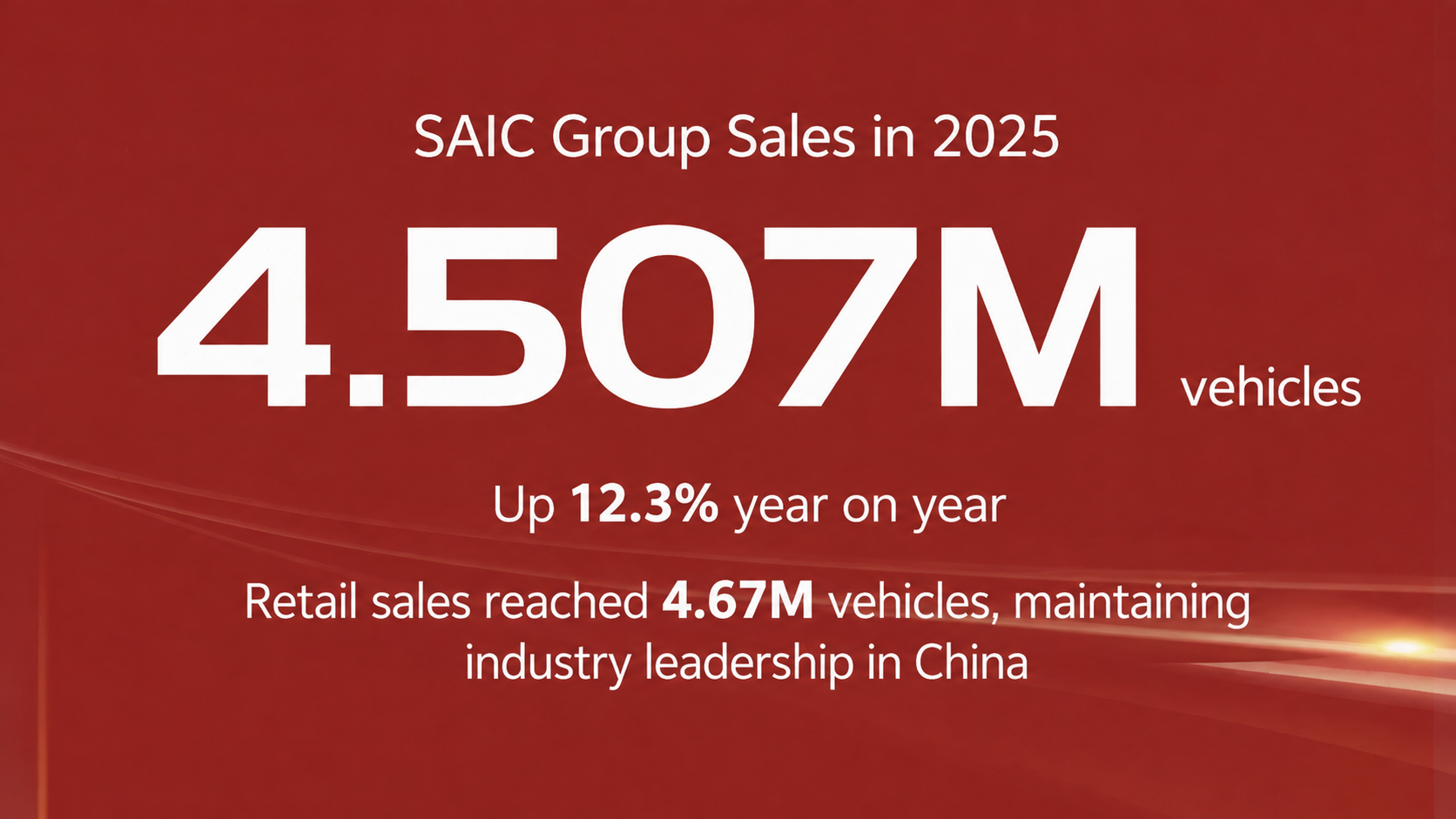
The broader group also improved. SAIC sold 4.507 million vehicles in 2025, up 12.3 per cent year on year, while retail deliveries reached 4.67 million. The recovery was not simply a market bounce. It reflected a deeper reform programme that began in the second half of 2024 and started to produce visible results in 2025.
Reform before product acceleration
For a company with many brands, hundreds of thousands of employees and a complex industrial chain, transformation is difficult. SAIC's challenge was to move from a manufacturer-led system toward a user-led operating model without losing the advantages of scale.
The reform targeted the full value chain, from product definition and research to manufacturing and marketing. One key change was the integrated management of SAIC's own-brand passenger and commercial-vehicle businesses, reducing internal barriers and making market feedback easier to translate into product updates.
The shift was cultural as much as organisational. SAIC needed to move from asking users to buy what it built toward building what users actually needed. In 2025, that change appeared in two areas: the rise of its own brands and a faster release of market-facing technology.
SAIC's own brands, including Roewe, MG, IM Motors, Maxus, Wuling and Baojun, sold 2.928 million vehicles in 2025, up 21.6 per cent. Their share of group sales reached 65 per cent, five percentage points higher than in 2024. The own-brand business became both the main sales engine and the centre of the group's innovation push.
The joint-venture side was also given a renewal task. SAIC-GM's Buick launched the Electra premium new-energy sub-brand and the Xiaoyao super-fusion architecture, while SAIC Audi introduced the E5 Sportback, combining Audi design and engineering cues with Chinese intelligent-EV technology.
Turning technology into sellable labels
SAIC's technology story in 2025 was built around three pillars: intelligence, safety and powertrain capability. The company's challenge was to make those technologies visible enough for buyers to understand and valuable enough to influence purchase decisions.
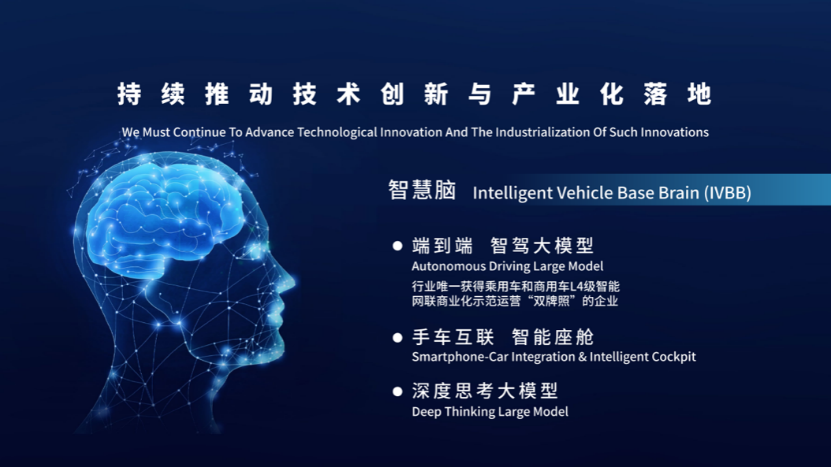
In intelligence, SAIC became the only company in the sector to hold L4 autonomous-driving demonstration operating licences for both passenger and commercial vehicles, according to the article. It also brought an end-to-end assisted-driving model into production and developed map-free navigation assistance designed for nationwide use.
In the cabin, SAIC worked with OPPO on phone-car connectivity and with Doubao on AI-powered in-car interaction. The aim was to make digital services feel less like an add-on and more like part of the ownership experience.
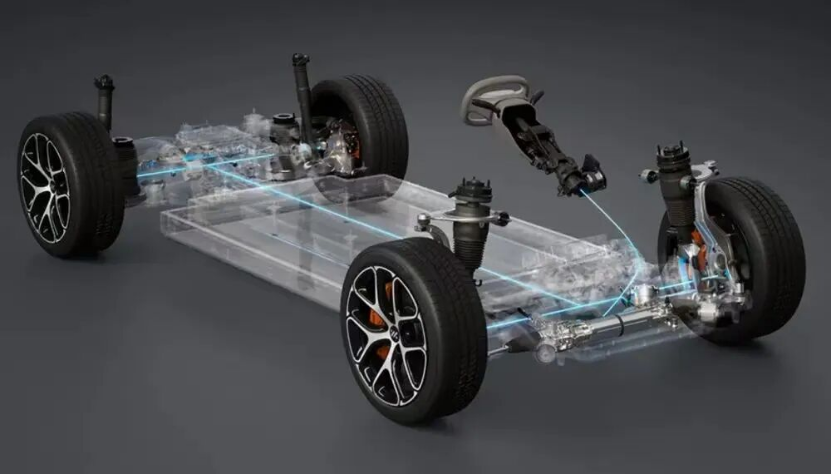
In safety and chassis technology, SAIC promoted an integrated active and passive intelligent safety system and the Lingxi digital chassis. The MG4's Rubik's Cube battery was positioned around standards exceeding national safety requirements, with claims of zero self-ignition and zero thermal runaway.
In powertrains, the DMH hybrid system achieved engine thermal efficiency above 46.3 per cent, while the Stellar super range-extender technology targeted long electric range and lower energy consumption. These systems were designed to answer buyers' range anxiety without forcing a single technology route.
From laboratory to volume products
The important change was speed of deployment. SAIC's technologies were not left in presentation slides. They were attached to products with clear market positioning.
The new MG4, equipped with a semi-solid-state battery, launched at the end of August and received more than 10,000 orders within 40 minutes, according to the article. It continued to sell more than 10,000 units a month after launch, positioning advanced battery technology as a mass-market feature.
The next-generation IM LS6 launched in September with Stellar super range-extender technology and the Lingxi digital chassis. It received more than 10,000 locked orders within 27 minutes and became a strong contender in the roughly $28,000 intelligent SUV segment.
The Shangjie H5, developed in deeper cooperation with Huawei, used Huawei Qiankun assisted driving and HarmonyOS cockpit technology. It exceeded 10,000 firm orders within one hour of launch. IM's flagship LS9 then moved into the roughly $42,000 luxury SUV market, entering the top three in large range-extended SUV sales in its first month, according to the article.
Other examples broadened the portfolio. The Roewe M7 DMH used a claimed 2,050km total range to target family-sedan buyers. The Buick Electra L7 entered the premium range-extended segment. The Audi E5 Sportback tried to combine German brand identity with Chinese intelligent-EV technology.
SAIC's more than $21 billion in cumulative research and development spending began to show through in products that customers could compare directly. The lesson was simple: in China's EV market, technology matters most when it is attached to a product that solves a specific buyer problem.
Global scale as the next test
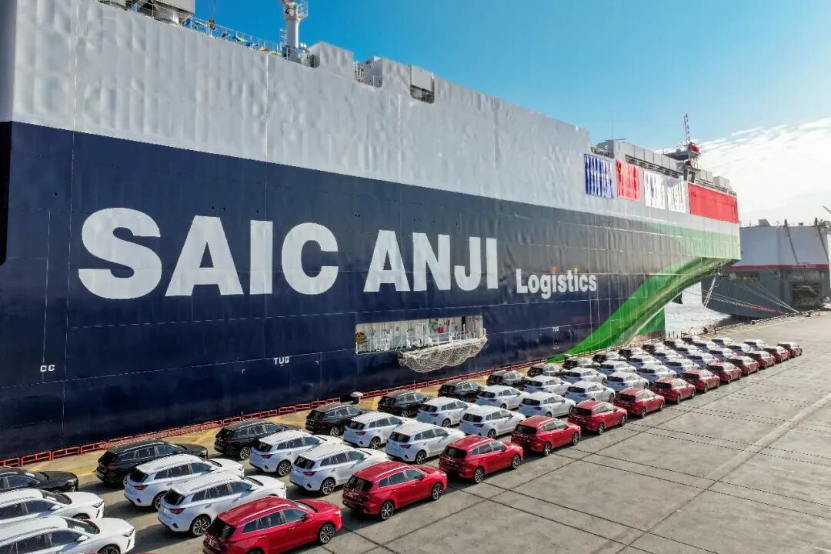
SAIC's transformation also reached overseas markets. In 2025, the group sold 1.071 million vehicles abroad. MG sold more than 300,000 vehicles in Europe, up nearly 30 per cent, and continued to move into the region's mainstream market.
The group's Glocal 3.0 strategy signals a shift from exporting products to exporting more of the value chain, including technology standards, manufacturing systems and brand operations. That is the harder phase of globalisation, but also the one that can create more durable overseas businesses.
SAIC's 2025 performance does not remove the risks facing legacy groups. Competition will remain severe, and faster rivals will keep pressing on software, price and user experience. Yet the year showed that a large traditional manufacturer can become more agile when reform, technology and product planning move in the same direction.