
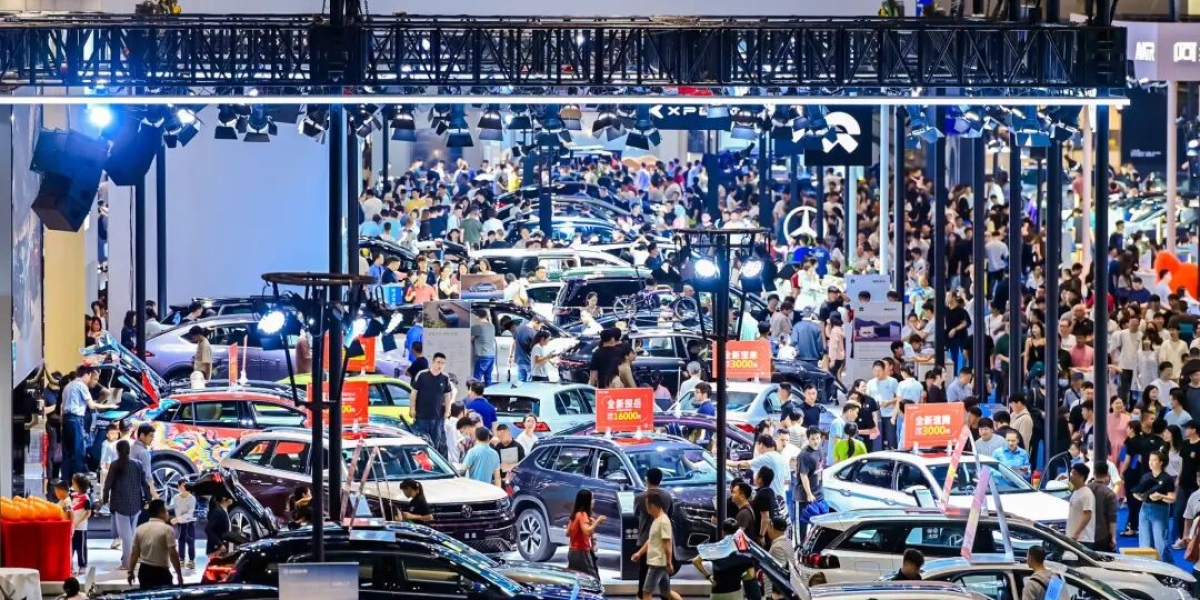
China's car market entered its year-end push with more intensity than usual.
A crowded final sprint
A fading purchase-tax window, the Guangzhou auto show and manufacturers' final sales targets all added pressure to an already crowded market.
The November figures point to a familiar but sharper pattern: leaders remain strong, newer EV players are accelerating, and traditional manufacturers are splitting into those adapting quickly and those still searching for a convincing transition.
Under the surface, monthly sales are becoming a measure of strategy. Electrification, software capability, brand segmentation and overseas execution are now determining which companies can defend share in a market that is no longer growing easily for everyone.
BYD remains dominant, but pressure is visible
BYD sold 480,186 vehicles in November, keeping its commanding position in the global new-energy vehicle market. The figure also revealed a softer side of the story: sales were down 5.25 per cent from a year earlier and did not clear the 500,000-unit threshold that BYD achieved in the same period in 2024.
The company still leads by a wide margin. In the first 11 months of 2025, BYD sold 4.182 million vehicles, leaving about 418,000 units needed to meet its 4.6 million annual target. That is a heavy final-month requirement, but not one likely to alter its leadership position.
BYD's internal brand structure continues to be a strength. Ocean Network sold 233,431 vehicles in November, with six of its seven main models above 10,000 units. Dynasty Network sold 184,338 vehicles, supported by the Qin, Yuan Plus, Song, Tang and Han series.
At the higher end, Fangchengbao delivered 37,405 vehicles, with the Ti 7 as the main contributor. Denza sold 13,255 vehicles, led by the D9 and N8L. BYD's challenge is no longer proving scale. It is defending growth as China's domestic market becomes more competitive and rivals crowd into plug-in hybrids.
Geely's multi-brand logic is paying off
Geely was one of the strongest performers in November, selling 310,400 vehicles, up 24 per cent year on year. Its new-energy sales reached 187,800 units, equal to 60.5 per cent of the total.
The result suggests that Geely has found a more effective structure for the current market. The core Geely brand protects the base, Galaxy builds volume through value-driven new-energy models, Zeekr maintains an intelligent luxury position and Lynk & Co holds a more premium joint-venture-influenced space.
That layered brand strategy reduces exposure to a single segment and gives Geely a broader answer to changing demand. It also reflects a wider lesson in China's market: scale alone is no longer enough without clear roles for each brand and product line.
Huawei's auto alliance and Leapmotor accelerate
Among newer forces, Harmony Intelligent Mobility delivered 81,864 vehicles in November, up 89.61 per cent year on year. Its performance shows the growing power of ecosystem competition, where software, smart cabins, assisted-driving systems and multiple partner brands are deployed together.
Huawei's ADS 3.0 system and HarmonyOS cabin technology have helped create a common technology base across the alliance. Aito remains the main sales driver, while Luxeed passed 10,000 deliveries and Shangjie H5 began adding volume at the entry level.
Leapmotor also continued its rise, selling 70,327 vehicles in November, up 75 per cent year on year. Its growth has been built around vertical integration, cost control and value-for-money models such as the C11, which competes strongly in the roughly $21,000 segment with L2-plus assisted-driving features and capable battery systems.
Nio delivered 36,275 vehicles, up 76.3 per cent. The main Nio brand accounted for 18,393, Onvo added 11,794 and Firefly contributed 6,088. The numbers suggest Nio's multi-brand approach is beginning to add breadth, even though profitability remains a harder target. Its battery-swap network continues to support customer loyalty.
Traditional automakers face a more uneven transition
Chery sold 255,800 vehicles in November, down about 2 per cent from a year earlier. New-energy sales reached 110,000 units, while exports stood at 132,000. That underlines both its strength and its dilemma: Chery remains powerful overseas and technically capable, but much of its business still depends on combustion-engine vehicles.
The iCAR brand delivered 11,428 vehicles and showed promise, yet Chery still trails leaders such as BYD and Tesla in the new-energy segment. To hold its position, it must strengthen its EV identity and deepen market penetration beyond its historic fuel-car and export advantages.
Great Wall Motor sold 133,200 vehicles in November, up 4.57 per cent. Haval sold 75,383, Wey rose sharply to 12,763, Great Wall Pickup sold 16,011, Ora fell to 4,821 and Tank reached 24,135. Overseas sales were 57,309, while new-energy vehicle sales were 40,113.
The data show progress, but also a fragmented portfolio. Haval still anchors the fuel-SUV base, Tank is strong, and Wey has momentum through plug-in hybrid models such as Blue Mountain and Gaoshan. Ora remains weak, and Great Wall has not yet built the same youthful or software-led identity as some rivals.
The next phase is about structure, not slogans
November's sales figures show China's auto market moving deeper into electrification and intelligent-vehicle competition. The companies that performed best were not simply those with new models, but those with coherent brand portfolios, technology depth and clearer answers to changing consumer demand.
BYD still has the scale, Geely has a stronger multi-brand structure, Huawei's alliance model is gaining momentum and Leapmotor is proving that cost control can be a growth engine. Traditional automakers can still compete, but their transition must become sharper and faster.
The industry shake-out is no longer theoretical. It is visible in monthly delivery reports, where the winners are building systems and the weaker players are discovering that legacy strength does not automatically transfer to the new-energy era.