

April is not usually a peak month for China's car market, but April 2026 was unusually revealing.
A weak month hides a deeper restructuring
According to the China Passenger Car Association, retail passenger-car sales from April 1 to 26 reached only 1.004 million units, down 24% year on year and 19% from the previous month. In the first four months, domestic passenger-car retail sales reached 5.226 million units, down 19% year on year.
The overall market cooled sharply. At the same time, China's new-energy vehicle retail penetration broke 60% for the first time in April, reaching 60.6%. In a market no longer driven by easy growth, the shift from petrol vehicles to new-energy models is moving faster than expected.
Exports are also becoming a second growth engine. Chery, BYD, Geely and other leading companies set fresh monthly overseas sales records. Among new-force brands, Leapmotor delivered more than 70,000 vehicles in April and opened a large gap over rivals. The market is moving from a question of who grows fastest to a more severe question: who survives.
New-energy penetration passes 60%
The April contrast was clear: the market contracted, while new-energy share climbed. From April 1 to 12, national passenger-car retail sales were 377,000 units, down 20% year on year. New-energy retail sales were 224,000, down 11% year on year but up 7% from the previous period. By the end of April, narrow passenger-car retail sales were about 1.42 million units, down 20% to 25%, while new-energy retail sales reached about 860,000 units.
A 60.6% penetration rate is a milestone. It means China's car market has formally entered a stage led by new-energy vehicles. That point arrived earlier than many industry participants expected.
The petrol-car market is shrinking faster. Even some replacement demand has not reversed the trend. For petrol-focused automakers, the window is narrowing.
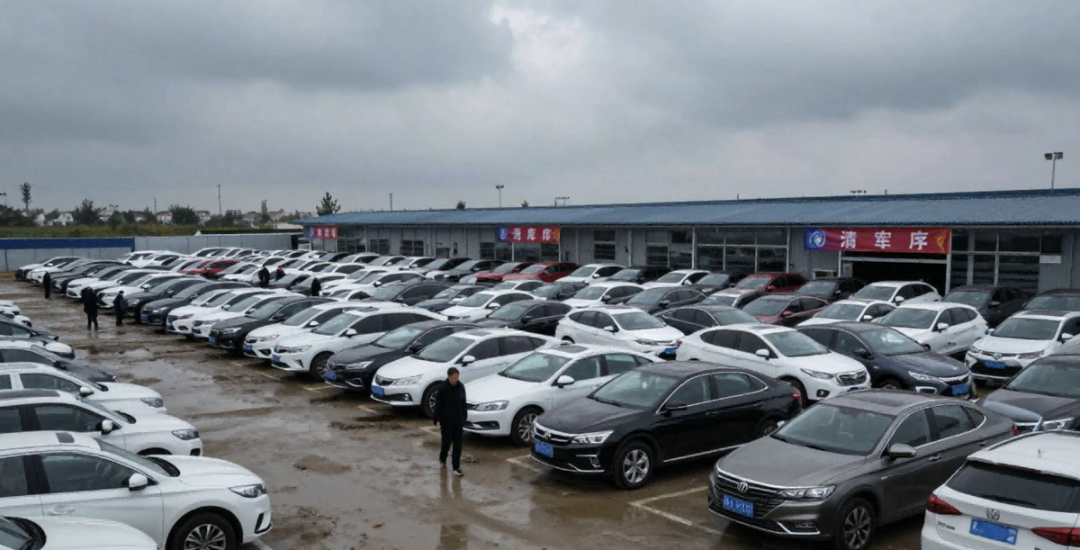
There is pressure at the channel level as well. Many dealers face a mismatch between factory wholesale pressure and actual retail demand. In practical terms, manufacturers are pushing more stock into dealerships than consumers are absorbing, forcing some dealers to sell at very thin margins or losses.
The Beijing auto show at the end of April brought a wave of new products that may support a recovery in May and the second quarter. Yet for petrol-vehicle players, the structural challenge is no longer temporary.
Exports become the industry's bright spot
If domestic retail data looked cold, exports looked hot. In March 2026, China exported 748,000 passenger vehicles, up 82.4% year on year. New-energy exports reached 349,000 units, up 139.9%.
The momentum continued in April. Chery Group was the standout, exporting 177,573 vehicles, up 102.4% and setting a new monthly record for Chinese auto exports. Chery's new-energy vehicle sales also passed 100,000 units for the first time, reaching 100,276, up 63.8%. From January to April, Chery exported 570,884 vehicles, up 66.3%.
BYD also set a new overseas record. April overseas sales reached 134,542 units, up more than 70% year on year. In the first four months, BYD passenger-vehicle and pickup overseas sales reached 454,300 units. The company has raised its 2026 export target from 1.3 million to 1.5 million vehicles, making overseas markets a major buffer against domestic price pressure.
Geely exported 83,186 vehicles in April, up 245% year on year and doubling for a fourth consecutive month. Its new-energy vehicle sales reached 135,591 units, accounting for 58% of total sales. Geely now operates in Europe, Egypt and other markets, with dealer networks across more than 100 countries and regions.
Other traditional groups are also expanding. Changan's overseas market grew 69.9% year on year in April. GAC's exports rose 133.9% in the first four months. SAIC exported 134,300 vehicles in April, up 55%.
Some industry forecasts now expect China's auto exports to exceed 8 million vehicles in 2026, with new-energy exports around 3.5 million. If oil prices stay high and Chinese EVs keep gaining share, the export story has only begun.
New-force brands are separating quickly
The new-force field is splitting more sharply. Leapmotor delivered 71,387 vehicles in April, up 73.9% year on year and more than 40% from the previous month. It returned to the 70,000-unit level after four months and led the new-force delivery ranking by a wide margin. Analysts pointed to the new A10 and D19 as important contributors, with the D19 taking more than 15,000 firm orders within half a month of launch.
Li Auto delivered 34,085 vehicles in April, up only 0.43% year on year and down about 17% from March. Its extended-range L-series models face ageing product appeal and stronger rival pressure, and promotional pricing has not fully reversed the slowdown.
Xpeng delivered 31,011 vehicles in April, down more than 11% year on year. It faces pressure from Leapmotor in value positioning and still lacks a strong premium breakout model. Sales depend heavily on lower-priced models such as the MONA M03. To defend volume, Xpeng announced a zero-down-payment and limited-time zero-interest policy in April.
The middle tier is crowded. HIMA delivered 32,800 vehicles, Deepal around 33,000, Zeekr about 32,000 and Xiaomi passed 30,000 for the first time. These brands have formed a 30,000-unit club, with gaps of less than 1,500 vehicles between several of them. As product similarity rises, premium differentiation may become harder.
Joint ventures are also showing uneven adjustment. GAC Toyota sold 54,116 vehicles in April, down nearly 10% year on year, but its Bozhi new-energy brand performed better. Bozhi 3X sold 10,027 units, while the Bozhi 7 luxury electric sedan delivered 4,637 units in its first month. The Bozhi brand accounted for 27% of GAC Toyota's sales.
Dongfeng Nissan, after a severe February slump, recovered to 119,000 terminal sales in the first quarter, up 24% year on year. Its petrol base remains, but the new-energy gap is still unresolved.
The shake-out is accelerating
April showed two markets operating at once. One is cooling, with petrol sales and weak dealers under pressure. The other is expanding through new-energy penetration and exports. The gap between winners and vulnerable players is widening.
The new-force elimination round may move faster than expected. Some observers believe only three or four companies with sustained cash generation may remain in the second half of 2026. That may prove too severe, but the direction is clear: China's car market is no longer rewarding growth stories alone. It is rewarding scale, exports, product cadence, margins and the ability to keep funding the next round.