Ford China has responded cautiously to reports that the company is in talks with BYD, saying it holds discussions with different companies across many business areas and does not comment on rumours or unsupported speculation.
A rumour with strategic weight
The wording neither confirmed nor denied the reports, leaving the industry to consider what such a partnership would mean.
The speculation matters because it comes at a difficult moment for Ford's electric-vehicle strategy. At the end of 2025, the company announced a major strategic retreat, including asset impairments of $19.5 billion, the discontinuation of the F-150 Lightning electric flagship and changes to battery-supply agreements.
A possible link with BYD would therefore not look like a routine sourcing discussion. It would sit at the intersection of Ford's effort to reduce EV losses, its shift toward hybrids, and BYD's rise as both a vehicle maker and a global battery supplier.
Ford moves from EV expansion to loss control
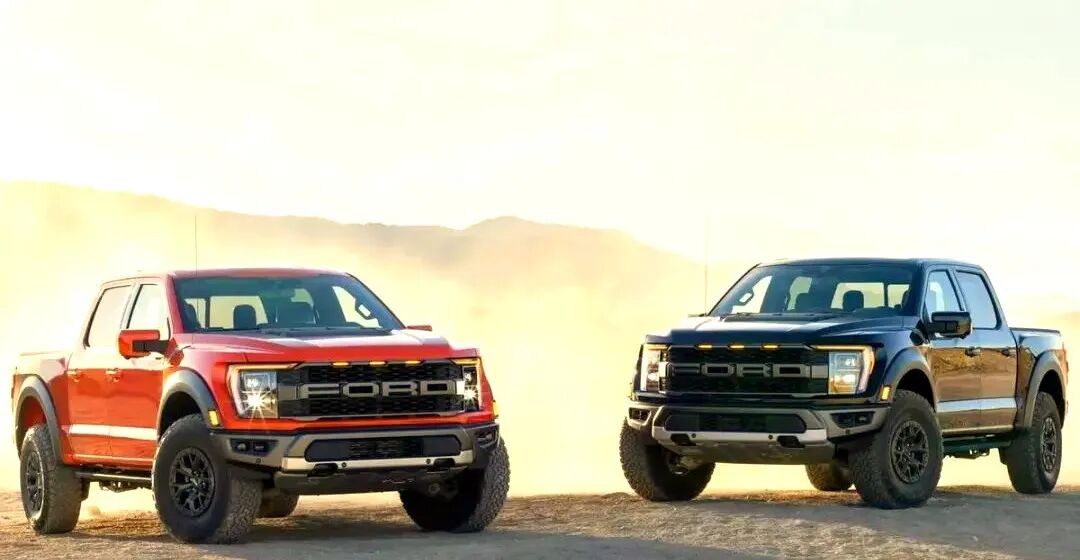
Ford's late-2025 strategy adjustment was one of the sharper reversals among global automakers. The company shifted emphasis from large battery-electric vehicles toward hybrids and combustion models, while still keeping development plans for smaller, more affordable EVs.
The cost was heavy. The $19.5 billion impairment was equal to about 10.5 per cent of Ford's 2024 global revenue, according to the article. About $8.5 billion was linked to cancelled EV product and capacity plans, $6 billion to ending a battery joint venture with South Korea's SK On, and $5 billion to related project adjustments.
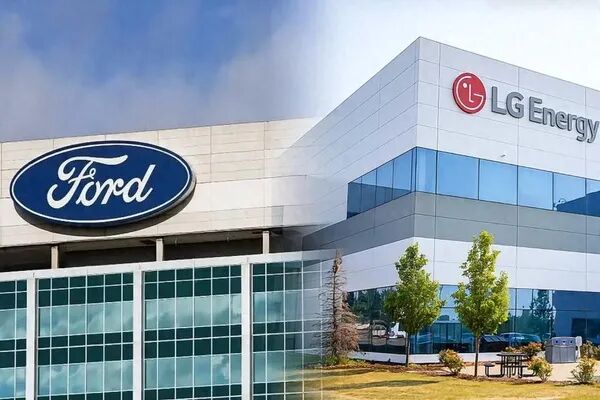
Ford's contract changes with LG Energy Solution also drew attention. The article says Ford did not cancel all cooperation, but unilaterally terminated 75GWh of battery orders scheduled for 2027 to 2032 under two contracts signed in October 2024, while retaining 34GWh of supply for 2026 to 2030. The cancelled order was worth about $6.5 billion.
The reason is clear: US EV demand weakened in 2025 as policy support shifted. After the Trump administration returned to the White House, measures reducing EV support affected buyer confidence and industry planning.
Ford's own figures showed the pressure. In October 2025, its US battery-electric retail sales fell 24.8 per cent year on year, with the Mustang Mach-E down 12 per cent and the F-150 Lightning down 17 per cent. From January to November, F-150 Lightning sales reached only 25,583 units, down 10 per cent, while the model remained loss-making, according to the article.
Ford's EV division has lost more than $13 billion since 2023. Chief executive Jim Farley had already warned that he would not be surprised if the US EV market share fell from 10 to 12 per cent to 5 per cent after subsidies were removed.
Why BYD fits Ford's new priorities
As automakers shift from electric expansion at any cost to profitability and efficiency, battery suppliers are being judged less by capacity alone and more by technology maturity, cost control and global adaptability. BYD is strong in all three areas.
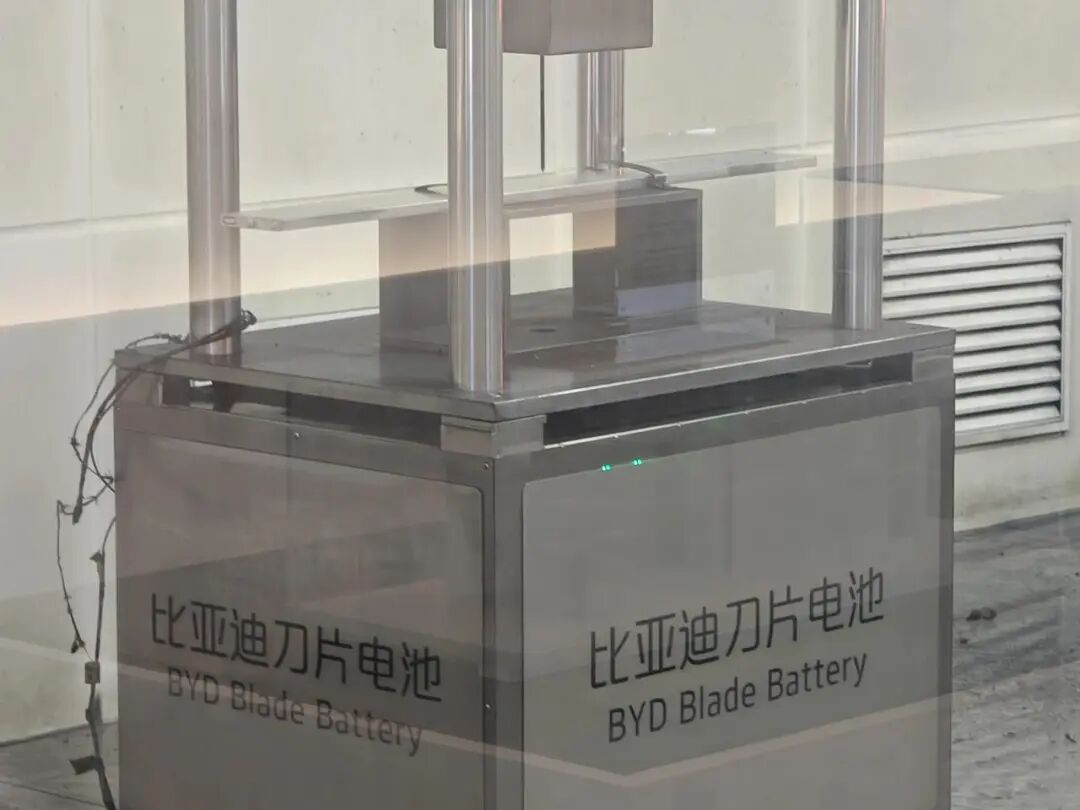
The Blade Battery is the main attraction. BYD's lithium iron phosphate design eliminates the traditional module structure and directly integrates long, thin cells into the pack. The article says this raises pack space utilisation from about 40 per cent for conventional ternary lithium designs to more than 60 per cent.
The latest Blade Battery cell energy density is described as 180Wh/kg, close to mainstream ternary lithium system-level density. BYD models such as the Han EV and Seal can exceed 600km of CLTC range, with some high-end versions reaching 715km.
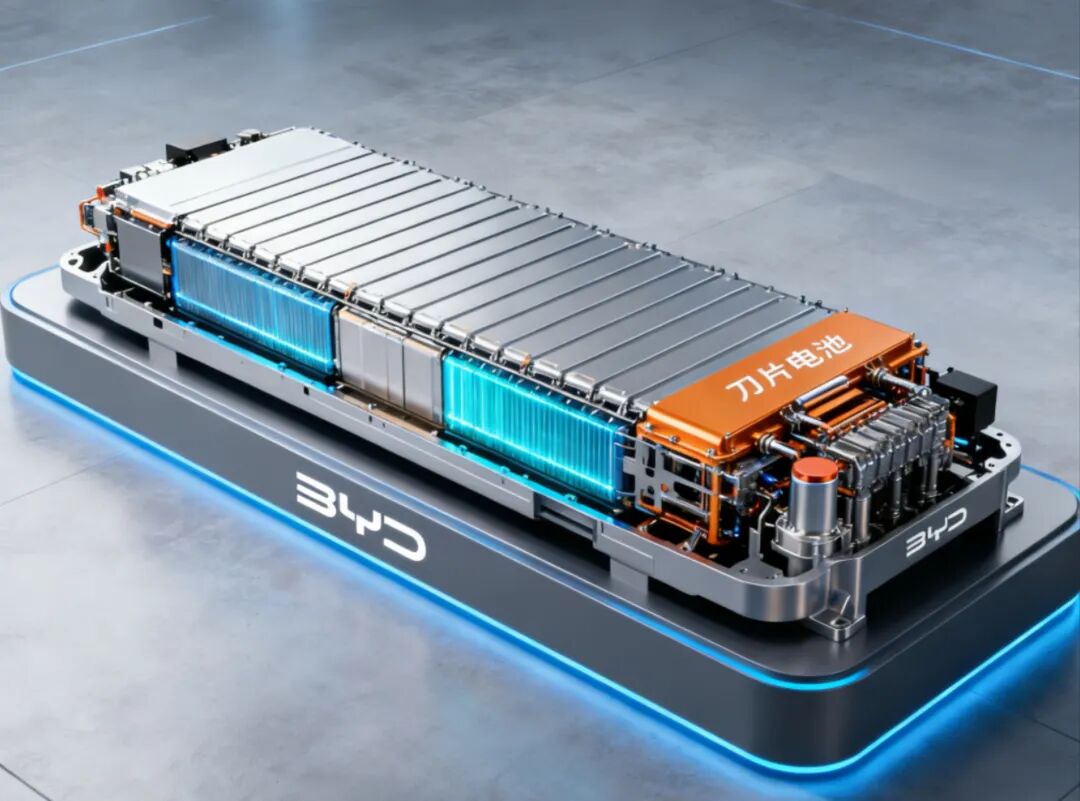
Safety is another selling point. BYD has promoted the Blade Battery's performance in nail-penetration testing and a 46-tonne truck crush test. For hybrid vehicles that need high reliability from smaller battery packs, that safety story could be attractive to Ford.
Cost may be even more important. Lithium iron phosphate batteries avoid expensive nickel and cobalt, while BYD's module-free structure reduces component count and manufacturing complexity. For Ford, which is trying to restore profitability in electrified vehicles, lower battery cost could matter more than maximum energy density.
A hybrid-focused partnership would make sense
The reported talks are said to focus mainly on hybrid models, which matches Ford's revised strategy. Ford has set a goal for hybrids, range-extended hybrids and battery-electric vehicles to account for 50 per cent of global sales by 2030.
BYD has extensive experience in plug-in hybrids and battery integration. Its technology could support customised solutions for Ford's hybrid line-up and shorten development cycles.
The two companies also have some past basis for cooperation. In 2020, the Ford Escape PHEV sold in China through the Changan Ford joint venture used ternary lithium cells supplied by BYD's Xi'an Zhongdi Lithium Battery unit. That was not a Blade Battery application, but it showed that BYD cells could be integrated into Ford products.
Compared with other suppliers, Japanese and Korean battery companies have mature technology but higher ternary lithium costs. Other Chinese battery makers may have cost advantages but may not match BYD's combination of technology maturity, global service capability and stable capacity. That makes BYD a plausible partner if Ford wants to diversify quickly.
What a deal would change
If a Ford-BYD partnership is finalised, Ford could accelerate its shift toward hybrids and reduce development and manufacturing costs. It could also diversify away from dependence on Japanese and Korean battery suppliers, using BYD to control overseas battery costs while relying on local plants for US-market requirements.
For BYD, cooperation with Ford would mark another step in its globalisation as a battery supplier. The company has already worked with Daimler, Toyota and other automakers, but supplying a major US legacy carmaker would raise its international credibility and make it easier to win more overseas customers.
The partnership would also support Blade Battery capacity utilisation, improving scale economics. Because the reported focus is overseas markets and battery supply rather than Chinese domestic vehicles, it would not directly collide with BYD's own car business in China.
The wider signal may be more important than the individual contract. In the past, global automakers generally held the upper hand over battery suppliers. As Chinese battery companies gain technology and cost advantages, the relationship may shift toward more balanced strategic partnerships.
The global EV transition is not ending. It is becoming more disciplined. If Ford and BYD do reach an agreement, it would show how legacy automakers are reworking their supply chains around cost, hybrid flexibility and Chinese battery technology.