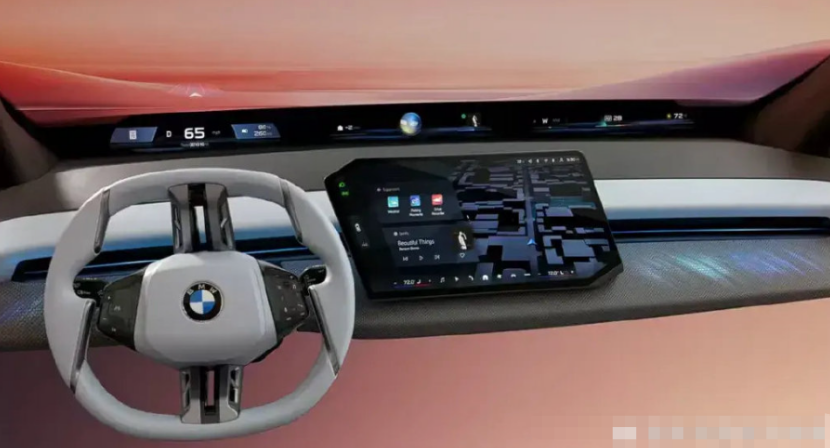
China's premium car market is changing quickly. Chinese high-end brands are gaining share with intelligent cabins and advanced driver-assistance systems, putting pressure on BMW, Mercedes-Benz and Audi.
German luxury brands face a China problem
Data cited in the article show all three under pressure in China in the first three quarters of 2025. BMW sold nearly 465,000 vehicles, down 11.2 per cent. Mercedes-Benz passenger-car sales reached 1.3414 million, down 8 per cent. Audi sold 1.1911 million, down 4.8 per cent.
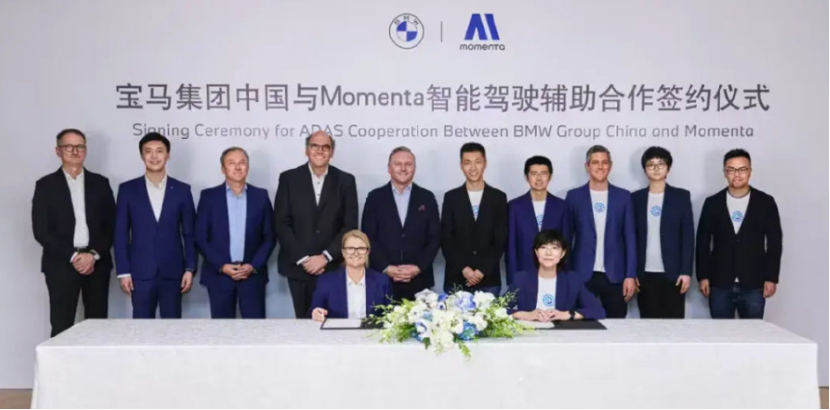
The numbers point to a growing weakness: intelligent-vehicle capability has become a core constraint on legacy luxury growth. BMW's cooperation with Momenta is therefore less a side project than a strategic attempt to close a gap that Chinese rivals have exposed.
BMW chooses local intelligence without losing its driving identity
BMW has long built its brand around driving pleasure. In the smart-EV era, that heritage has made the company more cautious about advanced driver assistance. Its earlier L2 systems focused mainly on adaptive cruise control and lane keeping, leaving it behind faster-moving Chinese brands.
BMW has also been careful for safety reasons. In March, BMW board member Jochen Goller said the company would never put unverified technology into customer cars and use consumers as test subjects, according to the article.
That stance created a dilemma. BMW needs stronger intelligent-driving capability in China, but it does not want to dilute the brand's control feel or safety reputation. Momenta offers a local solution.
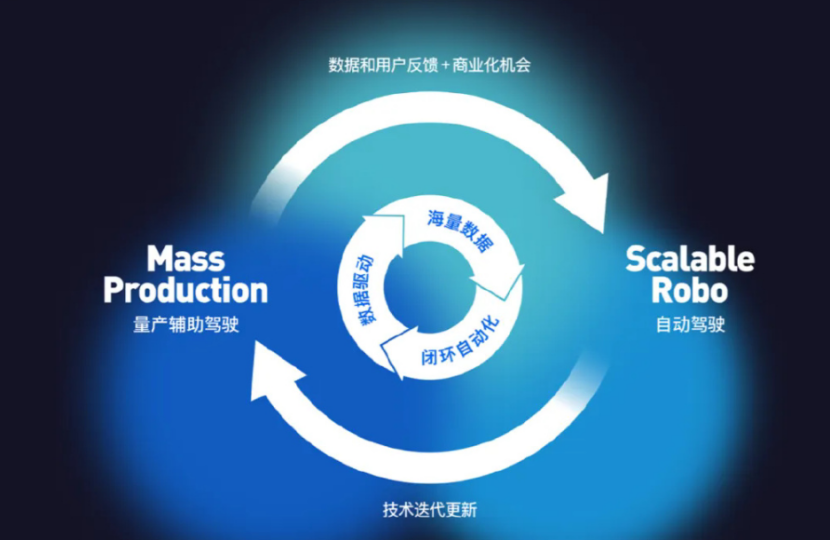
Momenta's end-to-end flywheel model integrates perception and planning and has reached production deployment. Its China road data and local traffic understanding address problems BMW cannot solve quickly through global self-development alone.
The partnership is described as deep joint development rather than simple supplier adoption. BMW aims to combine Momenta's algorithms with its own chassis technology and driving logic, upgrading smart-driving functions while preserving the handling character that defines the brand.
Mercedes and Audi take different routes
Mercedes-Benz also has a history with Momenta. It became the first international automaker to invest in the Chinese company in 2017, but its broader intelligent-driving strategy remained more conservative and self-development focused for years.
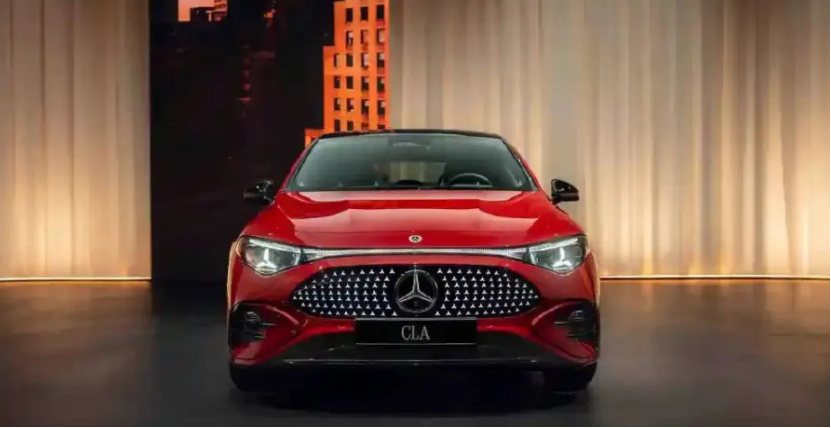
Mercedes began moving more visibly with Momenta around 2023 and accelerated investment after weaker performance in 2024. Its jointly developed end-to-end assisted-driving system has now reached production and debuted on the new battery-electric CLA launched in November 2025, according to the article. Mercedes has also worked with ByteDance on AI algorithms and Tencent on high-definition maps and cloud computing.
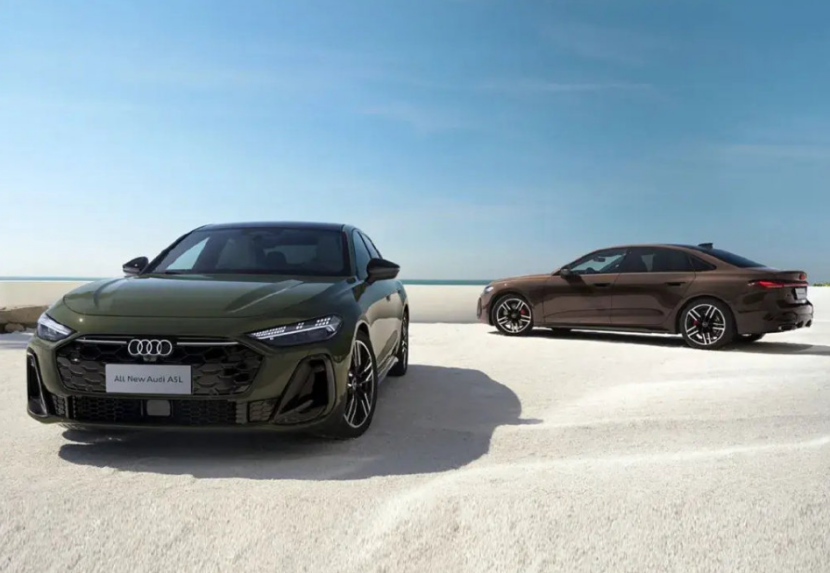
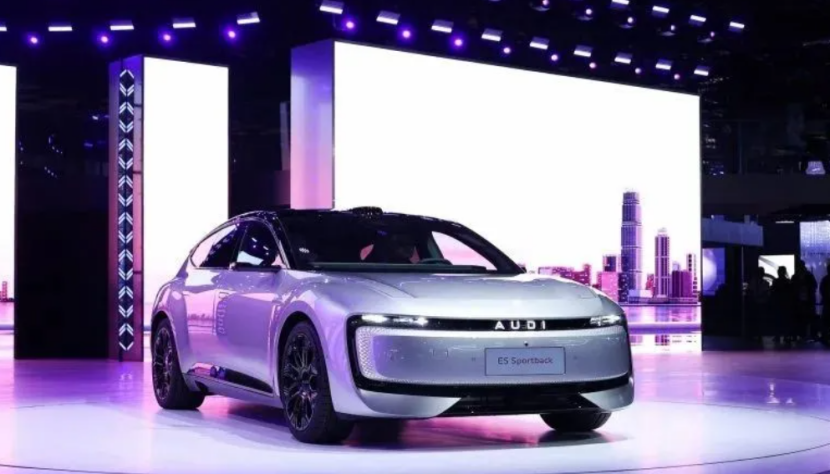
Audi has taken a more aggressive path through deeper cooperation with Huawei. FAW-Audi's A5L and Q6L e-tron use Huawei ADS 3.0 advanced driver assistance, giving Audi stronger appeal in features such as map-free urban navigation assistance.
Audi's cooperation ties into smart driving, cockpit and connectivity, while keeping Audi's luxury identity through customised tuning and product design. It is one of the clearest examples of a legacy luxury brand working deeply with a Chinese technology company.
BMW starts later but may have long-term room
BMW does not have the clearest first-mover advantage. Mercedes has years of cooperation experience with Momenta and has already launched the CLA. Audi has a differentiated Huawei path with products already in market. BMW's Momenta solution will not truly arrive in production until the China-built Neue Klasse BMW iX3 in 2026.
That timing means BMW faces short-term pressure. By the time its new model enters the market, Mercedes may have already gained early user feedback and Audi may have strengthened its position in selected smart-driving segments.
The longer-term picture is more open. BMW's system will be based on Momenta's end-to-end flywheel model and combined with BMW's experience in safety control and human-machine interaction. That may suit luxury buyers who want smart features but still expect confidence and refinement.
BMW also plans to use the solution across multiple Neue Klasse models. Its Shenyang production base gives it scale advantages, and broader deployment could lower costs and improve consistency once the system is validated.
Safety may become BMW's differentiator. If it can prove that its smart-driving system is stable, reliable and carefully validated, the company could turn its cautious approach into a trust advantage rather than a weakness.
The next battle is ecosystem execution
BMW is also watching China's range-extended vehicle boom. Bloomberg has reported that BMW is evaluating range-extender configurations for some models, though the idea remains under internal discussion, according to the article. If BMW combines range-extension products with stronger local smart driving, it could gain a more relevant China-specific offer.
The German luxury smart-driving race will not be decided by one technology alone. Mercedes, Audi and BMW each have strengths and risks. Mercedes has a longer Momenta relationship but must integrate self-development and external cooperation efficiently. Audi has strong Huawei technology but must avoid becoming too dependent on an external ecosystem. BMW starts later but may benefit from a tighter fit between local algorithms and its own driving DNA.
The next two to three years will be decisive. The winner will be the brand that best combines Chinese user needs, reliable smart-driving technology, product execution and a still-recognisable luxury identity.