
Global car markets entered April under unusual pressure. As conflict in the Middle East entered its seventh week, Brent crude had already moved above $110 a barrel, while West Texas Intermediate closed at $112.41, its highest settlement since June 2022.
Oil Prices Put Chinese EVs in the Spotlight
Agence France-Presse reported that benchmark oil prices had risen by as much as nearly 70% since February 28, when the US and Israel launched joint military strikes against Iran. Societe Generale said a two-month closure of the Strait of Hormuz could plausibly push oil above $150 a barrel. Macquarie forecast that, if the conflict lasted into June and the strait remained closed, prices could reach $200.
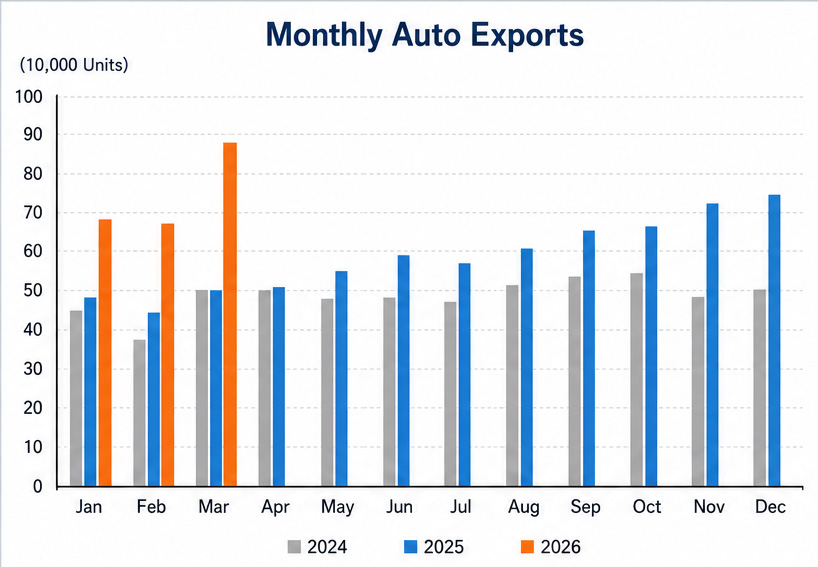
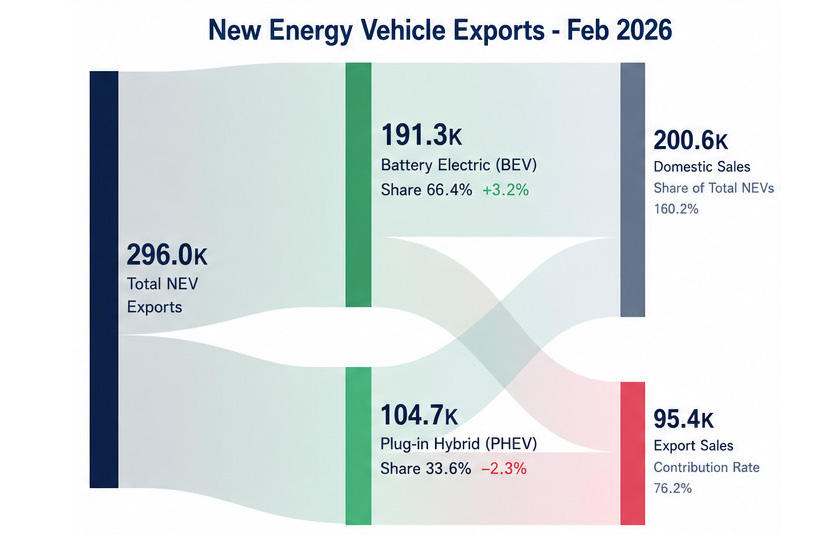
The oil shock has unexpectedly pulled Chinese vehicles into the centre of the global conversation. Data from the China Association of Automobile Manufacturers showed that China exported 875,000 vehicles in March 2026, up 72.7% year on year. First-quarter exports reached 2.226 million units, up 56.7%. New-energy vehicle exports totalled 371,000 units in March, up 130%, and 954,000 units in the first quarter, up 120%.
Some observers see high oil prices as a tailwind for Chinese EVs. Others worry that China's domestic price war is spreading overseas. After more than a decade of technology accumulation and industrial build-out, the story is more complex than either explanation alone.
A Demand Window Opens
Fatih Birol, head of the International Energy Agency, has described the current oil crisis as more severe than the crises of 1973, 1979 and 2022 combined. In response, the IEA's 32 member countries pledged to release 400 million barrels of reserves, including 172 million barrels from the US, about 40% of its strategic reserve.
That may still be small against the disruption. The conflict has interrupted 12 million barrels a day of crude supply, while the maximum reserve release rate is only 3 million barrels a day.

The impact is acute for emerging markets reliant on imported crude. In south-east Asia, higher fuel costs are changing buying decisions. Thailand's EV registrations rose 230% year on year in January and February, while Indonesia's increased 195.8%.
Reuters has reported that sustained high oil prices are helping Chinese EVs expand overseas, as the gap in energy costs pushes more consumers away from petrol cars and toward better-value Chinese electric models.
The shift is visible in several markets. In February 2026, Chinese-brand EV sales in Europe rose 94% year on year, and market share climbed from 4.2% to 8%. In March, BYD registrations in Germany surged 327% year on year, while Chinese brands took a 15% share of the UK market. In Australia and New Zealand, Chinese brands surpassed Japan for the first time in March to become Australia's largest source of imported cars. Battery-electric penetration doubled to 14.6%, and some popular models saw waiting times stretch to three or four months.
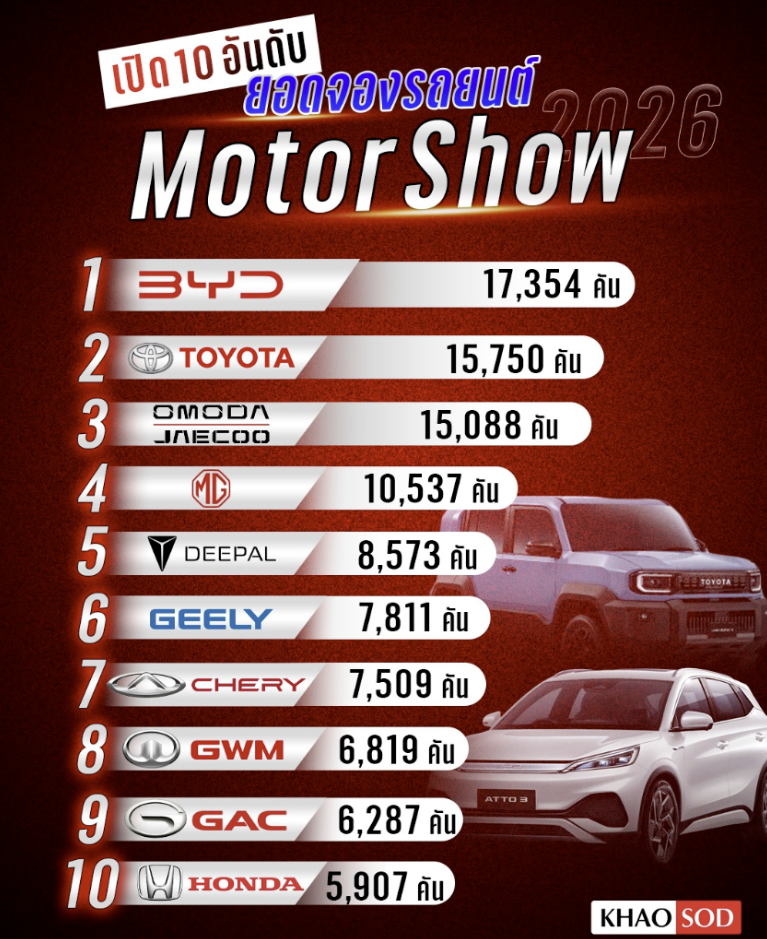
The 47th Bangkok International Motor Show offered another signal. The event generated 132,951 vehicle orders, a record for the Thai show, with EVs expected to account for more than 70%. BYD led brand orders with 17,354 reservations, ahead of Toyota's 15,750. Chery's Omoda and Jetour brands ranked third with 15,088. Seven of the top 10 brands by orders were Chinese, the first time Chinese brands collectively surpassed Japanese brands at the show.
Supply Chain Strength Becomes the Moat
High oil prices have opened a demand window, but the real question is whether Chinese products can compete directly with global brands. Increasingly, the answer is yes in more segments.
China's strongest advantage remains the completeness and autonomy of its electric-vehicle supply chain. Batteries, motors, power electronics, vehicle operating systems and intelligent-driving functions are all supported by a dense domestic industrial base. Localisation of core components exceeds 95%, allowing Chinese carmakers to respond quickly to market demand, scale production rapidly and iterate products faster than many European or American rivals.
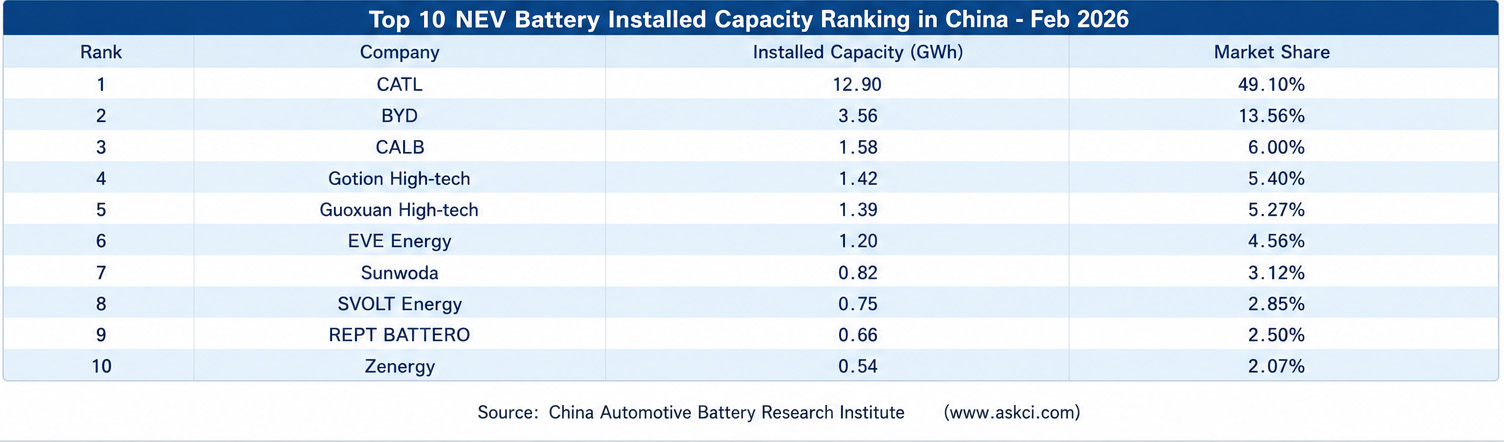
The battery sector shows the concentration of that advantage. According to China Business Industry Research Institute, the top three domestic power-battery installers held about 68.7% of the Chinese market in February 2026, while the top 10 held 94.4%. CATL led with a 49.1% share, followed by BYD and CALB.
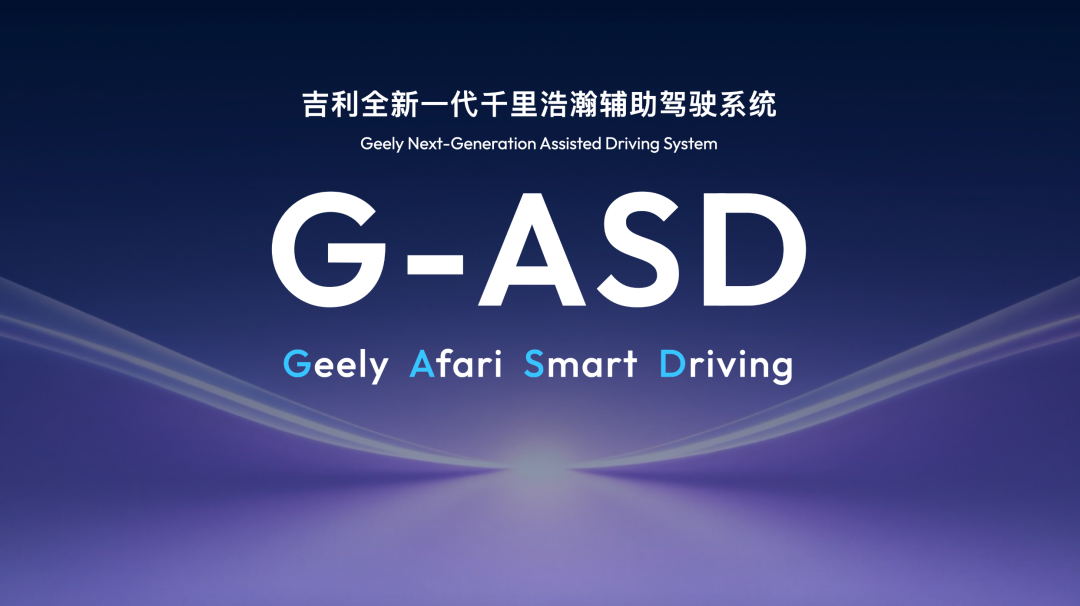
Intelligent-driving technology is also starting to change the competitive framework. On March 12, 2026, Geely Auto Group's Qianli Haohan G-ASD assisted-driving system received UN R171 certification from the United Nations Economic Commission for Europe. It was the first such international certification for a Chinese high-level assisted-driving technology, meaning vehicles equipped with the system do not need separate country-by-country approval across the EU.
Geely expects the first G-ASD vehicle certified under UN R171 to enter European roads in June. The certification matters because UN R171 is among the toughest international rules for intelligent driving, and Geely's approval signals that Chinese systems are becoming globally credible rather than only domestically competitive.
Brand recognition is improving as product capability rises. In January and February 2026, Chinese-brand EV sales in Europe rose 94%, lifting share from 4.2% to 8%. In March, Chinese brands held 67.7% of China's domestic passenger-car market. An Australian consumer quoted in the original report said Chinese EVs offered low operating costs, rich intelligent features and a good driving experience, saving A$100 to A$200 a week.
Why Overseas Markets Are Not Simply Another Price War
One fear is that China's intense domestic price competition will spill overseas and turn global expansion into another red sea. So far, overseas pricing rules look different from China's domestic market.
On January 12, 2026, China's Ministry of Commerce and the European Commission reached a consensus to use a price-undertaking mechanism to avoid additional tariffs of up to 35.3%. Chinese exporters must sell pure EVs at or above the minimum prices set by the EU.
That means Chinese EV companies have little room to fight a low-price war in Europe. In some cases, they must lift pricing to comply with rules.
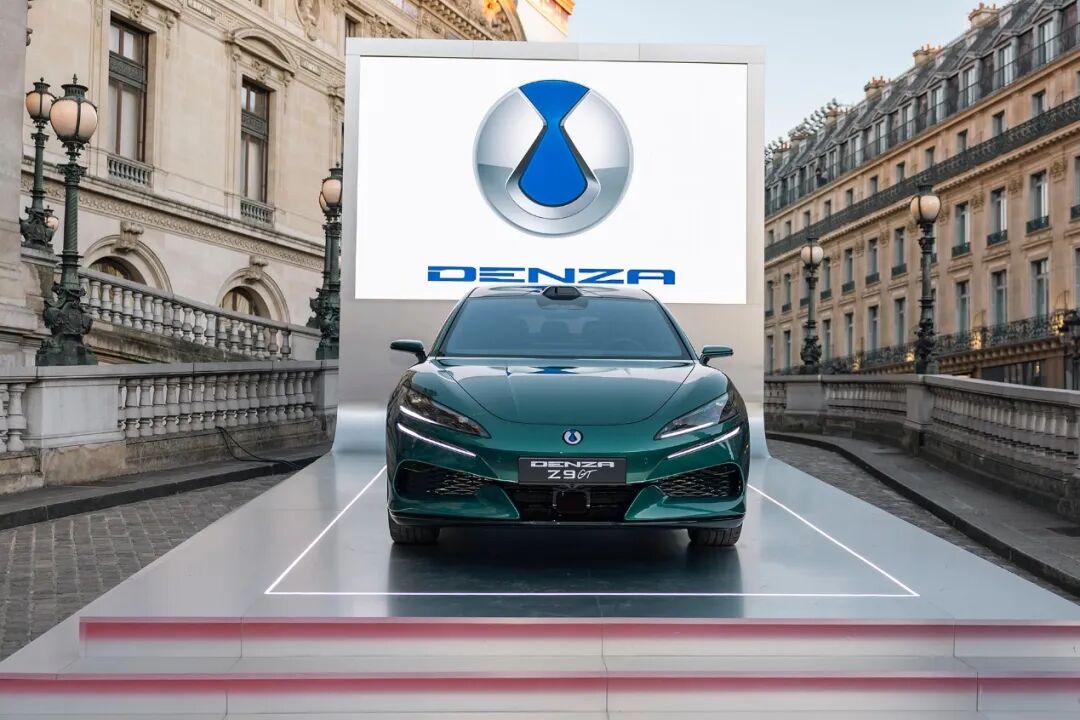
Denza's Z9GT illustrates the new dynamic. In Europe, the flagship model starts at about €115,000 for the pure-electric version and €103,500 for the plug-in hybrid. In China, the model starts at about $37,000, with different versions priced roughly between $37,000 and $51,000. The premium overseas pricing suggests that Chinese manufacturing is increasingly being accepted as brand value, not only low-cost production.
Industry executives still warn that if companies fight alone, overseas price-war risks remain. The answer, they argue, is coordinated global expansion across the supply chain rather than repetitive competition.
At the 2026 High-Level Forum on Intelligent Electric Vehicle Development, participants reached a broad consensus: overseas expansion is no longer a marginal growth option. It has become a necessary path for easing domestic overcapacity pressure and building stronger global auto brands. Experts called for three shifts: from selling products to building ecosystems, from isolated company moves to supply-chain coordination, and from price competition to value creation.
Beyond the Oil Windfall
China's auto industry has travelled a long road over the past two decades, from joint-venture learning to direct competition with global giants. Rising oil prices have accelerated the surge in overseas orders for Chinese EVs, but treating the export boom as only an oil-price windfall would understate the industry's progress.
The same is true of the price-war argument. Domestic competition has forced Chinese carmakers to become leaner and faster, but overseas gains increasingly rest on supply-chain depth, intelligent technology, product quality and brand confidence.
High fuel costs may have pushed more buyers to consider Chinese cars. The reason many are staying interested is that China's automakers now have products capable of meeting the moment.