
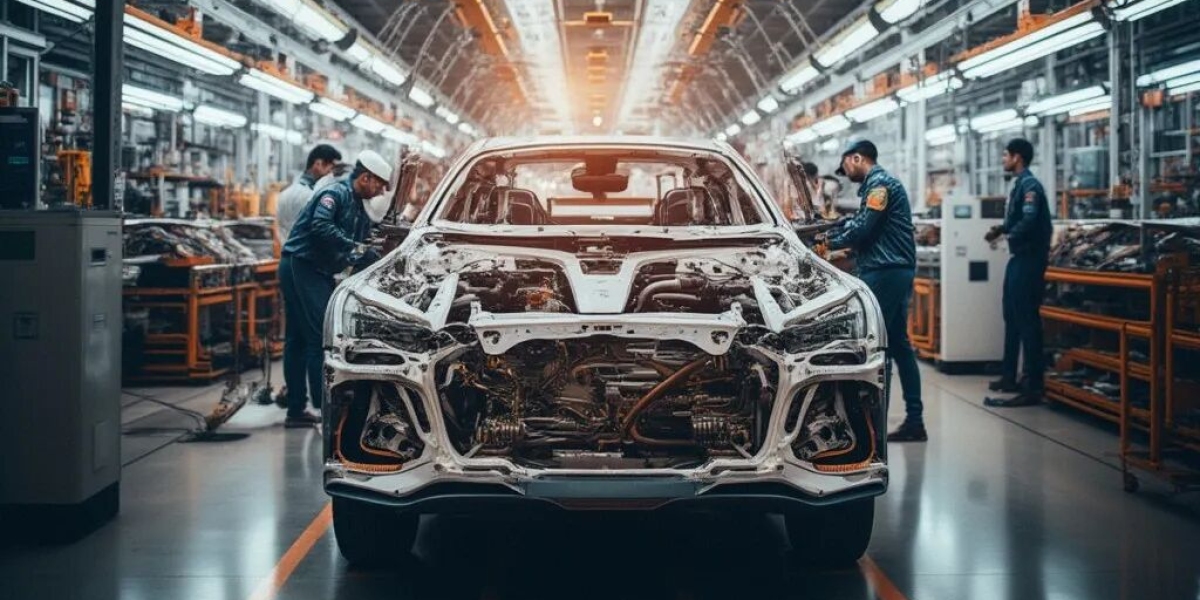
On the first working day after the Lunar New Year holiday, Chinese automakers set the tone for 2026 in different ways.
A Quieter First Workday
Some issued internal letters. Some used new products to grab attention. Others moved through promotions and dealer mobilisation.
Compared with previous years, the mood was less theatrical and more restrained. There were fewer dramatic sales pledges and fewer warnings about a blood-red market. That quieter start may say more about the industry's maturity than any slogan.
The electrification dividend is fading, and the next intelligent-vehicle breakthrough is still forming. In that setting, the first workday showed a tug of war between ambition and discipline.
Geely: Steady Progress and Wider Intelligence
Geely's message was the most measured. Group chief executive Gan Jiayue used his New Year remarks to stress correct values, avoidance of destructive internal competition and a more sustainable development path.
That stance matters in a market still shadowed by price wars. It suggests a leading group trying to protect long-term quality rather than chase every short-term volume opportunity.
Steady does not mean passive. Gan also disclosed the next stage of Geely's intelligent-driving roll-out. The Qianli Haohan H7 advanced assisted-driving system will be pushed into more group models, especially Lynk & Co and Geely Galaxy. The next version of G-ASD will debut on the Zeekr 8X.
Geely's approach is to make mature intelligent-driving technology more widely available, using scale to support iteration rather than relying only on concept leadership.
Xpeng: Physical AI and Mass-Production Ambition
If Geely represented discipline, Xpeng represented ambition. Chairman He Xiaopeng issued an internal letter describing 2026 as a turning point for fully automated driving and said Volkswagen would become the first customer for Xpeng's second-generation VLA model.
He also set a broad mass-production goal across three AI businesses: robots, flying cars and robotaxis. The next-generation IRON humanoid robot is planned for production at the end of the year, while the modular flying car, known as the Land Aircraft Carrier, is expected to enter scale delivery.
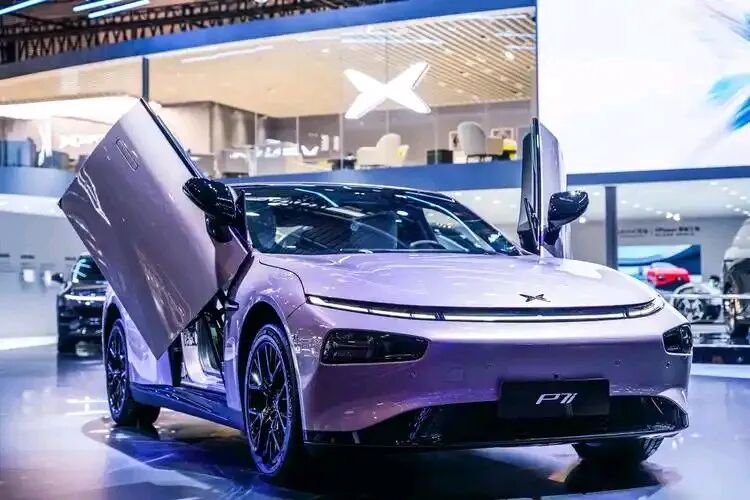
Xpeng also plans to recruit 8,000 people globally this year, including 5,000 campus hires.
The company's target is to move from automaker to future-mobility technology company. Whether three new businesses can reach production and market acceptance at the same time remains the hard question.
Xiaomi: Traffic Discipline and Product Colour
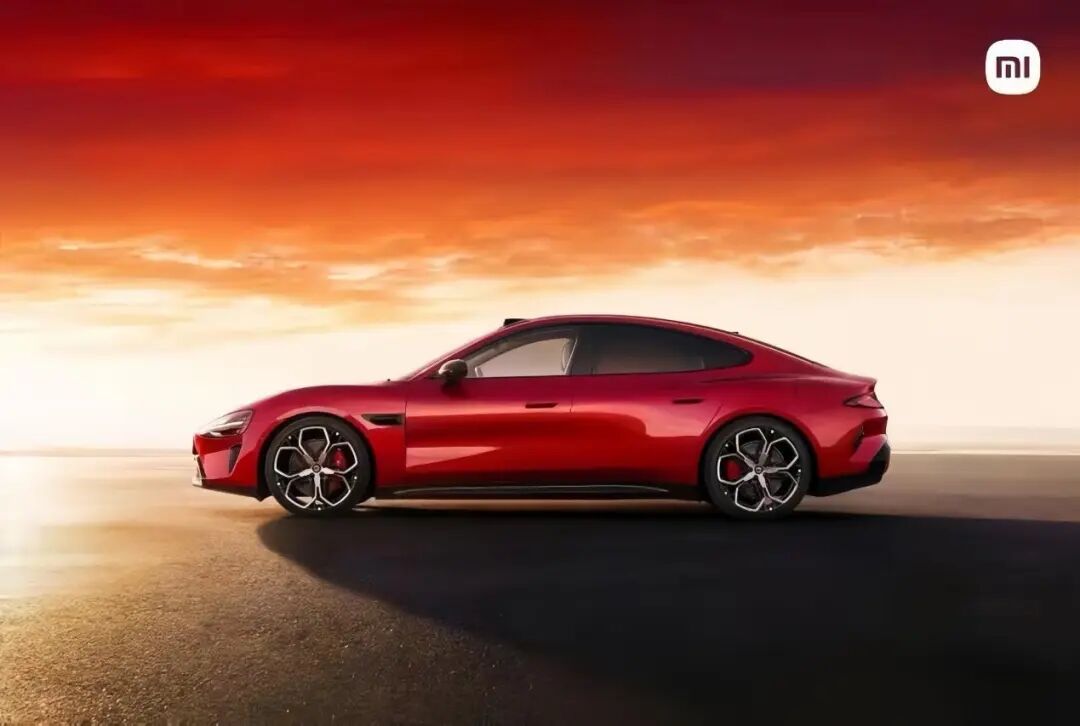
Xiaomi founder Lei Jun chose a familiar internet-style opening. He and senior executives handed out New Year red envelopes to employees and then announced a new colour for the next-generation SU7: Chixia Red, positioned as the first vivid red of the new year.
The new SU7 began early reservations in January and is expected to make its global debut in April. It will come standard with lidar and end-to-end assisted driving.
Using a new colour to dominate first-workday attention is classic Xiaomi. The company remains one of the best in China's car market at turning small product signals into large online discussion.
BAIC Off-Road: Regional Mobilisation
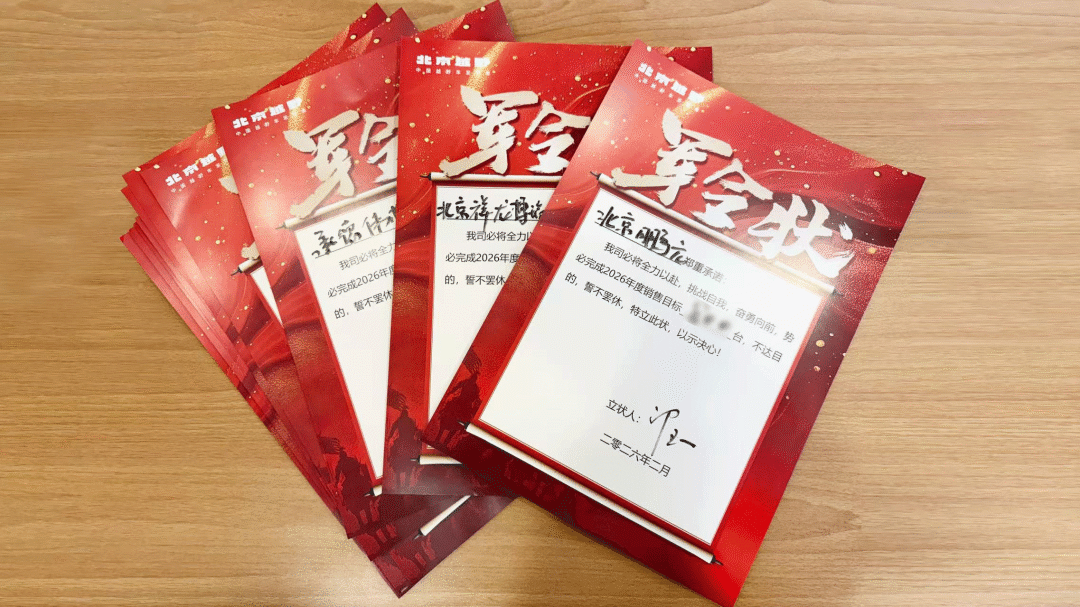
BAIC Off-Road began a day earlier. On February 23, BAIC Motor held a Beijing-Tianjin-Hebei regional mobilisation meeting for its 2026 opening campaign. Chairman Wang Hao, president Chen Geng and regional dealers gathered under the theme of scientific, precise, innovative and complete execution.
Wang laid out three priorities: move early in the first quarter to secure the annual sales base, strengthen both store operations and user operations to build brand reputation, and make Beijing-Tianjin-Hebei a home-market benchmark for national growth.
Dealers also made public performance pledges, showing that regional execution remains central for traditional brands with deep channel networks.
The Price Battle Still Runs Underneath
Some automakers chose more direct market action: launches and promotions.
GAC Toyota introduced the new Wildlander AIR version, offering a cash discount of about $3,000. With national and manufacturer subsidies combined, the reduction reaches roughly $4,000, bringing the final benefit price to about $19,000. The company also offered an eight-year low-interest finance plan, with a down payment of about $2,000 and monthly payments around $200.
Chery launched a New Spring Renewal campaign across Chery, Exeed, Jetour, Zongheng and iCAR, covering petrol and new-energy models with trade-in subsidies, limited-time renewal prices, long-term low-interest finance and lower down-payment thresholds.
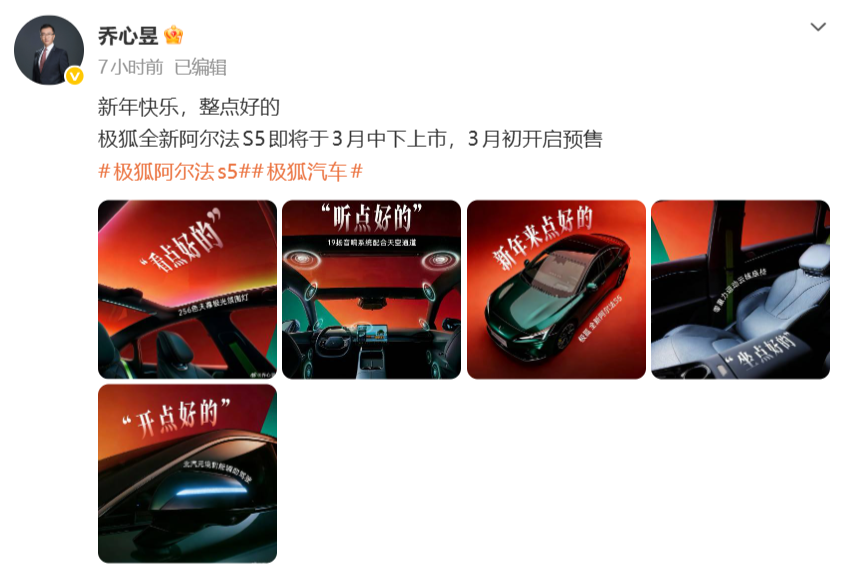
Arcfox announced that the next-generation Alpha S5 would begin presales in early March and launch officially in mid-to-late March. It also introduced a purchase-tax support policy for the Alpha S5, Alpha T5 and T1, with subsidies of up to about $3,000. After combined incentives, the Alpha S5 starts at about $14,000.
Silence Is Also a Signal
Many brands stayed quiet on the first workday. That silence may reflect strategic timing, internal preparation or simple caution as companies wait for market, competitor and policy signals.
Yet the absence of loud declarations does not mean the fight has cooled. Many discounts and finance plans were already in place before the holiday and continued through the break, shaping the market before public statements resumed.
In 2026, the industry shake-out will accelerate. The winner will not be the company that shouts loudest on the first working day. It will be the company that runs steadily through the next 300 days.