
China’s car market delivered two sharply different pictures in July 2026. Passenger-vehicle retail sales at home fell to roughly 1.52 million units, a seasonally weak level and lower than a year earlier.
The split-screen reality behind July sales
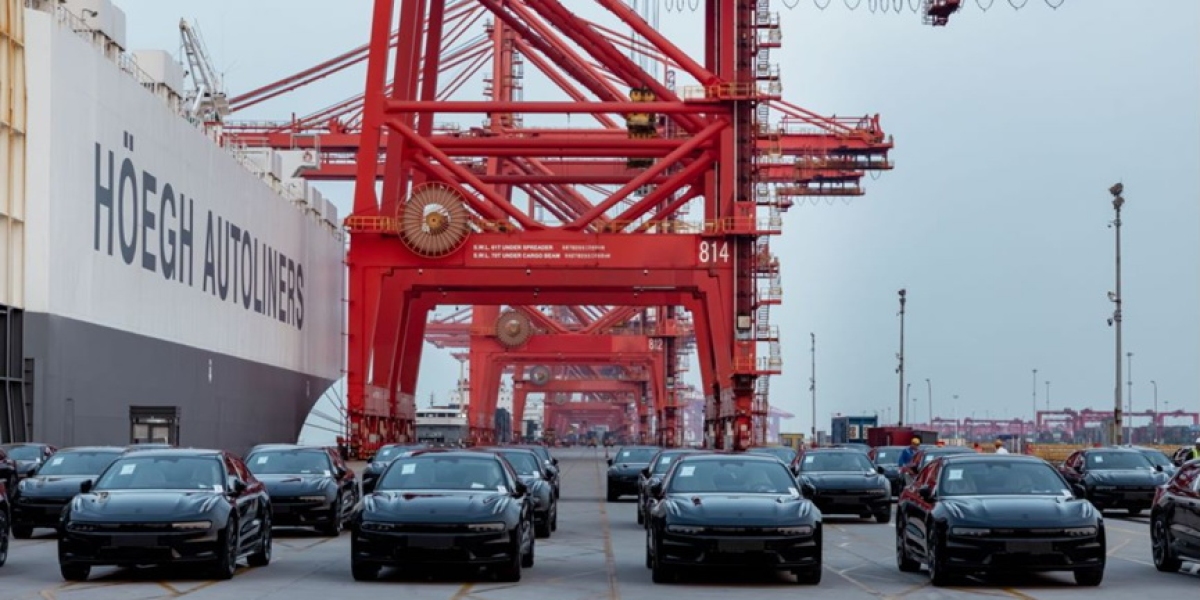
Overseas, the country’s leading manufacturers were moving in the opposite direction: BYD, Chery and Geely sold a combined 489,000 vehicles outside China.
The contrast is becoming difficult to dismiss. International expansion is no longer a side project for China’s largest carmakers. It is moving from an optional source of growth to a strategic requirement.
BYD sold 419,211 vehicles in July, including 179,841 overseas, up 124.3 per cent from a year earlier. Exports and international sales accounted for 43 per cent of its total. Chery Group sold 276,820 vehicles and exported 202,533, a 70.1 per cent increase, becoming the first Chinese automaker to exceed 200,000 exports in a single month. Geely Automobile sold 250,161 vehicles, with overseas shipments reaching 106,663, up 202 per cent.
Taken together, the figures show that international markets now account for more than two-fifths of sales at several of China’s largest automotive groups. The shift is not sudden. BYD chairman Wang Chuanfu has repeatedly described the company’s ambition to become a global new-energy vehicle producer. Chery chairman Yin Tongyue has made a similar case, arguing that a carmaker confined to its domestic market cannot become a genuinely global company.
The pressure is building at home. China’s new-energy vehicle penetration rate reached a record 64.5 per cent in July, but the overall retail market remained subdued. Petrol-powered vehicles still accounted for about 540,000 sales, or 35.5 per cent of the market. Battery-electric models continued to gain share within the new-energy segment, while growth in plug-in hybrids and range-extender vehicles slowed. The domestic market is still large, but the pool of incremental demand is becoming harder to divide.
Overseas markets are becoming the main arena
The scale of overseas sales suggests that the centre of gravity is already moving. BYD’s international volume reached 179,841 vehicles in July, or 43 per cent of its total. Its January-to-July overseas sales approached 969,000 units, putting the company close to the one-million mark before the final five months of the year.
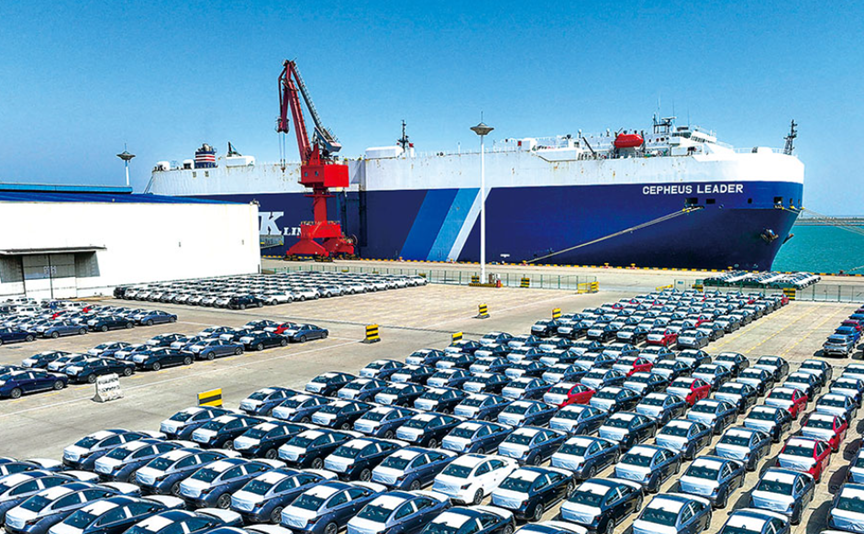
The industrial infrastructure behind that expansion is equally significant. BYD has deployed eight roll-on/roll-off vessels with combined annual capacity of about one million vehicles. Plants in Thailand, Brazil and Hungary are entering production, while the company has been evaluating a second European manufacturing site in Spain. This is no longer an export programme built around excess domestic capacity; it is a global production and logistics system.
Chery has gone further in terms of dependence on foreign markets. Exports accounted for 73 per cent of its July sales, after five consecutive monthly records. The group exported 1.146 million vehicles in the first seven months of 2026, up 71.2 per cent. In 2025, Chery contributed 1.344 million units to China’s total vehicle exports of about 8.32 million, representing more than 16 per cent of the national total.
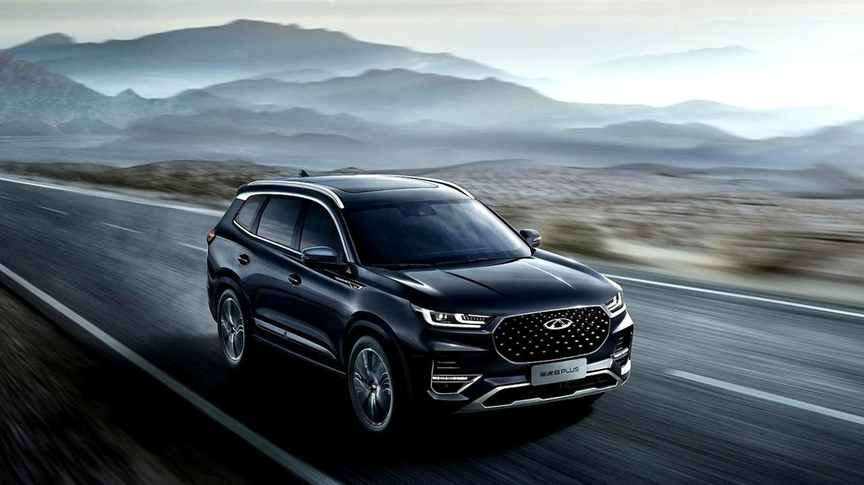
Chery Automobile, listed in Hong Kong under the code 9973.HK, sold 261,876 vehicles in July, up 24.1 per cent. It also entered the Fortune Global 500 for the first time as a listed company, ranking 383rd. Its return on equity stood at 36.5 per cent, placing it 30th among companies on the list and first among Chinese groups. Overseas growth has become central not only to Chery’s volume but also to its position in global capital markets.
Geely is building a similarly broad footprint. Its July exports exceeded 100,000 vehicles for a second consecutive month and accounted for 42 per cent of total sales. New-energy vehicle exports rose 616 per cent to 62,604 units, making up 59 per cent of its overseas volume. Zeekr delivered 35,837 vehicles in July, up 111 per cent, and has positioned itself as a premium electric brand in markets including Australia, Malaysia and Mexico.
The combined overseas sales of BYD, Chery and Geely were equivalent to almost one-third of China’s entire narrow passenger-car retail market in July. For these groups, foreign demand is no longer a supplement to domestic sales. It is one of the main engines of growth.
Even newer companies are responding. Li Auto delivered 30,468 vehicles in July, down 0.9 per cent from a year earlier, yet began local production of the L9 in Kazakhstan. The move is modest compared with the global networks of BYD or Chery, but it shows how quickly international expansion is becoming part of the strategic agenda for China’s electric-vehicle start-ups.
There is still a question of quality as well as quantity. A company whose exports account for most of its sales gains scale, but also becomes more exposed to sudden changes in tariffs, regulation or political relations. Chery’s July overseas volume was almost three times its domestic sales. That concentration creates a different form of risk.
Higher prices do not guarantee easy profits
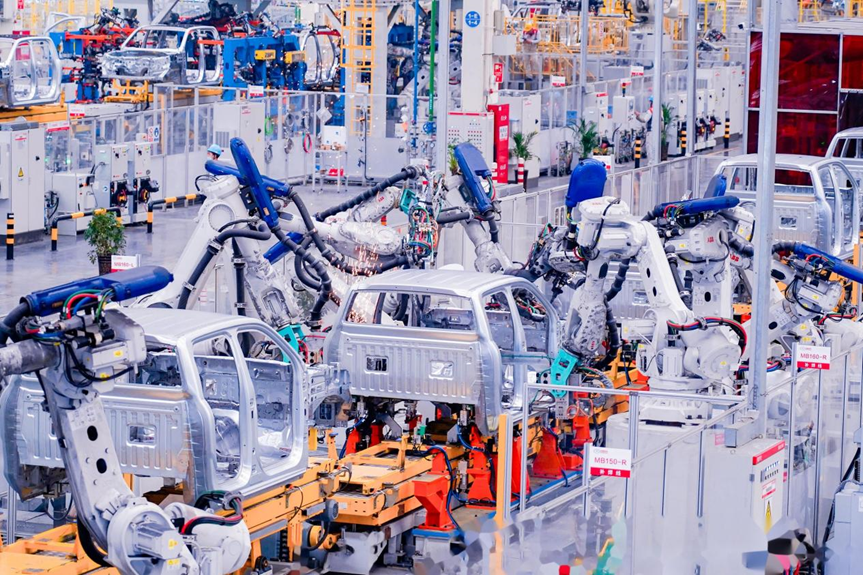
The appeal of international markets is partly financial. China’s vehicle price war has compressed margins for years, and even though average discounts narrowed slightly in July, the domestic market remained highly promotional. BYD’s Dynasty and Ocean models compete mainly in the $14,000 to $28,000 range at home, where price pressure is intense. The same products, or more highly specified versions, often command better prices overseas.
Chery’s first full financial report after listing showed that the average selling price of a vehicle abroad was about $2,000 higher than in China. In the Middle East, a high-specification Jetour Traveller sells for roughly $63,000, about twice its domestic price. BYD is also accelerating the international expansion of premium marques such as Fangchengbao and Denza, where average transaction prices are materially higher than those of its mass-market models.
Geely’s premium strategy follows the same logic. Zeekr’s average selling price exceeds about $42,000, and the brand is marketed as a luxury electric competitor in Australia, Malaysia and other markets. The 616 per cent increase in Geely’s new-energy exports therefore reflects more than low-cost volume. Higher-value products are playing an important role.
Yet headline pricing can obscure the cost of going global. The European Union’s additional duties on Chinese electric vehicles, the effective closure of the US market to Chinese manufacturers, and a wider rise in trade barriers all reduce the apparent margin advantage. Overseas growth may still be attractive, but it is becoming more capital-intensive and politically complex.

BYD’s fleet of eight vehicle carriers and its factory investments across three continents require spending measured in the billions of dollars. Chery has activated production in Rosslyn, South Africa, and joined a Spanish project to revive the Ebro brand. Geely’s production-sharing and partnership discussions around Ford’s Valencia plant illustrate a lighter approach, but one that still depends on substantial industrial and political negotiation.

Three broad models have emerged. Traditional vehicle exports require less capital and can generate moderate margins, but leave manufacturers exposed to tariffs and policy swings. Localised production offers greater long-term control and potentially stronger profitability, but demands heavy upfront investment, global supply-chain discipline and cross-cultural management. Technology partnerships and shared manufacturing reduce capital requirements, though they also limit control over the final product and local operations.
China’s newer EV makers are developing their own variations. Nio delivered 35,934 vehicles in July, up 71 per cent, while continuing to build its battery-swap network in Europe. Leapmotor delivered 101,267 vehicles, up 102 per cent and above 100,000 for the first time; its overseas exports in the first half already surpassed the whole of the previous year. Xpeng delivered 38,027 vehicles, up only 4 per cent, but completed local validation tests in Germany for its Turing AI driving system.
There is money to be made abroad, but overseas markets are not an escape from competition. They are a different and often more expensive form of it.
China’s domestic market is running out of easy growth
The deeper force behind the overseas push is the narrowing room for growth at home. China sold about 980,000 new-energy passenger vehicles at retail in July, with battery-electric models accounting for roughly 60 per cent. Pure electric vehicles continued to gain share, while plug-in hybrids and range-extender vehicles lost momentum. The market is not shrinking, but competition is concentrating around fewer areas of meaningful growth.
The divergence among EV start-ups reinforces that point. Leapmotor’s July deliveries surpassed 100,000, making it the first Chinese new-energy start-up to cross that threshold in a single month. Its rise has been supported by a broad product range spanning roughly $8,000 to $42,000, as well as rapid overseas expansion.
Li Auto moved in the opposite direction. Its July deliveries fell 0.9 per cent year on year and 1.4 per cent from June, making it the only leading start-up to record declines on both measures. Production of the i6 was reduced by about 4,000 units because of supply-chain constraints, underscoring the risk of relying heavily on a small number of models.
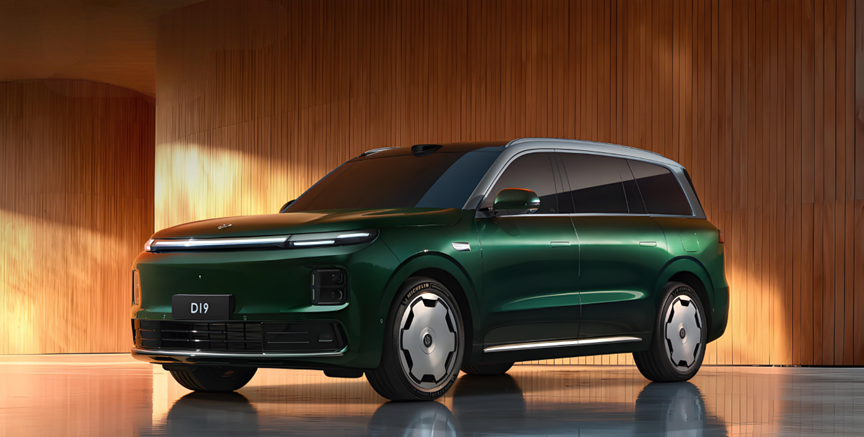
Nio’s deliveries fell 11.5 per cent from the previous month despite contributions from three brands, suggesting that a multi-brand structure does not automatically create effective internal balance. Xpeng’s July volume reached 38,027, but the next test is whether it can raise production of the strongly ordered MONA L03. Xiaomi delivered more than 30,000 vehicles for a fourth consecutive month, yet remained around that threshold while waiting for a new model line scheduled to begin deliveries in September.
Petrol vehicles also remain more resilient than many forecasts assumed. They accounted for about 540,000 retail sales in July. Nissan Sylphy and Volkswagen Lavida remained among the three best-selling sedans, while Japanese sport utility vehicle sales fell by more than 10 per cent rather than collapsing outright. The replacement cycle for existing petrol-car owners will continue for years.
That produces the central contradiction in China’s car market. New-energy sales are expanding, but the number of companies competing for that growth is also rising. BYD’s domestic monthly sales of about 239,000 vehicles may already be approaching the practical share limit for a single manufacturer in such a fragmented market. Leapmotor faces production and supply-chain pressure as it tries to grow beyond the 100,000-unit level. Other brands remain dependent on a successful launch cycle or on one or two high-volume models.
The result is a market increasingly defined by pressured domestic demand and strong external sales. China’s carmakers are not abandoning their home market, but many can no longer rely on it to support their next phase of growth. International expansion is becoming the mechanism through which they seek scale, pricing power and strategic room.
Going global is necessary, but it is not a free pass
July’s sales figures point to a structural change. Overseas markets have become a primary battleground for China’s largest carmakers as domestic growth slows, petrol vehicles retain a sizeable customer base and competition shifts from market creation to share capture.
Foreign markets offer better pricing in many segments, but that advantage must be weighed against tariffs, local manufacturing costs, shipping, compliance and political exposure. The profitability of an export-led strategy can look very different from that of local production or a manufacturing partnership.
No single model guarantees success. Companies with the balance sheet to build factories and logistics networks may gain greater control, but they also carry more fixed costs. Groups that rely on exports remain flexible, yet vulnerable to policy shocks. Partnerships reduce investment requirements while creating dependence on local allies.
For China’s carmakers, the strategic choice is therefore more complicated than “go abroad or disappear”. They must expand internationally without weakening their domestic position, and they must choose a model that matches their capital, brands, technology and tolerance for political risk. Going global is no longer optional for many of them. Making it profitable is the harder part.