
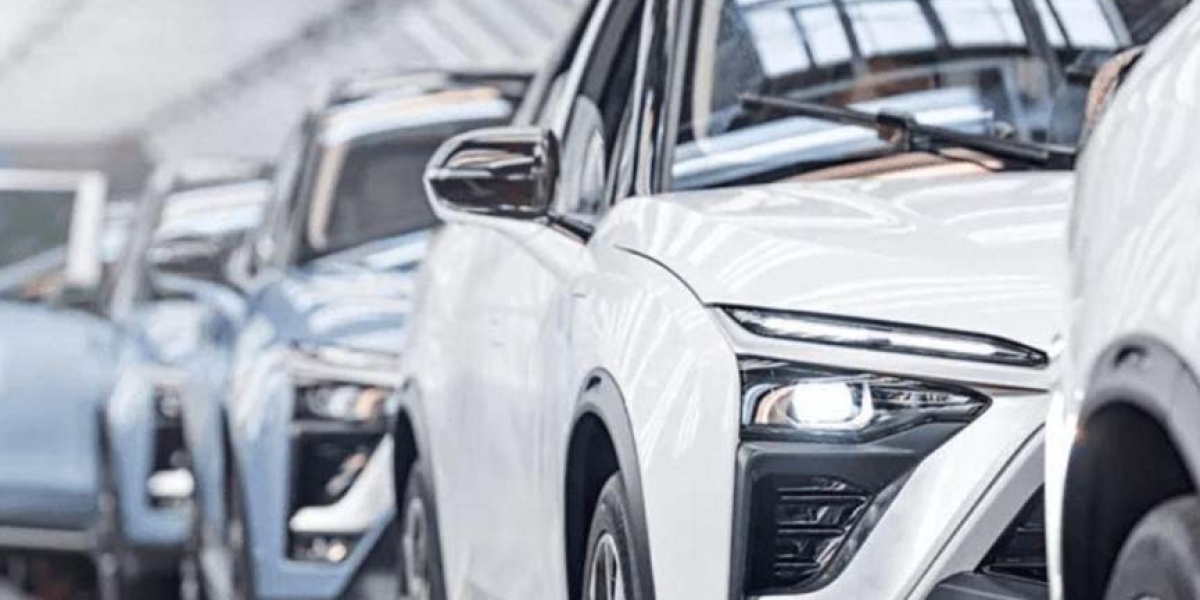
July’s delivery figures exposed an increasingly sharp divide among China’s electric-vehicle startups.
Leapmotor delivered 101,267 vehicles, including exports, up 102% from a year earlier and becoming the first Chinese new-energy vehicle startup to cross the 100,000-unit mark in a single month.
XPeng delivered 38,027 vehicles, Nio 35,934 and Li Auto 30,468, while Xiaomi’s EV business also exceeded 30,000 units. The gap is striking, but the more important question is not who won the monthly sales ranking. It is what those numbers say about one of the defining strategies of China’s young EV companies: the reliance on a single breakout model, or a very small number of them, to establish a brand.
That dependence is often treated as a weakness. In reality, for an early-stage automaker it can be a rational response to an unforgiving industry. Cars require heavy upfront investment, long development cycles and extensive supply-chain coordination. A startup that spreads limited capital across too many products risks producing several mediocre vehicles instead of one that can break through.
The bigger risk comes later. A blockbuster can buy a company time. It cannot, on its own, build the engineering, manufacturing, distribution and financial system needed to survive multiple product cycles. The real test is whether a startup can turn one successful car into a repeatable business.
Why Betting on One Model Can Make Sense
Criticism of “single-model dependence” tends to intensify whenever delivery rankings diverge. Yet in China’s increasingly saturated auto market, producing even one genuine hit has become difficult. If one model is strong enough to support an emerging brand, that is often evidence of product-market fit rather than strategic laziness.
The economics of vehicle development help explain why. Bringing a new model from concept to mass production requires investment across design, vehicle architecture, batteries and power electronics, assisted-driving systems, suppliers, tooling and manufacturing. For a startup with finite capital, the choice is often between spreading resources across several unremarkable vehicles or concentrating them on one segment where the company has a realistic chance of winning.
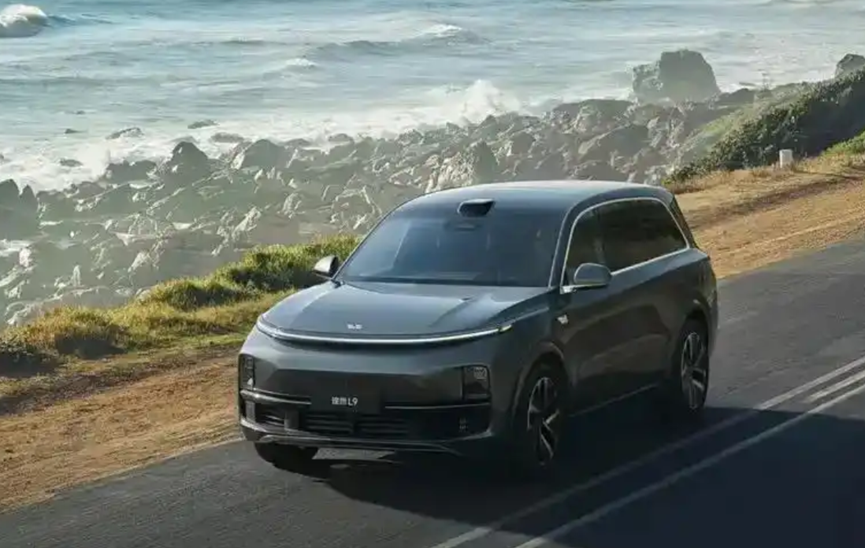
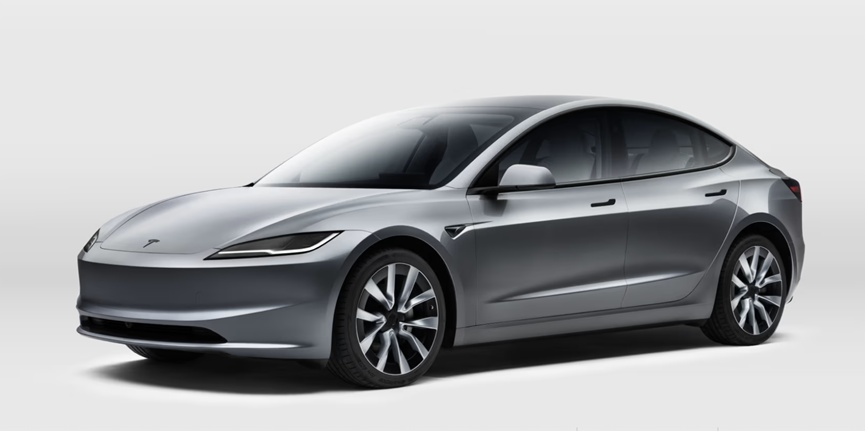
Tesla spent roughly a decade moving from the Roadster to the Model S and then the Model 3. Leapmotor took six years to move from monthly sales of 879 vehicles to more than 100,000. XPeng relied heavily on the P7 and G6 in 2023, while Li Auto built its early position around the Li ONE and the extended-range EV format.
Xiaomi offers a useful comparison outside the auto industry. When it entered smartphones in 2011, it began with a single flagship model and sold 7.9 million phones in its first year. The lesson is not that cars can be developed like smartphones — they cannot — but that young companies frequently have to build scale sequentially rather than launch with a fully formed portfolio.
A single model can also act as a relatively contained market test. Consumer preferences in China’s auto market are fragmented, and even established manufacturers struggle to predict which segments will expand. A startup may be better served by testing its product thesis with one vehicle before committing capital to several.
Seen this way, the question is not whether dependence on a hit model is inherently dangerous. The first priority for a startup is to survive long enough to have that debate.
Volume Alone Does Not Decide Who Wins
A blockbuster strategy becomes sustainable only if the economics work. That makes the relationship between price and volume more important than headline deliveries.
Price too high and volume may never reach the level needed to absorb fixed costs. Price too low and even strong sales can generate little or no profit. Every startup is therefore searching for its own balance between scale, pricing power and manufacturing cost.
The difference was visible in 2025. Leapmotor led the group with 596,600 deliveries, ahead of XPeng at 429,400, Li Auto at 406,300 and Nio at 326,000. Yet revenue told a different story. Li Auto generated roughly $16.6 billion, Nio about $12.9 billion, XPeng around $11.3 billion and Leapmotor approximately $9.6 billion.
Those figures reflect different approaches to the same problem. Li Auto has historically operated at the higher end of the market. It reported net profit of about $166 million in 2025, suggesting that its pricing and cost structure were still capable of producing a profit despite intense competition.
Nio remained loss-making for the full year, but reported adjusted operating profit of about $185 million in the fourth quarter, an indication that its premium strategy was moving closer to financial viability.
Leapmotor has taken almost the opposite route. Its model depends on high volume and aggressive cost control. The company reported net profit of about $79 million for 2025, its first full-year profit, supported by extensive in-house development and a lower-cost product portfolio.
XPeng sits somewhere between those two positions. It was still loss-making for the full year but posted quarterly net profit of roughly $56 million in the fourth quarter, its first profitable quarter. Its challenge is to extract enough pricing power from software, assisted-driving technology and product differentiation to protect margins in the middle of the market.
The broader industry environment makes that balancing act harder. According to data cited in the original analysis from the China Association of Automobile Manufacturers, Chinese vehicle sales fell 4.1% in the first half of the year while the auto manufacturing sector’s overall profit margin dropped to 1.5%, the lowest level in nearly a decade.
Nio President Qin Lihong put the issue plainly in an August 2 interview: monthly volume is only one measure; the relationship between price and volume matters more. A vehicle selling for an average of roughly $15,000 could still fail to cross the company’s economic survival threshold even at 30,000 units a month.
There is therefore no universal answer to whether a single breakout model can make money. If a company finds the right combination of price, volume and cost, one successful model can create a virtuous cycle. If it does not, scale can simply magnify losses.
The Bigger Risk Comes After the Hit
Even when the financial model works, reliance on one model creates an obvious operational vulnerability. A product update that disappoints, a reputational problem or a strong new rival can quickly damage the vehicle carrying most of the company’s volume.
The problem is not the act of creating a blockbuster. It is failing to use the cash flow, brand attention and customer base created by that success to reduce dependence on it.
That is why the period immediately after a breakout model matters so much. The company has to decide whether to broaden its portfolio, deepen its technology platform, strengthen procurement and manufacturing, expand distribution or build a brand architecture capable of reaching new customer groups.
From One Product to a System
Xiaomi’s earlier development offers one illustration of how this transition can work. After establishing itself with its first smartphone, the company launched Redmi in 2013 to address the mass market, began building an ecosystem of connected-device companies in 2014, separated Redmi into an independent brand in 2019 and pushed the Xiaomi name further into the premium segment. By 2024, the company had extended its ecosystem into cars with the SU7.
Over roughly a decade, Xiaomi turned a breakout consumer product into a wider platform spanning brand, supply chain, users, capital and connected devices. The important part of that example is not the precise sequence of products. It is that the original hit became a source of capabilities rather than an end in itself.
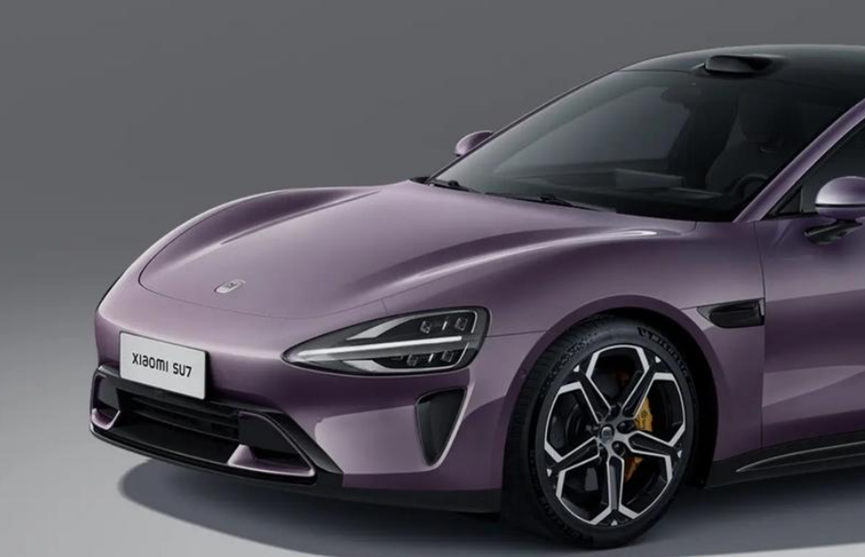
Automakers face a harder version of that transition because vehicle development and manufacturing are more capital-intensive and product cycles are longer. Still, several Chinese EV startups are already attempting it.
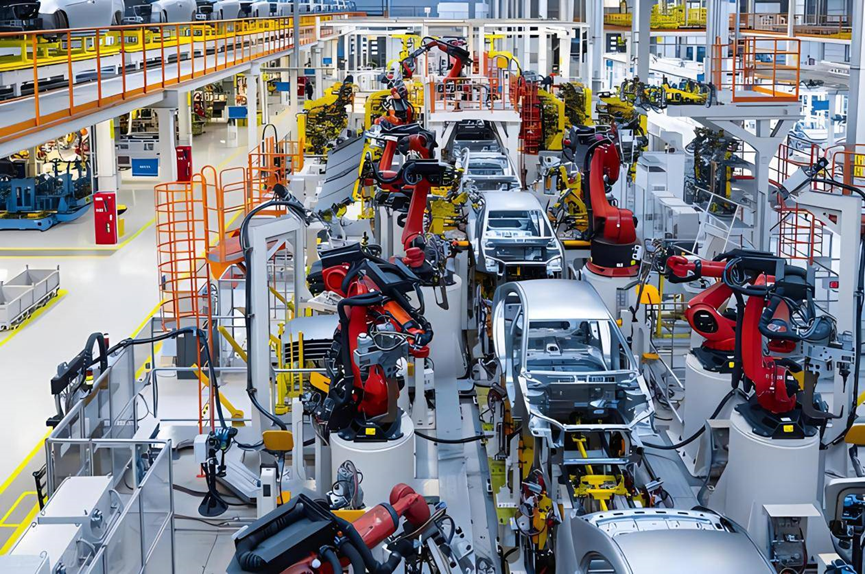
Leapmotor is one of the clearest cases. From the S01, the company expanded into A, B, C and D product series by 2025, covering vehicles priced from roughly $9,000 to $44,000. Its rise to more than 100,000 deliveries in July did not come from one model alone. It reflected a broader system built around in-house electric-vehicle technology, shared platforms, procurement, channel expansion and an increasingly important overseas business.
Nio is taking a different route through a three-brand structure. Its main Nio brand targets the premium market above roughly $44,000, Onvo focuses on family vehicles priced at about $22,000 to $37,000, and Firefly addresses smaller urban cars. In July, Onvo delivered 10,155 vehicles and Firefly 5,771, together accounting for 44% of Nio’s monthly deliveries.
The strategy reduces reliance on a single vehicle or customer segment, but it introduces another form of risk. Multiple brands mean more products, more channels and more complexity. That places greater demands on organisational efficiency, supplier management and capital.
The underlying competition among China’s EV startups is therefore shifting. Monthly sales remain important, but they increasingly reflect deeper differences in product planning, manufacturing efficiency, distribution, cost control and capital discipline.
As the sector moves beyond the phase in which companies could compete mainly on technology narratives and growth expectations, those operating capabilities are becoming harder to hide. A weak supply chain, poor channel economics or an inefficient platform will eventually show up in deliveries and margins.
A Blockbuster Is an Entry Ticket, Not a Business Model
Building one successful vehicle is only the beginning. The more difficult task is creating an organisation that can produce successful vehicles repeatedly.
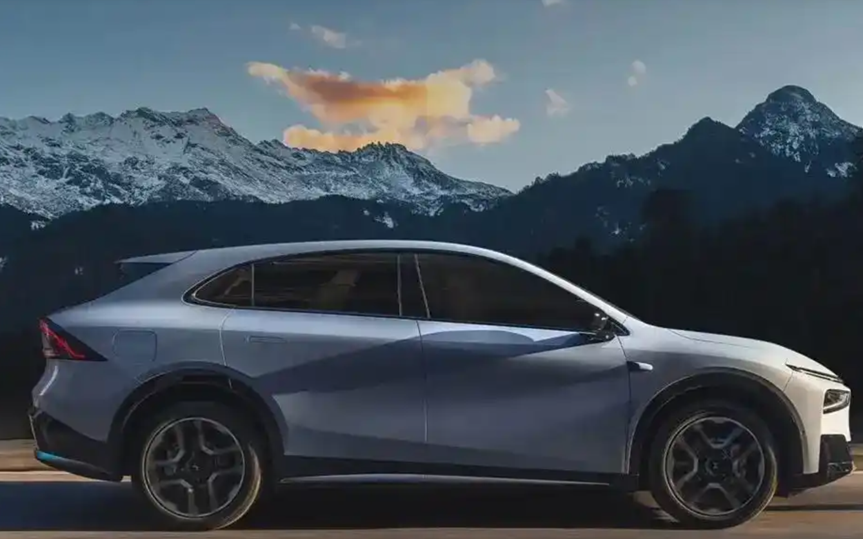
A breakout model can provide the entry ticket: brand awareness, a customer base, supplier leverage, data, manufacturing scale and, in the best cases, cash. Whether that ticket turns into a durable franchise depends on what management does while the product is still generating momentum.
The key questions are structural. Can the technology platform be reused across models? Can suppliers support larger volumes without destroying margins? Can a sales network remain efficient as the portfolio expands? Can the brand retain customers when the original hit ages?
China’s EV startups are discovering that “one model decides life or death” is both true and misleading. One model may determine whether a young company survives its first stage. It is unlikely to determine whether that company survives the next decade.
As XPeng Chairman He Xiaopeng has argued, there is no single weapon capable of deciding the auto industry. Companies instead have to clear a new threshold every few years, accumulating capability until they can push themselves into a stronger position.
That is the more important divide now emerging in China’s EV market. The winners will not simply be the companies that produce the next blockbuster. They will be the ones that can turn a blockbuster into a system.