
China’s mainstream mid-size sedan market is being pulled in two directions.
Established petrol-powered models are defending sales through increasingly aggressive discounts and thinner margins, while a new generation of electric sedans is arriving with faster charging, more advanced software and technology once reserved for luxury cars.
The contrast is reshaping one of the most important segments of the world’s largest car market.
China’s new-energy vehicle penetration rate exceeded 60 per cent for three consecutive months in the first half of 2026, according to retail data from the China Passenger Car Association. At one point, only one conventionally powered model remained among the country’s 10 best-selling passenger vehicles.
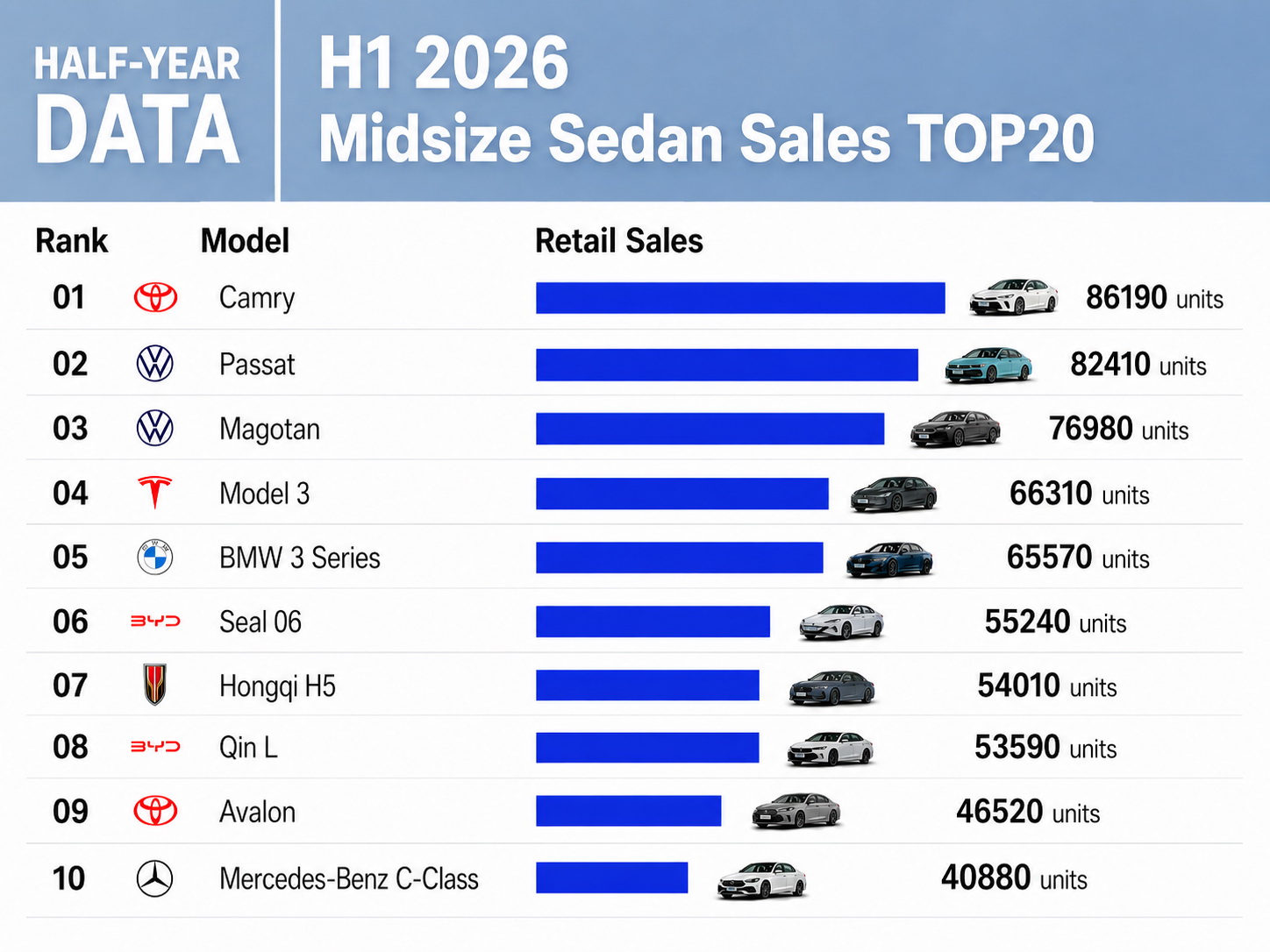
Yet the picture looked very different in the mid-size sedan category. The five leading models by retail sales during the first half were the Toyota Camry, Volkswagen Passat, Volkswagen Magotan, Tesla Model 3 and BMW 3 Series. Tesla was the only fully electric entrant; the other four relied on petrol engines or conventional, non-plug-in hybrid systems.
That resilience has led some in the industry to describe mid-size sedans as the “last fortress” of the internal-combustion car. The reality is more complicated. Rather than a secure stronghold, the segment has become a contested position in which traditional manufacturers are buying time through price cuts as electric-car makers prepare a broader product offensive.
Why Mid-Size Sedan Buyers Still Choose Familiar Technology
Understanding the apparent anomaly requires a closer look at the people who buy these cars.
Mainstream mid-size sedans in China have traditionally occupied a price band of roughly $22,000 to $37,000. Their core customers are often aged between 30 and 45, including families with school-age children, buyers replacing an older vehicle and professionals who need one car to cover commuting, long-distance family travel and occasional business use.
For these households, a purchase of about $30,000 represents a significant financial commitment. The buying process is therefore longer and tolerance for costly mistakes is lower. Many customers are less interested in a single headline specification than in how reliably the vehicle will perform over several years.
What they are buying, in other words, is not simply technology. It is predictability.
That predictability rests on three advantages. The first is mechanical maturity. Models such as the Camry, Passat and Magotan have been developed over several generations. Major weaknesses found in earlier versions have largely been addressed, while their powertrains and chassis systems have been tested across large fleets and long ownership cycles.
The second advantage is service coverage. Toyota and Volkswagen operate extensive authorised dealer networks across China, supported by a mature independent repair industry, readily available parts and relatively transparent maintenance costs.
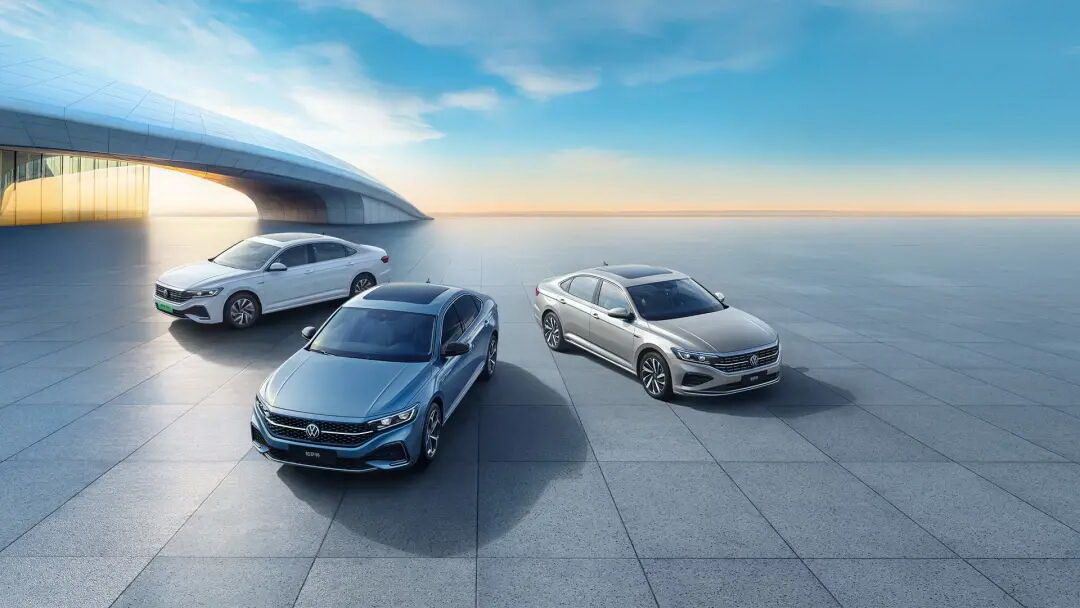
The third is resale value. Data from the China Automobile Dealers Association for 2025 put the Camry’s three-year residual value at about 57.39 per cent, compared with 55.24 per cent for the Passat and 53.55 per cent for the Magotan. Those figures remain stronger than the resale performance of many mainstream electric sedans.
Dealers frequently say that family buyers choosing a Camry are primarily seeking a car that requires little attention. Similar views appear repeatedly in owner forums, where buyers cite concerns about charging access, range variation and software reliability when considering an electric alternative.
Electric vehicles offer clear advantages in acceleration, digital features and cabin technology. They can also introduce uncertainties that matter to cautious buyers: reduced winter range, uneven charging availability on longer journeys and volatile used-car values. In this part of the market, those risks may carry more weight than a longer equipment list.
The Cost of Defending Market Share
The continued strength of petrol-powered mid-size sedans does not mean they are decisively outperforming electric rivals on product appeal. Joint-venture manufacturers are supporting demand with discounts on a scale that would have been difficult to imagine only a few years ago.
Average dealer incentives on mainstream joint-venture mid-size sedans reached about $7,000 to $10,000 during the first half of 2026, according to industry estimates. Discounts were even deeper in regions where dealers were clearing inventory or combining manufacturer offers with vehicle-replacement subsidies.
After incentives, some versions of the Toyota Camry were advertised from about $17,000. Discounts on an entry-level Volkswagen Magotan reached roughly $10,000, bringing transaction prices to about $16,000. Basic versions of the Passat were offered with reductions of around $9,000, with prices falling to approximately $17,000.
Three years earlier, that money would typically have bought a well-equipped compact sedan. It can now secure a full-size mainstream mid-size model from one of the country’s best-known joint-venture brands.
The strategy is eroding the premium these cars accumulated over decades. The Camry and Passat once represented an established threshold for middle-class family motoring. As their prices move steadily closer to those of compact cars, that positioning is becoming harder to sustain.
Dealer economics are also under pressure. After financing costs, inventory expenses and operating overheads, profit on the vehicle itself has become negligible at many outlets. Some transactions are completed at a loss, with dealers relying on year-end volume rebates, financing products and insurance commissions to recover margins.
Price cuts have not stopped electric models from taking a larger share of the category. CPCA wholesale data showed sales of electric mid-size cars reaching 273,000 units in May 2026, up 42 per cent from a year earlier. June volumes increased to 295,000 units, a rise of 37 per cent, making the segment one of the faster-growing areas of China’s new-energy vehicle market.
Competition is also widening. BYD has unveiled the Qin MAX with an expected price range of roughly $19,000 to $25,000, putting it directly against discounted entry-level joint-venture sedans. Geely has refreshed the Xingrui L Plus with petrol and hybrid powertrains, while the Zeekr 007GT and Deepal L06 each recorded retail sales of more than 7,000 units in June. Their volumes are moving closer to those of the leading conventional models.
The petrol sedan’s position is therefore being defended through financial concessions rather than expanding pricing power. Each additional discount protects near-term volume at the cost of dealer profitability and long-term brand equity. Once margins reach their practical limit, manufacturers will have fewer tools left to deploy.
Electric Carmakers Are Closing the Product Gap
The fact that only one electric car appeared among the five best-selling mid-size sedans does not necessarily indicate that demand has reached a ceiling. It may instead reflect a temporary shortage of convincing products in the segment.
For much of 2026, China’s electric mid-size sedan market has been caught between product cycles. Several older models were losing appeal, while newer vehicles equipped with the latest electrical architectures and driver-assistance systems had yet to reach large-scale deliveries. Buyers delayed purchases, helping to explain why the market appeared subdued before rebounding sharply in June.
Electric-car manufacturers had previously concentrated much of their investment on lower-priced family sedans and compact SUVs, where high volumes could establish scale quickly. Premium brands focused on larger SUVs and people carriers with higher margins. The mid-size sedan — positioned between family transport and light business use — received fewer models capable of combining mainstream pricing, long-distance usability and a well-established ownership reputation.
Beyond the Tesla Model 3, relatively few Chinese-built electric sedans had demonstrated the ability to sustain large volumes over several years while maintaining strong consumer recognition.
That supply gap is now narrowing. From the second half of 2026 through 2027, manufacturers are expected to launch a wave of newly developed electric mid-size sedans. Many will share a similar set of upgrades: 800-volt electrical systems, faster charging, more capable driver-assistance features on mainstream trim levels and chassis technology previously associated with vehicles costing more than $44,000.
Rear-wheel steering and air suspension are also beginning to move towards the roughly $30,000 price bracket. As these features become more common, electric sedans will be better placed to compete not only on acceleration and software, but also on ride quality, manoeuvrability and long-distance convenience.
The Battle Will Be Decided by Ownership, Not Specifications
China’s reduction of purchase-tax support for new-energy vehicles in 2026 has given heavily discounted petrol sedans a temporary reprieve. Over the longer term, the retreat of policy incentives is likely to force electric-car makers to rely more heavily on engineering, cost control and customer experience.
Companies with mature technology and efficient manufacturing will be in a stronger position. Models dependent on subsidies or lacking a clear advantage are likely to disappear as the market consolidates.
The decisive question over the next two years is therefore not whether petrol sedans can continue to appear near the top of the sales rankings. It is whether electric-car makers can build vehicles that suit the practical priorities of traditional mid-size sedan buyers.
Winning products will need to combine the benefits of electrification and software with the qualities families already value: reliability, convenient servicing, predictable running costs and confidence over a long ownership period.
Whichever manufacturers solve that equation first will gain access to one of the last large mainstream segments in China where electric vehicles have yet to establish clear dominance. By 2027, the sales rankings may show whether the petrol sedan’s current resilience was a durable advantage — or merely one purchased through discounts.