
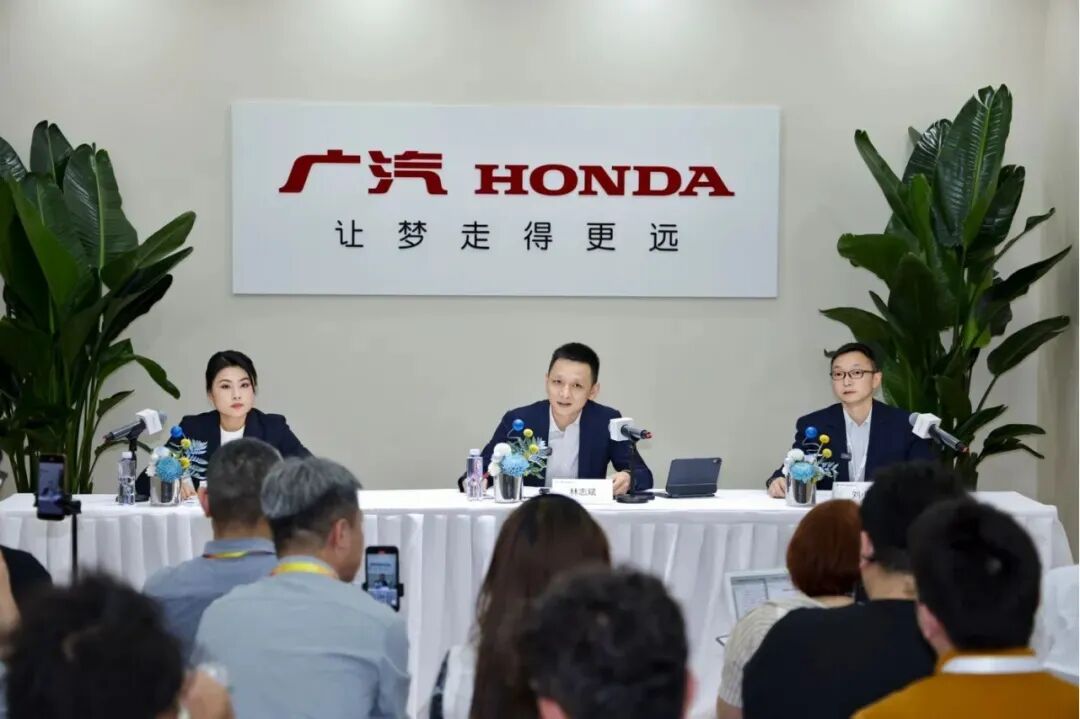
“Let the team that lives on this land every day define the cars Chinese customers drive every day.” That was the message GAC Honda used at a strategy briefing in Taiyuan to frame a new phase of its partnership with Honda, now extended through 2038.
The timing could hardly be more awkward.
Almost simultaneously, GAC Honda began moving into GAC Group’s integrated sales and service network, putting Honda vehicles alongside GAC Aion and Trumpchi models in county-level showrooms. For a joint venture that once helped pioneer China’s standalone 4S dealership model, sharing retail space with its Chinese parent’s own brands marks a significant shift in status.
GAC Honda plans to add more than 1,000 cooperating outlets this year. Trumpchi and Aion will enter many of those stores through direct first-tier authorization, while GAC Honda will largely rely on secondary-network distribution. The arrangement offers faster market coverage, but it also underlines how much the balance of power inside China’s car market has changed.
The deeper question is why GAC and Honda chose this moment to commit to another decade together. GAC Honda’s sales fell 55.82% in the first half of 2026, older production capacity is being cut, and the joint venture is under pressure to prove that its localization strategy can catch up with a market that has moved rapidly toward electrification and software-defined vehicles.
On July 20, GAC Group and Honda formally renewed their joint-venture agreement, keeping the ownership structure at 50:50 and extending the partnership from its original 2028 expiry date to 2038. The Taiyuan briefing on August 2 was the first major media event after the renewal, carrying the theme of building cars that “understand China better.”
The agreement removes one immediate uncertainty: Honda is not preparing to abandon one of the world’s largest car markets. What it does not remove is the much harder question of whether GAC Honda can recover fast enough to justify the extra ten years.
From a Sales Peak to a Decade Low
GAC Honda was once one of China’s most successful foreign joint ventures. In 2020, annual sales reached 808,900 vehicles, the highest level in the company’s history. The decline since then has been persistent rather than cyclical. By 2025, annual sales had fallen to 351,900 units, less than 45% of the peak.
The deterioration accelerated in 2026. According to GAC Group’s production and sales data cited in the source article, GAC Honda sold just 68,318 vehicles in the first half, down 55.82% from a year earlier. June sales fell 53.03% to 14,099 units, leaving the company with its weakest first-half performance in nearly a decade.
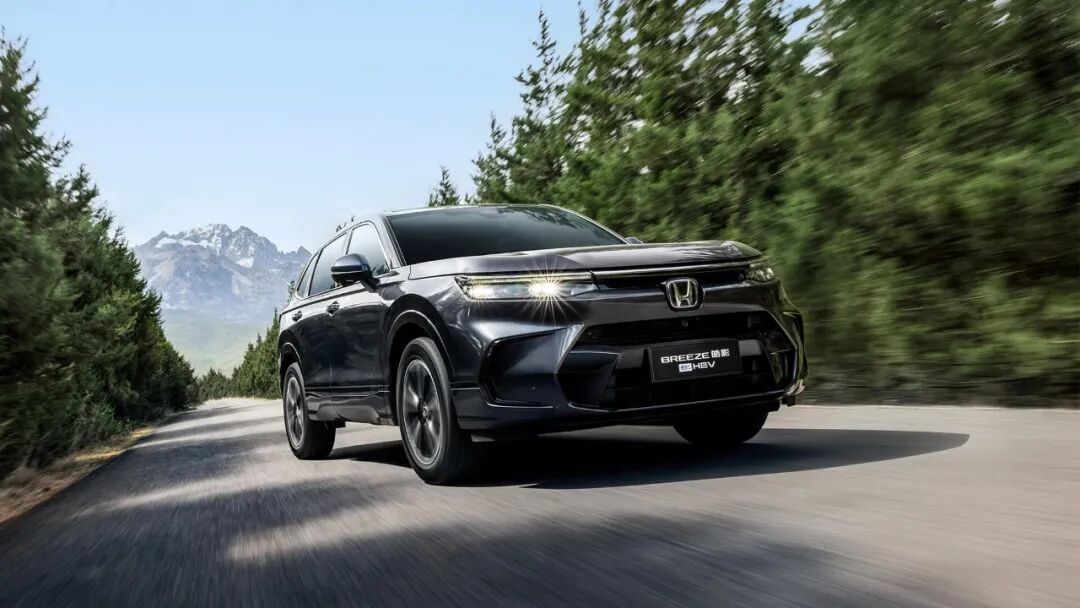
The pressure has reached models that once formed the core of Honda’s strength in China. Sales of both the Accord and Breeze fell by more than half. At its peak, the Accord could exceed 30,000 units in a month; it is now averaging only a little above 6,000. Even with transaction prices for some Accord variants falling to roughly $21,000, discounting has done little to restore the volumes the nameplate once commanded.
That makes the problem harder to dismiss as another consequence of China’s price war. The more uncomfortable interpretation is that GAC Honda’s underlying competitiveness has weakened as Chinese brands have improved their electric powertrains, software, driver-assistance systems and in-car technology at a much faster pace.
The decline also matters beyond the joint venture itself. GAC Honda was historically one of GAC Group’s most important profit contributors. GAC now expects a net loss attributable to shareholders of roughly $600 million to $675 million for the first half of 2026, according to the source article. The group had already recorded a full-year net loss of about $1.30 billion in 2025.
Honda is facing its own financial strain. The source article says the Japanese automaker recorded a net loss of ¥423.9 billion in fiscal 2025, while cumulative losses from its electric-vehicle business reached ¥1.45 trillion.
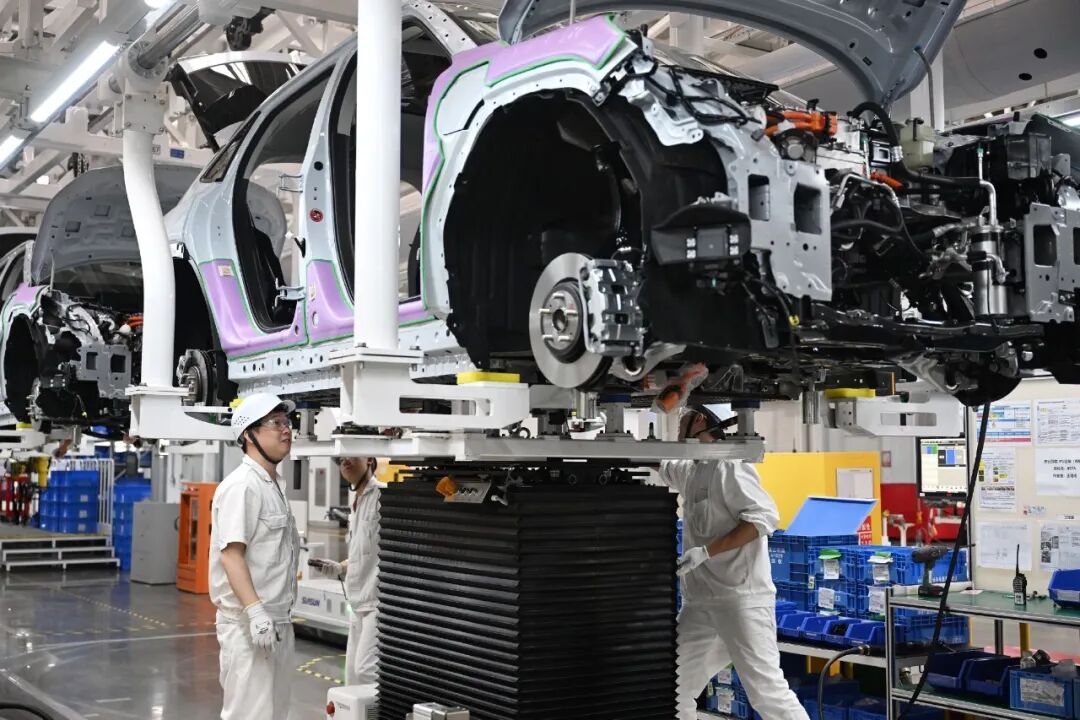
Capacity is being reset as well. GAC Honda’s Huangpu plant in Guangzhou, which had operated for 26 years, stopped production in June 2026. Following a broader restructuring, Honda’s planned production capacity in China has been reduced from 1.2 million vehicles to 720,000. By the end of 2025, GAC Honda’s capacity utilization rate had already fallen below 60%, while the company had begun a significant workforce adjustment as early as the fourth quarter of 2023.
Falling sales, weaker profitability, factory consolidation and workforce restructuring would normally point toward retreat. Instead, GAC and Honda have chosen to extend the relationship for another decade.
A Renewal, or a Ten-Year Reprieve?
The duration of the new agreement is revealing. When GAC and Honda formed their joint venture in 1998, the original contract covered 30 years. This renewal adds only ten, extending the partnership to 2038.
That does not necessarily signal a lack of commitment. China’s automotive market is changing too quickly for either shareholder to make confident assumptions about what the competitive landscape will look like a decade from now. But the shorter extension gives both sides a more limited horizon in which to determine whether the joint venture can reinvent itself.
The timing has also shaped how the agreement is being interpreted. With two years still remaining on the existing contract, speculation had grown over whether Honda might eventually reduce its China exposure as sales fell and production capacity was cut. The renewal largely puts those exit rumours to rest.
Yet the deal looks less like a declaration of confidence than an agreement to preserve strategic options.
For GAC, the logic is straightforward. GAC Honda remains a large industrial asset with an established supplier base, manufacturing footprint, dealer network and customer base. GAC’s own brands, including Aion and Trumpchi, have expanded rapidly, but they have not yet fully replaced the earnings contribution once generated by the joint-venture business. Allowing GAC Honda to unravel would create another layer of financial and industrial disruption at a difficult moment for the group.
For Honda, leaving China would carry a different risk. The market is far less profitable and far less hospitable to established foreign brands than it was five years ago, but it remains too large, technologically important and strategically influential to abandon lightly.
Honda’s China sales fell from 1.627 million vehicles in 2020 to 645,000 in 2025, a decline of almost one million units in five years. In April and May 2026, monthly sales in China remained below 30,000 vehicles, while the company’s market share fell from about 8% to less than 3%.
Honda has lost much of the position it once enjoyed in China, but an exit would mean surrendering not only sales volume but also access to a market that increasingly sets the pace in batteries, intelligent cockpits, assisted driving, supply-chain integration and product-development speed.
The result is a partnership in which both sides have strong reasons to continue, even if neither can assume the old business model will return. The renewal buys time. It does not guarantee a turnaround.
The decision to keep the ownership structure at 50:50 also stands out after China removed foreign-ownership limits in passenger-car manufacturing. Rather than seeking greater control, Honda and GAC have preserved the existing structure. That suggests the immediate priority is to extract more value from assets already built together while sharing the risk of a difficult transition.
Localization Comes Late
GAC Honda’s answer is a much deeper localization push.
At the August 2 strategy meeting, deputy general manager Lin Zhibin said the company would make localization central to product development, procurement, distribution and internal operations. The most important organizational change is a new “product director” system that gives the joint-venture team a leading role in defining vehicles for China.
The shift sounds simple, but it represents a significant departure from the model that sustained many foreign joint ventures for decades. Instead of importing a global vehicle concept and adapting it for China, GAC Honda says it wants locally based teams to define products from the outset.
Over the next two years, the company plans to launch five new vehicles. They will include a next-generation hybrid and two locally developed new-energy models that draw on resources from both shareholders. From 2027, new models are also expected to adopt a new assisted-driving system and substantially upgraded cockpit technology.
GAC Honda is turning to Chinese technology suppliers as part of the reset. It plans to deepen cooperation with Huawei’s HarmonyOS ecosystem for intelligent cockpits and work with Momenta on assisted-driving technology, while increasing the share of locally sourced components.
The strategy is directionally consistent with where the market has moved. The problem is that GAC Honda is arriving late.
Volkswagen, Toyota, General Motors and Nissan have already moved toward more China-led product development, local software partnerships and shorter decision-making cycles. For GAC Honda, the new product-director structure is not an attempt to establish a new model for foreign automakers in China. It is an effort to catch up with a model that several competitors are already using.
The competitive backdrop is unforgiving. Foreign joint-venture brands accounted for 61.6% of China’s passenger-car market in 2020, according to data cited in the source article. By the first half of 2026, their share had fallen to 28.2%.
That decline reflects more than nationalism or pricing. Chinese automakers increasingly compete on the technologies that now shape purchase decisions: battery efficiency, plug-in hybrid systems, smart cockpits, over-the-air software and driver assistance. Traditional foreign advantages in engines, transmissions, reliability and brand image carry less weight when the basis of competition changes.
The Electric Gap Is the Hardest One to Close
GAC Honda’s biggest structural weakness is electrification.
New-energy vehicles accounted for less than 10% of its sales in the first half of 2026, according to the source article, leaving more than 90% of its volume dependent on combustion-engine models. Battery-electric products such as the e:NP1 have struggled to build meaningful momentum, while the company’s plug-in hybrid line-up remains limited.
That leaves GAC Honda exposed at precisely the point where the Chinese market is moving fastest. A late product cycle is difficult to recover from because each new generation of local EVs brings cheaper computing hardware, faster charging, stronger software integration and more sophisticated assisted-driving functions.
Honda does not need to beat every Chinese EV maker at its own game. It does need to give buyers a reason to choose a Honda when established strengths such as fuel economy, durability and resale value are no longer sufficient on their own.
The decision to work with Huawei and Momenta acknowledges that challenge. It also shows how far the traditional joint-venture model has shifted. Foreign automakers once entered China primarily to bring technology, engineering standards and global products into the market. Increasingly, they are relying on Chinese partners for the digital systems that determine whether a new model feels competitive.
The Clock Is Already Running
GAC Honda has described 2026 as a year of preparation. The question is how much time the market will allow it to spend preparing.
Three all-new models are planned for 2027, spanning combustion, hybrid and battery-electric powertrains. Those launches will provide the first serious test of whether the company’s new localization structure can translate into products that recover market relevance.
The retail-network expansion is part of the same effort. Moving into GAC’s integrated outlets gives Honda faster access to lower-tier cities without requiring a costly rebuild of a standalone dealer network. It can increase visibility and reduce distribution costs at a time when traditional dealers are under pressure.
But showroom sharing also carries symbolism that is difficult to ignore. GAC Honda, once a benchmark for the modern 4S model in China, is now being distributed through stores where Aion and Trumpchi increasingly represent GAC’s future-facing products. The joint venture may gain reach, but it also risks becoming one brand among several inside a retail system controlled by its Chinese parent.
That is why the 2038 extension should be viewed less as a destination than as a deadline.
Ten years gives GAC and Honda room to preserve factories, suppliers, dealers and product-development capabilities while they attempt a reset. It gives Honda another chance to remain relevant in a market it can no longer dominate with global models and incremental localization. It gives GAC time to manage the decline of a once-critical joint venture without forcing an abrupt separation.
What it does not give either company is the luxury of moving slowly.
GAC Honda’s challenge is no longer simply to understand Chinese consumers better. It is to rebuild enough product competitiveness, technological relevance and sales scale to ensure that there is still a viable business left to renew when 2038 arrives.