
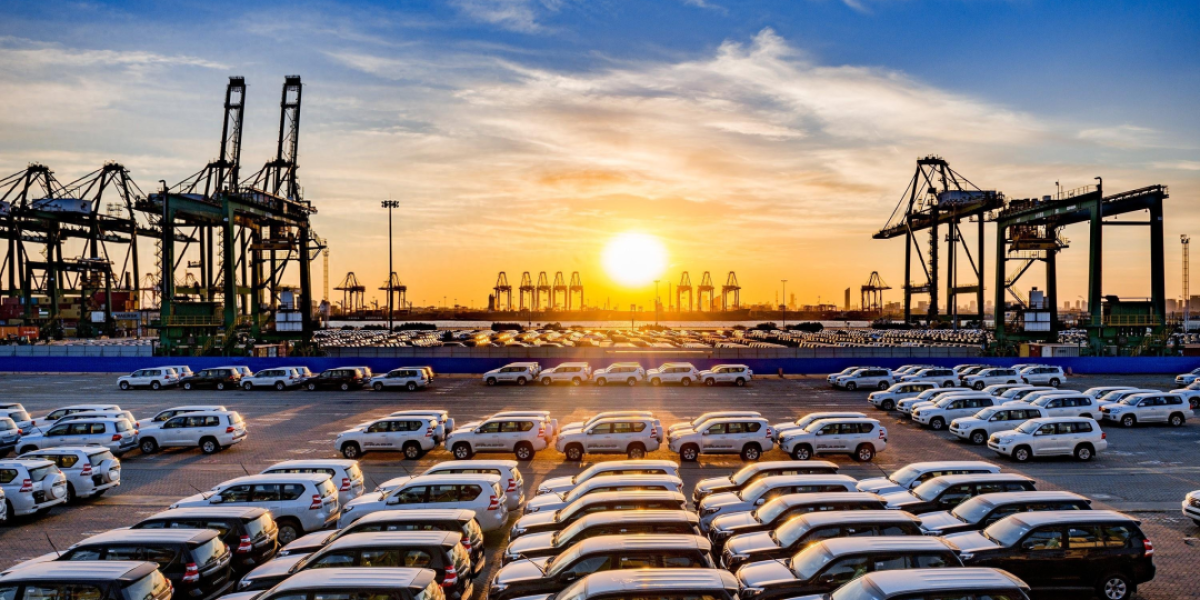
China exported 8.32 million vehicles in 2025, a figure that underlined how far the country's car industry has moved from low-cost manufacturing into a central force in global supply.
A record year under pressure
Roughly one in every three exported cars worldwide came from China, leaving the country at the top of the global export rankings for a third consecutive year and changing a field long dominated by Japan and Germany.
The achievement came during what many executives regarded as a year of containment. The European Union imposed extra duties on Chinese-built battery-electric vehicles. Mexico moved toward sharply higher tariffs that could close part of the North American route. Russia, once a fast-growing outlet for Chinese brands, raised recycling fees and saw imports from China fall sharply.
That backdrop makes the 2025 figures more important than the headline total alone. Chinese automakers did not simply ship more vehicles into easy markets. They changed the mix of products, shifted geography and began building the logistics and service networks needed to keep operating when trade rules become less friendly.
Plug-in hybrids become the pressure valve
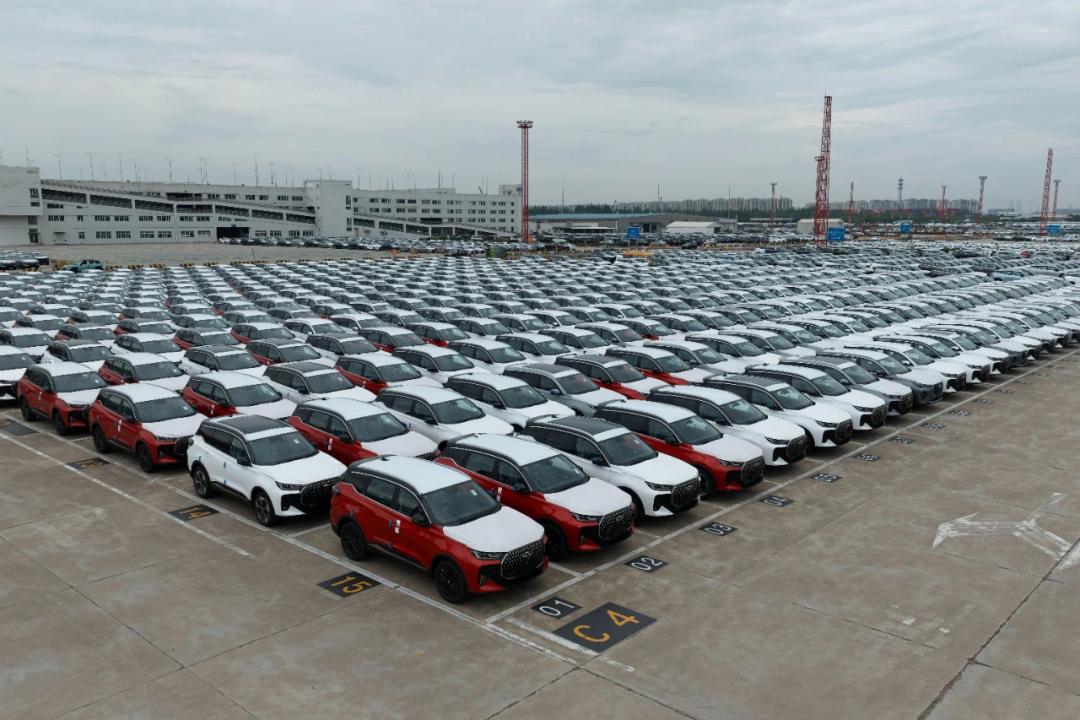
Battery-electric exports remained large, but the more decisive change was the surge in plug-in hybrids. China exported 3.43 million new-energy vehicles in 2025, up 70 per cent from a year earlier. Within that total, plug-in hybrid exports reached 1.11 million units, a 252 per cent increase. Their share of total vehicle exports jumped from 5 per cent in 2024 to 13 per cent in 2025.
December showed the shift most clearly. Plug-in hybrid exports reached 170,000 units in a single month, up 442 per cent year on year and equal to 17 per cent of all Chinese vehicle exports that month. The category had become more than a niche technology. It was a practical answer to both policy risk and consumer hesitation in markets where charging networks remain uneven.
Europe provides the clearest example. The EU's anti-subsidy measures raised the cost of Chinese-built battery-electric cars, weakening one of their main advantages: value for money. Plug-in hybrids were not covered in the same way and continued to face the bloc's base 10 per cent duty. Chinese groups responded quickly by pushing more hybrid models into Europe.
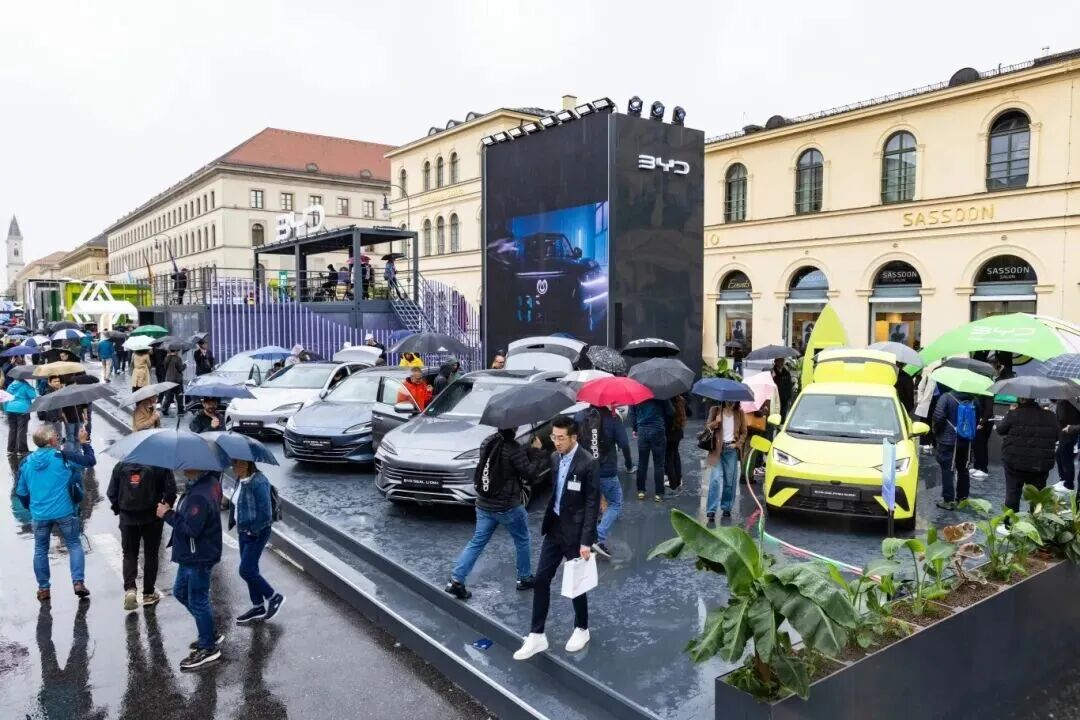
BYD's European version of the Song Plus plug-in hybrid sold 72,667 units in 2025, according to the article, making it Europe's best-selling plug-in hybrid model and placing it ahead of rivals from Volkswagen and Volvo. MG and Chery also gained ground. MG's HS plug-in hybrid sold 29,982 units in Europe, while Chinese brands' share of the European plug-in hybrid market rose from 3 per cent in 2024 to 14 per cent in 2025.
The lesson is broader than one powertrain. Chinese carmakers are no longer relying on a single battery-electric export formula. They are learning to adjust products to local rules, fuel prices, charging conditions and buyer preferences, which makes their overseas expansion harder to stop with one set of trade measures.
Less dependence on one big market
The second reason exports kept rising was geographic diversification. Russia shows the risk of concentration. In 2024, China exported nearly 1.16 million vehicles to Russia, about 26 per cent of its total exports. In 2025, that figure fell to 583,000 units, cutting Russia's share to 15 per cent.
Two forces drove the decline. High benchmark interest rates in Russia made vehicle loans more expensive, weakening demand. At the same time, Moscow raised recycling fees on imported vehicles by 70 to 85 per cent from October 1, 2025, with further annual increases planned through 2030. That pushed up the cost of Chinese cars entering the market.
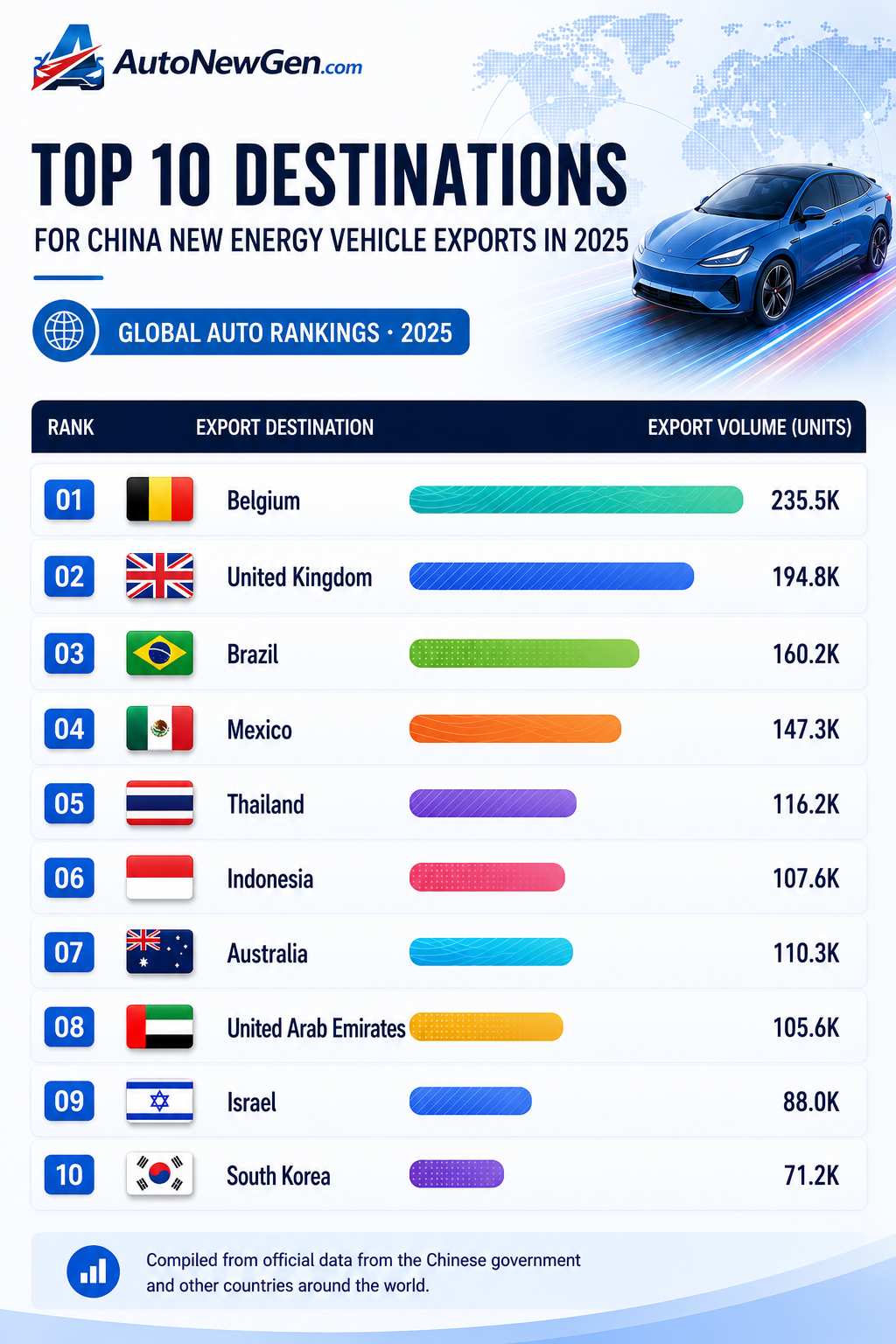
Mexico moved in the opposite direction during most of 2025. It imported 625,000 vehicles from China, overtaking Russia as the largest destination for Chinese auto exports. The market grew by about 41 per cent for the year. Yet a Mexican law approved on December 10, 2025 set tariffs of up to 50 per cent on Chinese imported vehicles and other goods from January 1, 2026, creating a new barrier after a year of rapid growth.
Chinese brands partly offset those risks through the Middle East. The United Arab Emirates imported 572,000 Chinese vehicles in 2025, up by 241,700 units from 2024 and ranking as the third-largest destination. Saudi Arabia and other regional markets also expanded quickly, lifting China's auto exports to the Middle East by more than 60 per cent.
Five years ago, a sharp reversal in one leading market could have dragged down the whole export story. By 2025, Chinese groups had enough reach to absorb weakness in Russia and prepare for uncertainty in Mexico while still gaining in the Middle East and other regions.
Ships, service and the harder phase of globalisation
The most symbolic images of the year may have been at Chinese ports. BYD took delivery of its fourth dedicated new-energy vehicle carrier, Shenzhen. SAIC's 9,500-space Anji Ansheng made its maiden voyage to Europe. COSCO vessels carried Chinese-brand vehicles into overseas markets. These ships showed that China's auto industry is trying to control more of the export chain, not just the factory gate.
Logistics had been a weakness during the previous export boom. Global shipping rates were volatile, capacity was tight and foreign carriers controlled much of the world's car-carrier fleet. For a carmaker trying to sell profitably overseas, transport costs could erode margins or create a strategic bottleneck during periods of trade tension.

Building or securing dedicated shipping capacity is only one part of the next stage. Chinese automakers also need local sales networks, parts supply, repair capability, battery support, software service and brand trust. In mature markets, the contest is not won by shipment volume alone. It is won by how well companies can support vehicles over years of ownership.
The 8.32 million export figure is therefore less a finishing line than a marker of transition. Growth slowed from the extraordinary pace of 2024, and trade barriers are likely to rise rather than disappear. The more important question is whether Chinese carmakers can turn scale into durable overseas operations. In 2025, they showed that they could adapt faster than many of the barriers built around them.