In a year shaped by tariffs, EV anxiety and price wars, Toyota delivered a result that challenged the industry's dominant narrative.
A counter-intuitive winner
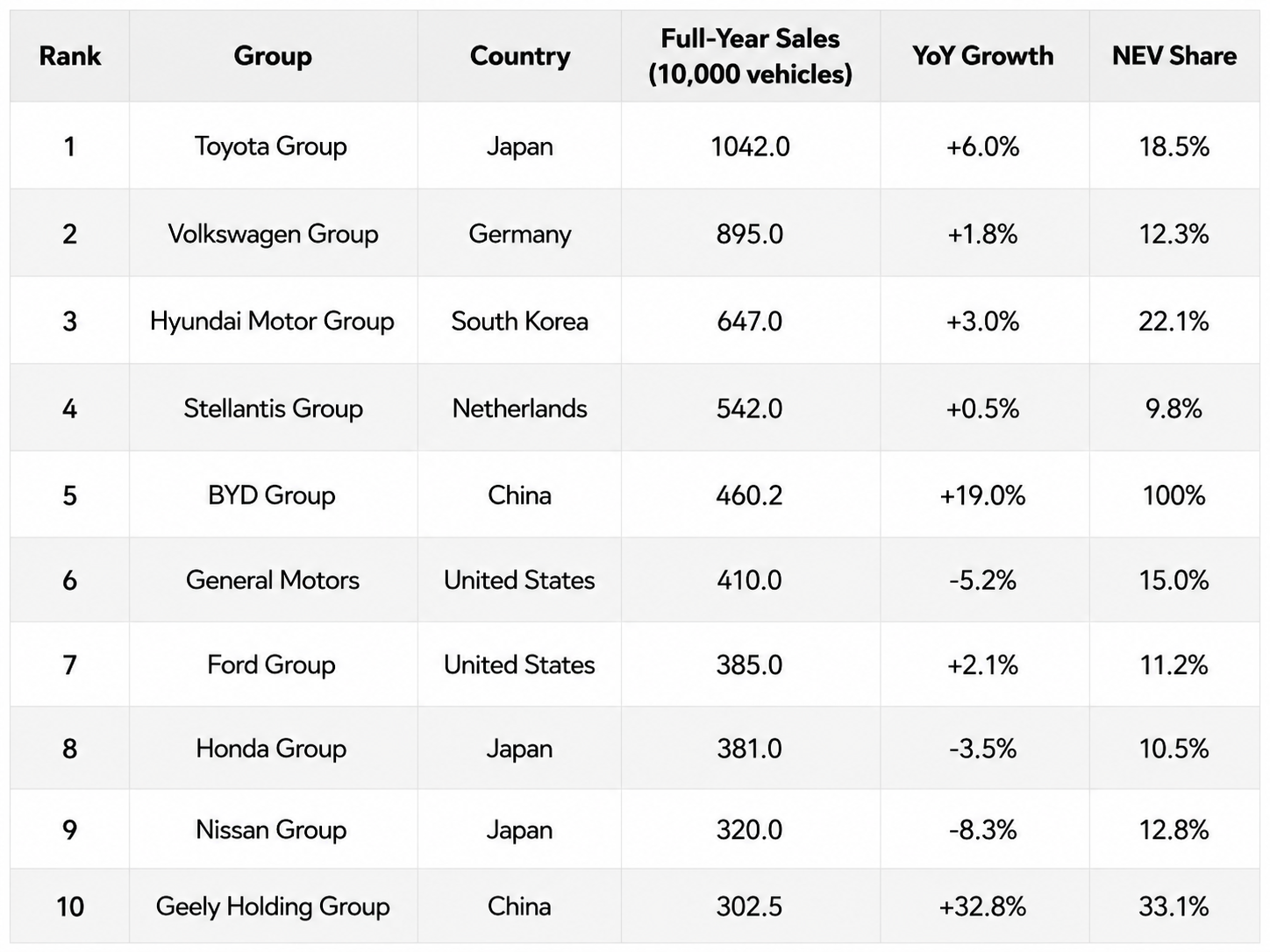
The company sold 10.42 million vehicles globally in 2025, ahead of Volkswagen Group's 8.95 million, and secured the global sales crown for a sixth consecutive year.
The result looked counter-intuitive because Toyota's battery-electric share remained low. In the first half of its 2025 fiscal year, battery-electric vehicles accounted for only about 1.59 per cent of sales, according to the article. Yet Toyota managed to hold volume and profit while Honda's net profit fell sharply and Nissan slipped into losses.
The answer lies in Toyota's refusal to place all its transition risk on one technology. Hybrids, local production, regional adaptation and disciplined pricing helped the company move through a turbulent year with more stability than many rivals.
Tariffs tested global resilience
Global auto uncertainty intensified in 2025. In early April, the US government announced a 25 per cent tariff on imported cars, including vehicles from Japan, lifting the total rate to 27.5 per cent after the existing 2.5 per cent base tariff. Later negotiations between the US and Japan lowered the rate to 15 per cent, but the episode showed how quickly policy could disrupt supply chains.
Toyota was better protected than many because it had spent decades building local production capacity in North America. That reduced overreliance on imports and helped offset tariff pressure.
In the second quarter of 2025, Toyota sold 794,000 vehicles in North America, up 12.8 per cent year on year. Even though its North American business posted its first quarterly loss because of tariffs, the company protected market share through scale. Nissan, by comparison, lost about 149.7 billion yen in profit from US tariffs in that quarter, according to the article.
The product mix mattered just as much. In the first half of 2025, electrified models accounted for 47.6 per cent of Toyota sales, with hybrids making up nearly 90 per cent of electrified volume. That gave Toyota exposure to electrification without depending entirely on the still-volatile battery-electric market.

China shows the strength of the hybrid bridge
China was the most important test of Toyota's approach. In the first half of 2025, China's battery-electric market was gripped by price competition. The industry's average profit margin was only 4.4 per cent, more than half of dealers were losing money, and average passenger-car prices fell about 9 per cent from a year earlier, according to the article.
Toyota still sold 837,700 vehicles in China during the period, up 6.8 per cent. Sales growth from April to June reached 9.5 per cent, while operating profit rose 10.4 per cent to 55 billion yen.
The two China joint ventures both contributed. FAW Toyota sold 377,800 vehicles in the first half, up 16 per cent, while GAC Toyota sold 364,200, up 5.6 per cent. They were the only two major Japanese joint ventures to achieve sales growth in the period, according to the article.
The contrast with rivals was sharp. Volkswagen Group's profit fell substantially, partly because its EV profitability remained weak. Tesla's European sales dropped 33 per cent in the first half of 2025. Toyota's diversified technology strategy proved more resilient in uneven regional markets.
Japanese automakers diverge
Toyota's success was not a victory for Japanese automakers as a group. It highlighted a widening split between Toyota, Honda and Nissan.
Toyota's 2025 global sales rose 6 per cent to 10.42 million vehicles. Honda delivered 3.81 million passenger vehicles, down 3.5 per cent, while Nissan sold 3.2 million, down 8.3 per cent. In China, Toyota's first-half volume exceeded Honda's 315,200 units and Nissan's 279,500 units combined.
The profit gap was harsher. In the April-June quarter, Toyota's net profit fell 37 per cent because of tariffs but still reached 841.3 billion yen, with operating profit of 1.17 trillion yen and a 9.5 per cent margin. Honda's net profit fell 50.2 per cent to 196.67 billion yen, and its operating margin dropped from 9 per cent to 4.6 per cent. Nissan posted a net loss of 115.76 billion yen and an operating loss of 79.1 billion yen.
The strategic difference was especially clear in China. Toyota adopted a localisation and ecosystem model, giving more development authority to Chinese chief engineers and working with Huawei and Momenta. Toyota defined user scenarios, Huawei contributed cockpit and electric-drive technology, and Momenta supported advanced driver assistance.
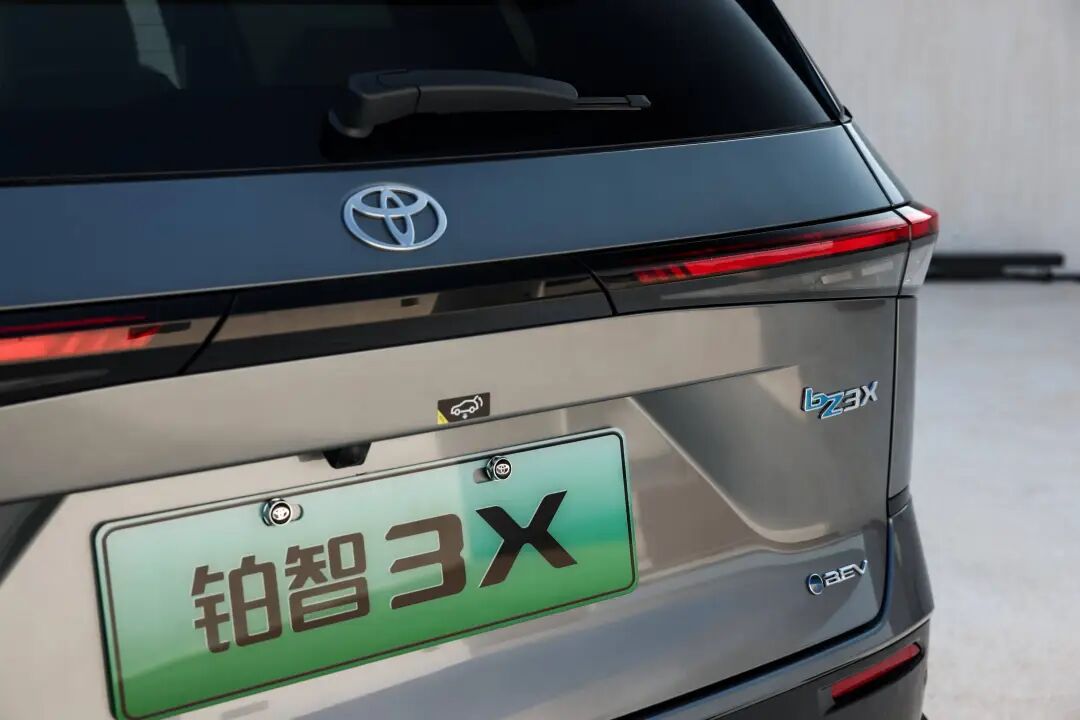
The bZ3X, developed through that approach, received about 25,000 orders in its first three months and delivered 12,000 units, setting a delivery record for a GAC Toyota joint-venture battery-electric model, according to the article.
Nissan's N7 showed some potential after its April launch, selling 6,189 units in June and receiving more than 10,000 orders within a month and a half. Yet one model could not offset the broader brand decline. Honda's Ye S7 and Ye P7 midsize electric SUVs produced limited market response and did not reach scale quickly enough.
A deliberate transition, not resistance
Toyota is often accused of being conservative on EVs. The article argues that its approach is better understood as controlled transition. As long as the first growth curve of fuel and hybrid vehicles remains profitable, Toyota is cultivating a second curve in battery-electric and alternative-energy vehicles without destroying the earnings base.
That discipline helped Toyota avoid the worst of China's irrational price competition. In 2025, 177 models still joined price cuts even though the number was 42 fewer than the previous year. Toyota used promotions, but it did not chase volume at any cost. Even after reducing its full-year profit outlook because of US tariffs, the company still expected fiscal-year net profit of 3.2 trillion yen, or about $22.5 billion.
Toyota has not abandoned electrification. In China, it is developing the bZ series with local technology partners and building a wholly owned Lexus EV plant for premium electric models. In Europe, it is upgrading its Kolin plant in the Czech Republic and plans to launch multiple electric SUVs by 2028. In North America, it is pushing plug-in hybrids while preparing electric pickups and other niche products.
The strategy is regional rather than uniform. In the first half of 2025, Toyota's plug-in hybrid sales rose 38.8 per cent and battery-electric sales rose 10.4 per cent, while electrified vehicles approached half of total sales. It is moving, but it is not forcing a single route across markets with different infrastructure, policies and consumer needs.
Toyota's sixth consecutive global sales crown is therefore a stage result, not a final judgement on the EV transition. It shows that in an unsettled market, patience, profitability and a multi-technology portfolio can be as powerful as speed.